In a nutshell
- 🧼 A microfibre cloth’s split fibres create vast surface area that traps dust and oils, delivering a scratch-free clean on screens, lenses, and coatings where paper towels can mar surfaces.
- ⚡ Light friction builds static attraction (triboelectric effect) that lifts particles into the pile instead of dragging them across glass; use gentle pressure and avoid exposed boards or add ESD protection when working inside devices.
- 🧰 Safe routine: power down, wipe dry in overlapping S-patterns, then spot-treat fingerprints with a corner lightly misted with distilled water—and never spray liquid directly onto electronics; finish with a dry buff.
- 🧵 Choose the right weave: plush high-GSM for TVs and bezels, tight-weave for phone/tablet glass, suede for lenses, and antistatic cloths for open electronics—matching GSM and texture to the task reduces streaks and lint.
- ♻️ Maintain performance by washing at 30–40°C, skipping fabric softener and bleach, then air-drying; colour-code cloths for separate uses and store clean to prevent grit transfer, prolonging reusable life and cutting waste.
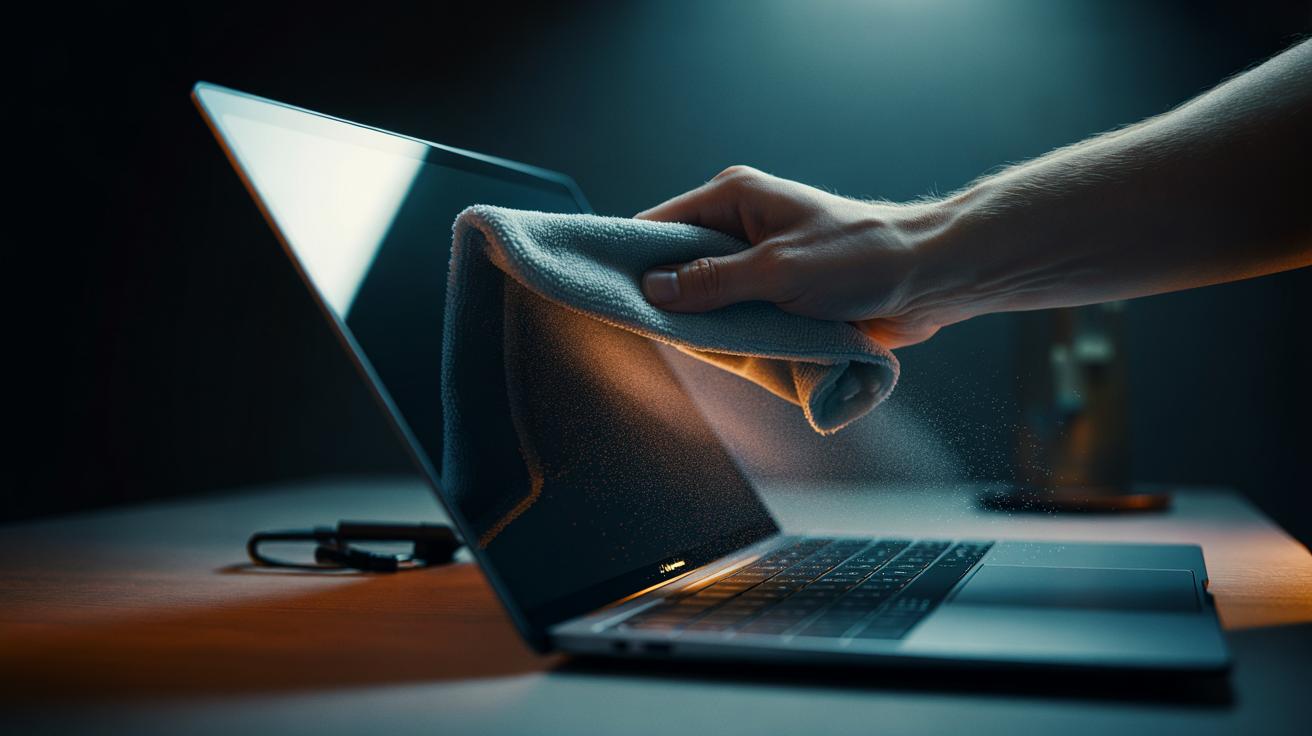
If your laptop lid glitters with lint or your TV collects a halo of dust, the simplest, safest fix is already in your drawer: a microfibre cloth. This humble square turns static attraction into a cleaning advantage, lifting particles from screens, bezels, and vents without scouring delicate coatings. Unlike tissues or paper towels, microfibre fibres trap debris rather than push it around. The result is a scratch-free finish on phones, tablets, OLED panels, and camera glass. Power down and unplug before you begin, then let the cloth’s engineered texture do the heavy lifting. Used correctly, it’s cleaner, greener, and kinder to your kit than sprays and wipes.
Why Microfiber Is a Safe Choice for Electronics
Microfibre (also styled “microfiber”) is woven from ultra-fine polyester and nylon strands, each sometimes thinner than a human hair by a factor of 100. These split fibres create vast surface area with countless microscopic “hooks” that grab dust, pet dander, and skin oils. Because the fibres are soft and uniform, they don’t contain abrasive wood pulp or loose grit. That makes them gentle on matte coatings, glossy glass, and anti-reflective layers often found on monitors, tablets, and OLED TVs. The cloth’s density also minimises lint, leaving fewer stray fibres behind and reducing the need for repeat passes.
Contrast that with paper towels or tissues, which can shed and drag particles across surfaces. Paper towels can scratch coatings and leave micro-marring you only notice under light. Microfibre is also reusable, cutting waste and cost. A single cloth, folded into fresh, clean quadrants as you work, offers consistent contact and traps contaminants safely away from the surface.
How Static Attraction Lifts Dust Without Scratching
When you wipe with microfibre, light friction generates a mild charge through the triboelectric effect. The cloth’s polymer blend becomes slightly polarised, and that electrostatic pull draws in neutral dust and airborne fibres. At the same time, the split ends form capillary-like channels that wick away smudges and light oils. In practice, these forces mean the cloth lifts and locks particles into its pile instead of skating them over the screen. Because the fibres envelop debris, hard motes are less likely to make direct contact with your device’s finish.
This is why technique matters. Do not press hard, and stop if you feel grit. Shake the cloth outside or tap it over a bin to release captured dust before continuing. For ordinary consumer gear, this static is safe; it’s not the same as a high-voltage zap. Even so, avoid wiping exposed circuit boards. If you’re working inside a PC, consider an ESD-safe mat and an antistatic brush for components.
Step-by-Step Routine for Smudge-Free Screens and Keyboards
Always power down and unplug first. Fold your cloth into quarters to create a cushioned pad; this provides multiple clean faces as you go. Start dry: a gentle, overlapping “S” pattern across the screen lifts dust by static pull and prevents tracks. For fingerprints, lightly mist a corner of the cloth with distilled water—never tap water, which can leave mineral spots—and wipe with minimal pressure, then immediately buff with a dry section. Never spray liquid directly onto electronics, especially near bezels where moisture can seep in.
For keyboards, turn the device upside down and tap gently to dislodge crumbs. Use the dry cloth to sweep between rows, then a slightly damp edge to spot-clean shiny keycaps. Around speakers and ports, use short, light strokes, avoiding bristles that can push lint inside. If you use compressed air, hold fans still with a finger to prevent overspinning, then follow with the cloth to capture resettled dust.
Choosing and Maintaining the Right Cloth
Pick weave and density to match the job. Plush, high-GSM cloths hug curved bezels and trap dust deeply; tight-weave options glide on glass and leave fewer streaks. For camera lenses and phone screens, a suede-style microfibre gives precision with minimal drag. Edgeless, ultrasonically cut cloths reduce the risk of stitched hems grazing sensitive finishes. Colour-coding helps: reserve one cloth for screens, another for cases or keyboards, so oils don’t migrate. For routine care, water is usually enough; for stubborn smudges, use a screen-safe solution sparingly on the cloth, not the device.
| Cloth Type | GSM/Weave | Best Use | Notes |
|---|---|---|---|
| Plush Microfibre | 350–500 GSM | TVs, monitors, bezels | Deep pile traps dust; great dry |
| Tight-Weave Microfibre | 200–300 GSM | Phone and tablet glass | Low streaks; smooth glide |
| Suede Microfibre | 120–200 GSM | Lenses, camera screens | Precision work; minimal lint |
| Antistatic Microfibre | Specialised | Open electronics work | Pairs with ESD gear |
Care is simple: wash at 30–40°C with a liquid detergent, and do not use fabric softener—it coats fibres and kills the static edge. Skip bleach and tumble-dry low or air-dry to preserve split ends. Store clean cloths in a zip pouch to keep them dust-free. If a cloth ever picks up grit, relegate it to household duty and replace it for tech. Treated well, a good cloth can last for hundreds of cycles without losing its safe, high-grab performance.
The beauty of microfibre is its restraint: minimal product, minimal pressure, maximum lift. Harnessing static attraction gives you a cleaner finish and protects fragile coatings, all while cutting down on disposable wipes. Keep one cloth in your laptop bag and another by the TV, and you’ll spend less time fighting streaks and more time enjoying your screens. What stubborn dust trap or device gives you the most grief—and which technique will you try first to let the cloth’s quiet physics do the work?
Did you like it?4.6/5 (30)