In a nutshell
- 💡 Yellowing causes: oxidised sebum, aluminium salts from antiperspirants, hard‑water iron, and detergent residue; aspirin clears the film so whites reflect cleanly.
- 🔬 Science: aspirin hydrolyses into salicylic acid and acetic acid, lowering pH, loosening oily–mineral complexes, and weakly chelating metals—it’s a de‑filmer, not a bleach.
- 🧺 Method: dissolve 6 × 300 mg tablets in 5 L water at 40–50°C; fully dissolve, soak cottons/polycottons 4–8 hours, rinse, then wash with an enzyme detergent; skip softener.
- ⚠️ Safety and fabrics: never mix with chlorine bleach; avoid wool, silk, and elastane; work warm, not hot, and ensure tablets are fully dissolved before submerging garments.
- 🧪 How it compares: use aspirin to lift oily films; choose oxygen bleach for oxidised stains and pair with enzymes for body oils; optical brighteners only mask yellowing after residues are removed.
Whites do not turn yellow overnight; they drift from crisp to dingy thanks to body oils, antiperspirants, detergent residue, and trace minerals in water. Against that backdrop, the humble aspirin tablet has gained a laundry-side reputation. When dissolved, it releases chemistry that can lift the amber veil without resorting to harsh bleach. The core actor is salicylic acid, formed as aspirin breaks down, and it behaves like a fabric “facial”, loosening the oily film that traps discolouration. Handled with care, an aspirin soak can revive cotton shirts and bedding, restoring brightness so your regular detergent and optical brighteners can finish the job.
Why Whites Yellow — And Where Aspirin Fits
The culprits behind yellowing are familiar yet stubborn. Oxidised sebum clings to fibres, binding airborne pollutants and dye transfer. Antiperspirants based on aluminium salts react with sweat and detergents to form tannish complexes, especially under the arms. Hard water brings iron traces that deposit a faint tea stain over time. Detergent residue, particularly from heavy dosing or cool cycles, leaves an alkaline film that makes all of this stick. Yellowing is rarely just “dirt”; it is a set of chemical attachments baked into the fabric.
Enter aspirin. In water, acetylsalicylic acid slowly hydrolyses to salicylic acid and acetic acid. Salicylic acid is a lipophilic beta‑hydroxy acid that can creep into the oily layer, helping to dislodge oxidised fats, while the mildly acidic conditions loosen mineral and deodorant complexes. It is not a bleach; rather, it clears the film that is masking white fibres. Once that veil lifts, optical brighteners in your detergent reflect blue light again, neutralising yellow tones to the eye.
How Salicylic Acid Works in the Wash
Two mechanisms matter. First, hydrolysis: aspirin breaks into salicylic and acetic acids, a process that is faster in warm water. Salicylic acid carries an aromatic ring that is friendly to oils, so it can partition into the sebum layer on cotton and polycotton. There, it disrupts the cohesive film and helps it disperse into the soak. Second, chelation and acidification: the carboxyl group in salicylic acid can weakly bind metal ions, while the lowered pH nudges iron and aluminium complexes to let go of the fibre. That combination detaches the faintly yellow cast that ordinary surfactants sometimes miss.
What it does not do is oxidise stains. Salicylic acid is a de‑filmer, not a bleaching agent. Think of it as a preparatory peel for fabric, not a bleach. After the soak, a normal machine cycle with a quality detergent and, if needed, an oxygen bleach booster completes the clean. Work at around 40–50°C to aid dissolution without risking elastane or printed trims, and keep soaks measured to protect delicate finishes.
Step-By-Step: The Aspirin Soak That Brightens
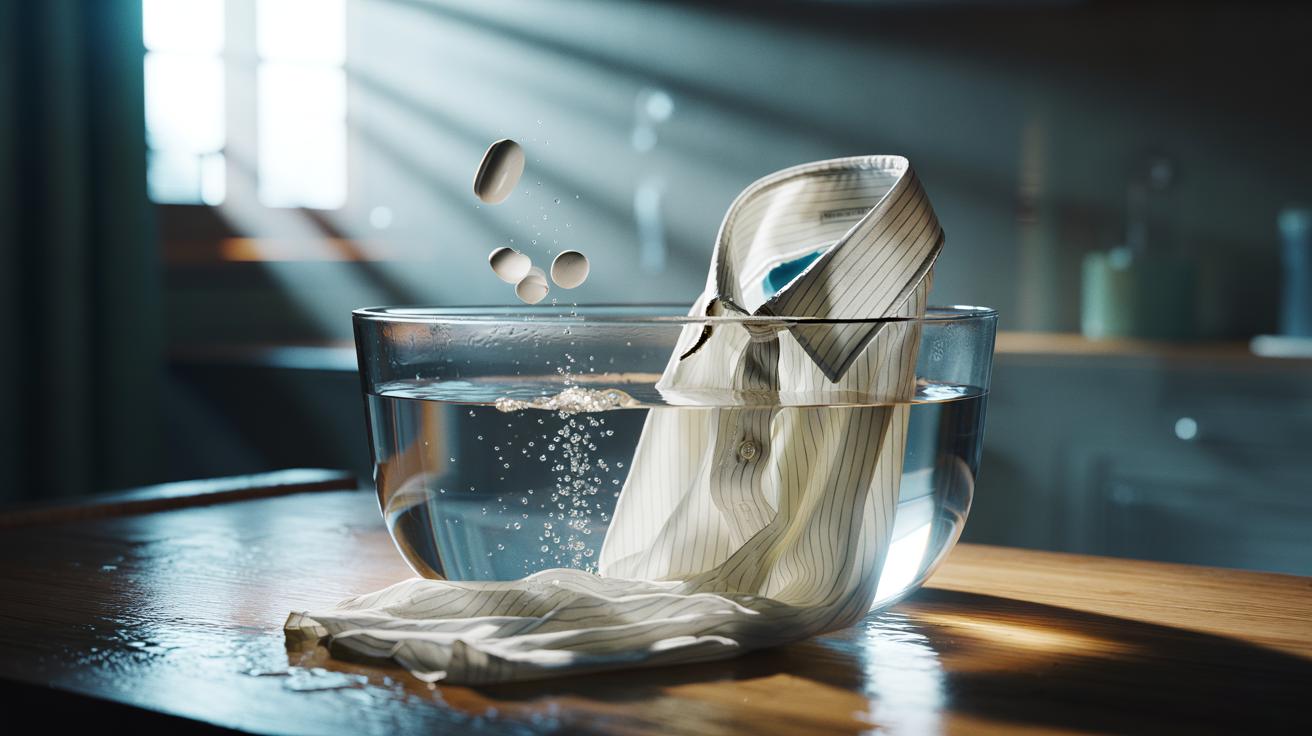
Use plain, non‑effervescent aspirin. For a sink or bucket, dissolve six 300 mg tablets in 5 litres of warm water (about 40–50°C). Stir until fully cleared; enter garments only after the solution is smooth. Always dissolve tablets completely before adding fabric. Submerge white cottons and polycottons for 4–8 hours, agitating occasionally to prevent tide lines. Rinse, then launder on a regular cycle with your usual detergent. Skip fabric softener, which can re‑deposit hydrophobic films.
Be choosy about fibres. Avoid prolonged acid soaks on wool, silk or elastane‑heavy performance wear. Treat underarm zones on shirts by gently working the solution into the area first. Never combine an aspirin soak with chlorine bleach; acidifying bleach risks releasing chlorine gas. For persistent yellowing from iron, follow the aspirin pre‑soak with an oxygen bleach wash to oxidise residual chromophores. Finish by drying in daylight, which boosts optical brighteners and helps the white point read cleaner.
| Element | Recommendation | Why It Matters |
|---|---|---|
| Water | 5 litres at 40–50°C | Speeds aspirin dissolution; gentle on fibres |
| Aspirin | 6 × 300 mg tablets | Provides enough salicylic acid to loosen films |
| Soak time | 4–8 hours | Allows acid to penetrate and dislodge residues |
| Fabrics | Cotton, polycotton whites | Avoid wool, silk, and elastane‑rich items |
| Safety | Do not mix with chlorine bleach | Prevents hazardous gas release |
Aspirin vs Other Whitening Boosters
Aspirin’s advantage is targeted: salicylic acid excels at breaking the oily–mineral film that hides true white. For oxidised stains or greying from dye transfer, sodium percarbonate (oxygen bleach) is stronger, releasing hydrogen peroxide in the wash to attack chromophores. Enzyme detergents with lipase and protease digest body oils and sweat proteins, complementing the aspirin pre‑soak. White vinegar (acetic acid) can neutralise alkalinity and mineral films, but lacks salicylic’s lipophilicity, so it is less effective on stubborn sebum build‑up.
Optical brighteners do not clean; they shift reflected light toward blue to mask yellow. They work best once residues are removed—exactly where the aspirin step helps. A practical rule: use an aspirin pre‑soak for dingy build‑up on everyday cottons, then wash hot enough for your fabric with an enzyme detergent. Reserve oxygen bleach for heavy yellowing or tea/rust tones. Select the chemistry for the stain, not the myth for the moment.
Handled sensibly, an aspirin dissolve is a subtle, science‑led way to cut through the film that dulls whites. It preps fibres so detergents and optical brighteners can deliver the crisp finish you expect, without the risks of chlorine bleach or the harshness of repeated hot washes. The method is inexpensive, easy to repeat, and kind to most cottons when time and temperature are controlled. Will you trial a salicylic pre‑soak on your most tired T‑shirts, or pair it with oxygen bleach for a side‑by‑side test to see which chemistry wins in your laundry?
Did you like it?4.4/5 (21)