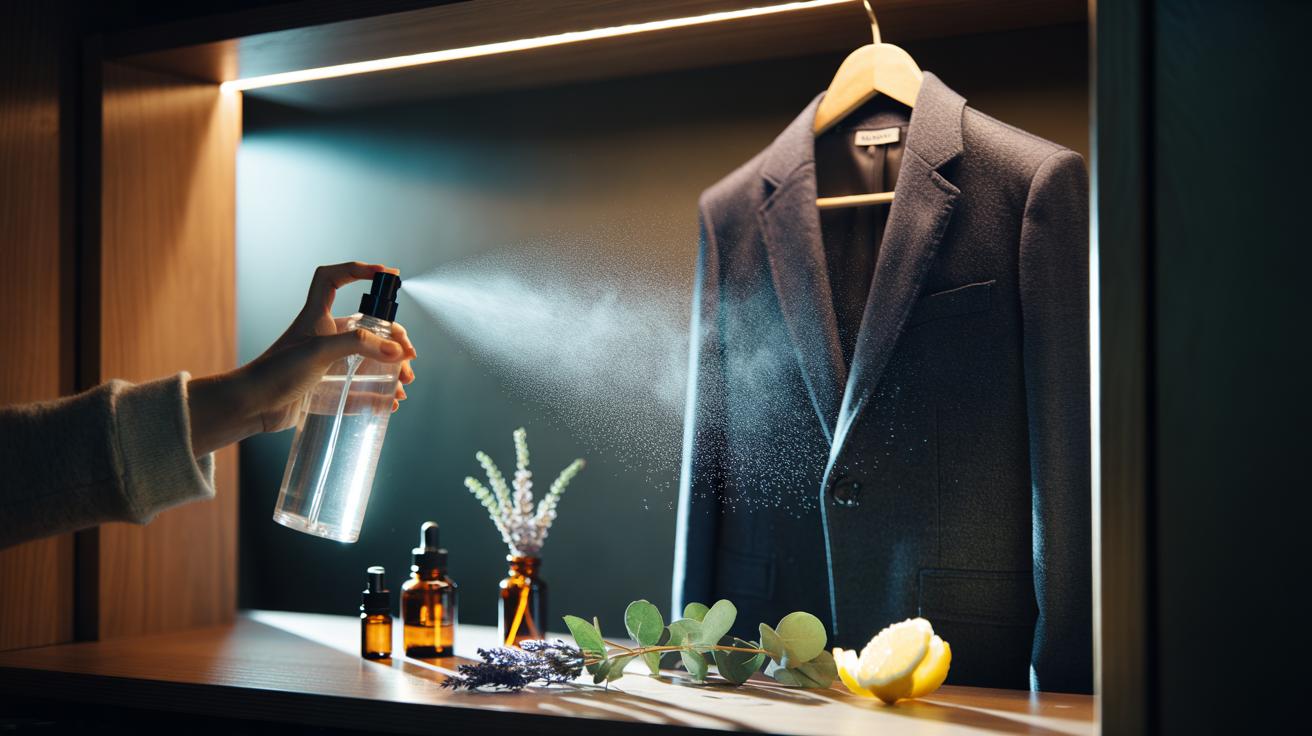
In a nutshell
- 🧪 Science: Ethanol dissolves malodour compounds and denatures some bacteria, then evaporates rapidly to lift smells; it does not “evaporate bacteria,” making it an effective odour refresher rather than a full disinfectant.
- 🌿 Ingredients: Use unflavoured vodka (40–50% ABV); add optional essential oils (tea tree, eucalyptus, lavender, lemon) sparingly; always patch test and be mindful of pet sensitivities.
- ⚗️ Mixing and Use: In a 100 ml atomiser, combine 80–100 ml vodka + 0–20 ml distilled water + 6–12 drops oil; label and shake; mist lightly from 20–30 cm, target underarms/collars, and hang to dry—less is more.
- ⚠️ Safety: Alcohol is flammable; keep away from heat, irons, and flames; test delicate fabrics (silk, acetate, leather), avoid mixing with bleach, and consider oil-free formulas for a neutral finish.
- ♻️ Benefits and Limits: Extends wear-life of suits, wool jumpers, coats, and upholstery between washes, saving water and energy; it won’t remove stains and doesn’t replace laundering.
There’s a well-kept wardrobe secret doing the rounds in fashion cupboards and theatre costume rooms: a quick spritz of vodka and essential oils can send stubborn smells packing between washes. The appeal is obvious. Alcohol is light, fast-drying, and leaves no soapy residue, while plant oils can lend a clean top note that masks lingering odours. Used correctly, it’s a cost-effective, fabric-friendly way to refresh garments that aren’t dirty enough to launder. Below, we unpack the science behind alcohol’s odour-busting power, how to choose the right ingredients, and the safest way to mix and use a spray that’s tough on smells yet gentle on textiles—and on your nose.
Why Alcohol Tackles Odours on Fabric
The heavy lifter here is ethanol, the primary alcohol in vodka. Its rapid volatility means it spreads thinly across fibres, dissolving many odour-causing compounds before evaporating swiftly. At the same time, ethanol disrupts the lipid membranes of some bacteria, which are often responsible for musty, sweaty smells. As the alcohol flashes off, it can carry away volatile malodour molecules, leaving fabrics smelling cleaner without soap or water. Crucially, alcohol does not “evaporate bacteria”; it evaporates quickly while denaturing some microbes and dispersing odorous compounds. That’s why the spray excels as a refresh rather than a full disinfection.
Alcohol also avoids many pitfalls of perfumed fabric sprays. It is a potent solvent, so it lifts and thins residues that trap smells. Because it dries fast, there’s less risk of water rings or a damp hang-time that can feed mildew. Still, expectations need calibrating. A vodka spritz won’t remove stains or replace hot washing for gym kits. Think of it as a targeted refresher for suits, wool jumpers, upholstery, and coats between proper cleans, especially after a night out, a crowded commute, or a smoky barbecue.
Choosing Vodka and Essential Oils That Actually Work
Reach for a clean, affordable vodka—unflavoured and ideally higher strength if you can find it. Standard 40% ABV is fine for odour control, though it is not a high-level sanitiser. If available, 50–60% ABV will boost performance and still dry fast. Essential oils are optional but useful. Tea tree and eucalyptus bring crisp, medicinal freshness; lavender softens harsh notes; lemon brightens stale smells. Use them sparingly to avoid overwhelming fragrance. Always patch test on an inside seam to check for colourfastness and sensitivity.
Sensitivity matters. Some people react to strong terpenes; cats can be particularly sensitive to tea tree and citrus oils. Keep sprays away from pets and children. Avoid using essential oils on baby items, and choose lighter doses for bed linens. Citrus oils can be phototoxic on skin in leave-on products, though fabric sprays pose less risk when dried fully. When in doubt, choose fewer drops, better ventilation, and a fragrance-free approach. The aim is crisp neutrality rather than an obvious perfume that merely masks smells.
How to Mix and Use the Spray Safely
For a balanced everyday refresher, a simple approach works. In a clean 100 ml atomiser, combine 80–100 ml vodka (40% ABV) with 0–20 ml distilled water, then add 6–12 drops of essential oil. Swirl, label, and store cap-on. This keeps alcohol content high for drying and odour lift while keeping fragrance restrained. Spray lightly from 20–30 cm, focusing on underarms, collars, and areas that touch skin. Hang the garment to dry in moving air. Less is more—mist, don’t soak. For stubborn spots, allow a second light pass after the first has fully dried.
| Alcohol Strength | Typical Source | Odour Control | Disinfection Potential | Fabric Notes |
|---|---|---|---|---|
| 30–40% ABV | Standard vodka diluted | Good for refresh | Limited | Gentle; dries slower |
| 40–50% ABV | Standard to overproof vodka | Very good | Moderate | Good balance of speed and safety |
| 60–70% ABV | Overproof ethanol blends | Excellent | High | Test first; highly flammable |
Respect the hazards. Alcohol is flammable: keep away from flames, radiators, and hot irons, and never spray near a candle. Avoid acetate, rayon, silk, leather, or items labelled “dry clean only” unless a test spot passes. Don’t mix with bleach or other cleaners. If you prefer a neutral finish, skip oils entirely—alcohol alone is effective. Remember: a vodka spray is for odour management, not a substitute for washing. Used wisely, it can double the wear-life of many garments between launderings, saving water, energy, and your favourite knit’s shape.
Used by stylists, actors, and anyone who wants to look presentable on a deadline, a vodka + essential oil spray is a pragmatic ally for modern wardrobes. It lifts volatile stink, dries quickly, and leaves fabrics soft to the touch, provided you keep doses modest and fabrics in mind. Treat it as a refresh tool for in-between times rather than a cure-all, and it will pay dividends in longevity and comfort. Which garments in your wardrobe would benefit most from a fast, fabric-safe refresh—and what scent profile would you choose for your signature spritz?
Did you like it?4.7/5 (27)