In a nutshell
- ✨ Use baby oil to make stainless steel fingerprints “disappear” by creating a thin, clear film that evens light reflection—less is more for a clean sheen.
- 🧽 Clean first with warm water and a little washing-up liquid, dry with a microfibre cloth, then apply a tiny drop of baby oil to the cloth and wipe with the grain; buff to finish.
- ⚠️ Patch test and avoid fingerprint-resistant, black stainless, touchscreens and gaskets; remove excess oil to prevent tacky residue and check manufacturer guidance for warranty safety.
- 🧴 Consider alternatives like food-safe mineral oil or dedicated stainless steel cleaners; skip cooking oils that oxidise and smell.
- 🗓️ For upkeep, quick dry buffs after use and a light weekly oil pass keep doors camera-ready; tackle splashes promptly and give handles extra attention.
For all its sleek appeal, a stainless steel fridge can be a magnet for smears, streaks and sticky handprints. There’s a simple, budget-friendly fix hiding in the bathroom cabinet: baby oil. A few drops transform cloudy doors into a showroom shine, disguising smudges while helping repel new marks. Cleaners in show homes have relied on this trick for years because it’s fast, forgiving and leaves a subtle lustre without harsh chemicals. Below, we unpack the science, the exact technique, and the caveats. Use a light touch, work with the grain, and the fingerprints seem to disappear in seconds—all without expensive specialist sprays.
Why Baby Oil Works on Stainless Steel
Your fridge’s stainless steel wears a microscopic layer of chromium oxide that resists rust but readily shows skin oils. Fingerprints are essentially tiny deposits of sebum that scatter light and look like dull patches. Baby oil, a lightweight mineral oil, creates an ultrathin, clear film that evens out the surface and matches the refractive index more closely, so smears visually vanish. The film also adds mild hydrophobicity, making fresh marks less likely to stick. Because it’s neutral and non-abrasive, it won’t scratch or etch brushed finishes when applied correctly.
Choose an unscented, dye-free formula to avoid residue build-up. Less is more—use a pea-sized drop for a whole door when buffed properly. Over-applying attracts dust and can feel tacky. The aim isn’t to soak the metal, but to burnish a whisper-thin layer across the grain. When done well, you’ll get a uniform, soft sheen that looks clean rather than oily.
Step-by-Step: The Wipe Technique for a Smudge-Free Finish
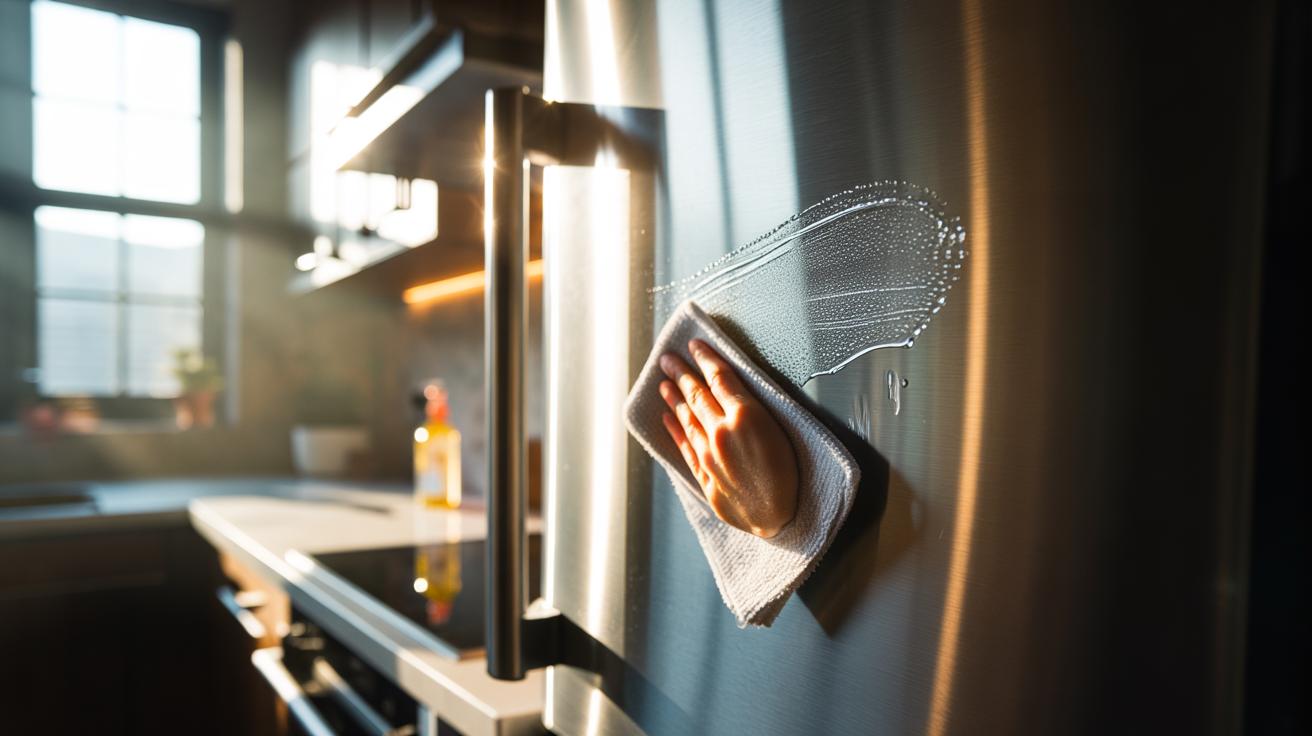
First, remove grime so you’re not sealing in dirt. Dampen a cloth with warm water and a splash of washing-up liquid, then wipe the doors. Rinse with clean water and dry with a fresh microfibre cloth. Put a single drop of baby oil on a corner of a second cloth—never directly on the fridge—then glide it in long strokes along the grain. Always follow the grain direction to avoid visible swirls and micro-scratches. Cover the whole surface lightly; avoid edges where oil can pool.
Flip to a dry side and buff gently until the finish looks even and fingerprints have “disappeared.” Repeat on handles, but sparingly, so they don’t feel slippery. For a high-use family kitchen, a light pass once a week usually suffices. If you notice haze, you’ve used too much—wipe with a dry cloth to strip the excess. The right amount leaves a clean sheen and no residue on your fingers.
Safety, Compatibility, and When Not to Use It
This method is ideal for classic brushed or polished stainless steel panels, but not for every door. Do a small patch test on a low corner before treating the full surface. Avoid “black stainless” or fingerprint-resistant finishes, which are often polymer-coated; oil can streak or undermine their factory layer. Keep oil away from touchscreens, dispenser buttons and silicone gaskets. Although baby oil isn’t volatile like aerosol polish, wipe off excess to prevent smears transferring to hands or nearby surfaces.
| Surface/Finish | Use Baby Oil? | Notes |
|---|---|---|
| Brushed stainless steel | Yes | Apply with the grain; buff thoroughly. |
| Polished stainless steel | Yes | Use very little; high shine shows excess. |
| Fingerprint-resistant stainless | No | Factory coating may streak or degrade. |
| Black stainless / coated alloys | No | Likely polymer film; stick to mild soap. |
Store the bottle out of reach of children and avoid dripping onto floors, which can become slippery. If oil contacts food prep areas, wipe with mild soap and water. When in doubt, check the appliance manual—some manufacturers specify approved cleaners to preserve warranties.
Alternatives and Long-Term Care Tips
If you’d rather skip baby oil, clear mineral oil sold for chopping boards offers a similar effect and is formulated for kitchen use. Dedicated stainless steel cleaners can add anti-static properties, but read labels to avoid silicone build-up. A vinegar-and-water spritz cuts greasy marks before your oil buff, yet it won’t repel prints on its own. Avoid olive oil or other cooking oils—they can oxidise and smell, and they often leave tacky residue. Choose products that are colourless, odourless and non-drying.
For upkeep, keep a clean microfibre hanging near the fridge for quick dry buffs after sticky moments, and give handles an extra wipe during the evening tidy. Tackle splashes promptly so you’re not polishing over dried tomato sauce or sugary smears. If you host often or have curious toddlers, consider a fortnightly deep clean followed by the light oil pass. With a measured hand and consistent care, that brushed steel will stay camera-ready between big cleans.
The humble bottle of baby oil offers a low-cost, low-fuss route to a consistently immaculate stainless steel fridge door, turning daily smudges into a subtle, even sheen. Apply sparingly, buff diligently, and respect any coated finishes, and you’ll keep fingerprints at bay without aggressive chemicals or pricey sprays. Beyond the fridge, the same approach can refresh extractor hoods and dishwasher fascias, provided you follow the grain and test first. What other under-the-sink or bathroom-cabinet staples have you found that deliver professional results in the kitchen without the professional price tag?
Did you like it?4.6/5 (30)