In a nutshell
- 🔬 Sweat odour arises when bacteria create volatile fatty acids; a box of baking soda (sodium bicarbonate) neutralises acids and adsorbs odour molecules, shifting the bag’s microclimate to neutral-and-dry.
- ⏱️ The powder works all week via a gentle pH ~8–8.5 buffer and vast surface area; keep it effective by stirring midweek and using about 200 g per bag to maintain capacity.
- 🧳 Set-up is simple: use an open box or vented tin, place near trainers, avoid direct contact with wet towels, and replace monthly; sachets or a microfibre insert dusted with bicarbonate are spill-resistant options.
- ⚖️ Versus rivals: sprays often mask rather than neutralise; activated charcoal adsorbs but doesn’t neutralise acids; silica gel dries only—making baking soda the most balanced, low-cost choice.
- ♻️ Practical extras: reuse spent powder to deodorise bins or drains, crack zips open at home for airflow, and avoid sealing bicarbonate with strong acids to prevent clumping and pressure build-up.
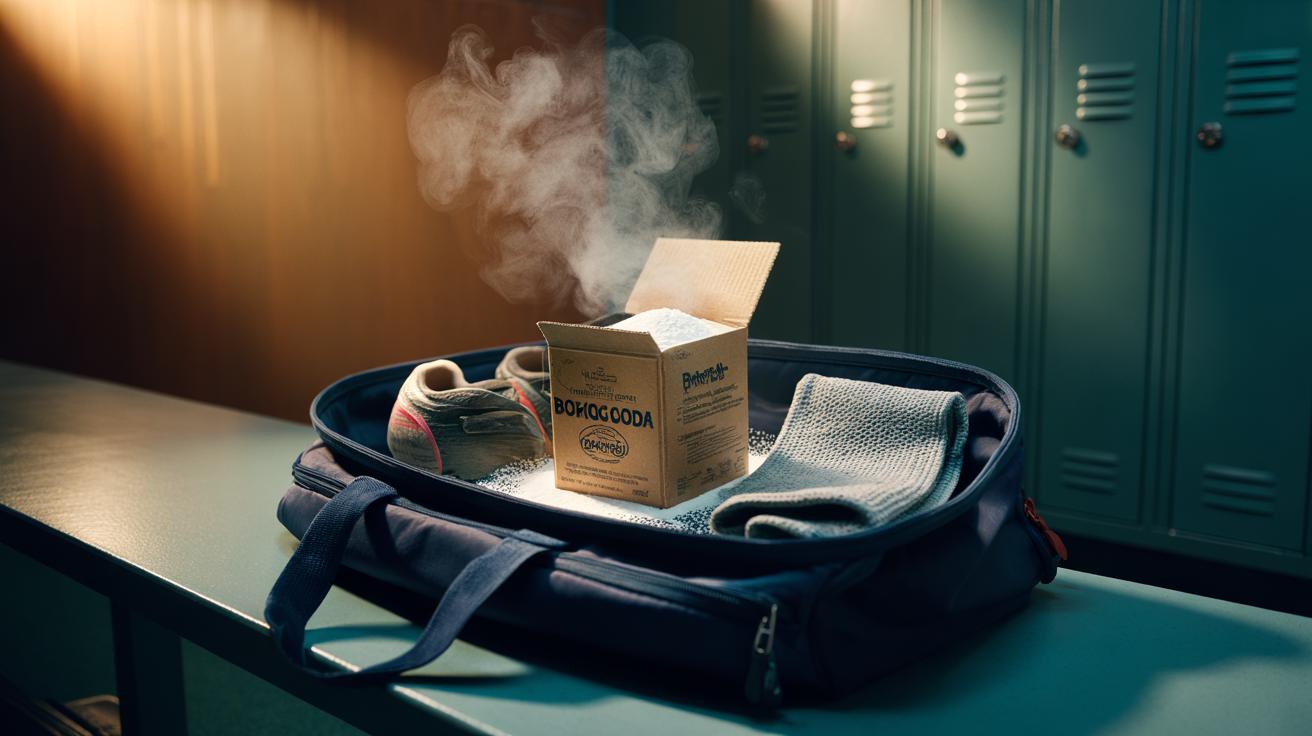
Even the most dedicated training routine can be undone by a stubborn gym-bag odour. Damp kit, sealed zips, and a long commute create the perfect incubator for smell-causing compounds. The simplest fix is also the cheapest: slip a small, open box of baking soda into your kit bag and let chemistry do the hard work. Within hours, the sharp tang of sweat begins to fade; over days, the atmosphere in the bag turns neutral and dry. This is not a perfume or a cover-up. It is a controlled, continuous reaction that tackles the source of the stink—exactly why the powder keeps working all week long, even between sessions.
Why Sweat Smells and What Baking Soda Targets
Sweat itself is nearly odourless. The trouble starts when skin bacteria feast on sweat and dead skin, releasing volatile fatty acids such as isovaleric acid, plus ammonia and sulfur notes that cling to synthetic fibres. A zipped gym bag traps humidity and slows evaporation, so those molecules concentrate on your clothes and trainers. Break the chemistry and you break the smell. That is where sodium bicarbonate excels. As a mild base and a buffer, it reacts with acidic molecules, neutralising them into less volatile salts, while gently nudging the environment away from the bacteria-friendly zone.
There is also a physical side. Finely divided particles of baking soda provide huge surface area for adsorption, which means odour molecules stick to the powder rather than hovering in the air. The crystals draw a little moisture too, depriving microbes of the dampness they love. A small open box changes the microclimate of your bag, shifting it from warm-and-wet to neutral-and-dry. The net effect is a steady decline in malodour without adding fragrances that merely mask the issue.
The Science of Powder Working All Week Long
Baking soda maintains a surface pH around 8–8.5, a sweet spot for neutralising acids but gentle on fabrics. As fresh odour molecules arrive after each workout, they meet millions of available sites on the powder’s surfaces. Odour reduction persists as long as fresh surface is exposed to the air. When acids meet bicarbonate, they form salts and water; a little carbon dioxide may fizz off, which helps lift volatile compounds out of fibres. Because the powder is solid and non-evaporative, its action is sustained rather than fleeting.
Longevity depends on exposure and clumping. A breathable container or an open-top box lets air pass over the granules, refreshing capacity daily. Stirring or shaking the box once midweek exposes new facets. If the powder cakes from moisture, break it up or replace it. In typical UK use—three to five gym visits—200 g of bicarbonate keeps a kit bag fresh for at least a week. No perfume, no sticky residue—just continuous neutralisation and adsorption.
Practical Setup for a Fresh Gym Bag
Use a small cardboard box or a reusable tin with holes punched in the lid. Fill with 150–250 g of baking soda and label it for kit use. Slip it into a side pocket or nestle it near trainers, ensuring airflow. Keep the powder upright and away from wet towels to reduce clumping. A fabric sachet or coffee filter bundle also works if you need spill-proof simplicity. Replace the contents monthly, or sooner if the powder feels damp and compacted. For heavy training weeks, refresh by stirring midweek. Pair with quick wins: air-dry kit promptly, crack zips open at home, and rotate shoe inserts.
| Tip | Specification | Why It Helps |
|---|---|---|
| Amount | 200 g per bag | Balances capacity with portability |
| Container | Open box or vented tin | Maximises airflow for adsorption |
| Placement | Side pocket near trainers | Targets high-odour hotspots |
| Refresh | Stir midweek; replace monthly | Exposes new surface; prevents clumps |
| Disposal | Use in drains or bins | Deodorises again before you bin it |
For extra resilience, slip a small microfibre cloth dusted with bicarbonate into your shoe cavity. Rinse hands after handling, and avoid mixing with strong acids in a sealed container. Consistency beats gimmicks: a breathable box and a weekly stir keeps odours at bay.
How It Compares to Sprays and Activated Charcoal
Commercial sprays often rely on fragrance and alcohol. They feel fresh at first but leave underlying acids untouched, especially in polyester blends. Activated charcoal excels at adsorption and pairs well with baking soda, though it does not neutralise acids. Silica gel targets moisture, not odour chemistry. If you want neutralisation plus light drying, baking soda is the most balanced single step. It is food-grade, inexpensive, and low-waste, and it will not stain kit. For persistent problems in deeply embedded fibres, alternate with a vinegar pre-soak during washing—just keep the vinegar away from your in-bag bicarbonate to avoid damp clumps.
Baking soda also plays nicely with your routine. Keep a small reserve at home for the laundry basket and sprinkle used powder into kitchen bins for a second life. Charcoal inserts can be recharged in sunlight; sprays cannot. When weighing cost, simplicity, and safety, the humble bicarbonate box is a clear everyday winner for the UK commuter’s kit bag.
Gym-life freshness does not need fancy gadgets. A vented box of baking soda neutralises acids, adsorbs odours, and dries the air just enough to slow bacterial mischief—all week, with minimal faff. Stir it once, swap it monthly, and give your kit a fighting chance between sessions and train rides. Small, consistent interventions beat scented quick fixes. If you pair this with timely drying and sensible storage, your bag will smell like nothing at all—which is the goal. What small tweak would make this odour-fighting routine easiest for you to adopt every week?
Did you like it?4.4/5 (20)