In a nutshell
- 🧪 The science: baking soda (sodium bicarbonate) tackles shoe odour by absorbing moisture and neutralising acidic compounds produced by bacteria digesting sweat.
- 👟 Why it works overnight: the fine powder’s large surface area enables adsorption and light absorption, drying the shoe’s microclimate and cutting odour by morning with a gentle pH buffer.
- 🕒 How to use: start with dry shoes, remove insoles, then add 1–2 tbsp of baking soda or use breathable sachets; leave for 8–12 hours, tap or vacuum out, and repeat for stubborn smells.
- ⚠️ Smart safeguards: avoid soaking‑wet leather, spot‑test suede/dyed materials, and use sachets to prevent residue on delicate linings.
- 🧰 Go further: pair bicarbonate with rotation, moisture‑wicking socks, and odour adsorbers like activated charcoal or silica gel; replace worn shoes or treat fungal issues if odour persists.
There’s a humble hero in most kitchen cupboards that can rescue even the most lived‑in trainers: baking soda. Night after night, our feet create a warm, moist microclimate inside shoes, a perfect playground for bacteria that turn sweat into stubborn odour. Enter sodium bicarbonate, a fine powder that tackles the problem on two fronts: it soaks up moisture and neutralises the acidic compounds that smell. Used correctly, baking soda can quieten a shoe’s funk overnight, buying you time between washes and extending the life of your footwear. Here’s how the powder works, why it’s safe, and the smart steps that deliver results by morning.
Why Shoes Smell: Sweat, Bacteria, and Chemistry
Human sweat is largely water with salts, but the smell arises when skin microbes digest residues and release volatile fatty acids such as isovaleric acid. Inside a closed shoe, warmth, friction, and dampness feed this process. Insoles and linings trap moisture, and synthetic fibres that don’t breathe well prolong the wet phase. The result is a lingering bouquet that resists a quick airing. Odour is chemistry, not a character flaw, and it thrives on repeated damp cycles that never fully dry out.
These conditions also nudge the shoe’s micro‑environment towards a lower pH. Many odorous compounds lie on the acidic side, which is why a mild base cuts through them. Bacteria flourish in moisture, so removing water is as important as neutralising acids. That’s where a dry, stable, and inexpensive powder shines. By interrupting the sweat–microbe–acid chain, you can make even hard‑working gym shoes tolerable by the next morning.
How Baking Soda Absorbs Sweat and Neutralises Odour
Baking soda (sodium bicarbonate, NaHCO3) is a weak base with a fine particle size and large surface area. Those tiny particles act like a sponge, drawing in moisture through adsorption onto their surfaces and light absorption into the powder bed. Less moisture means fewer active microbes and fewer smelly by‑products. At the same time, bicarbonate buffers acidity: it reacts with odorous acids to form neutral sodium salts and CO2, dialling down pH to a friendlier middle ground.
This dual action is why the trick works overnight. The powder keeps working passively while you sleep, shifting the shoe away from the wet, acidic zone that smells. It’s also non‑toxic, cheap, and safe for most fabrics. Still, take care: never apply baking soda to soaking‑wet leather, which can stain or stiffen; let the shoe air dry first. For trainers, canvas, and removable insoles, it’s a low‑risk, high‑reward fix that outperforms perfumed sprays that only mask stink.
Step-by-Step: Overnight Deodorising With Baking Soda
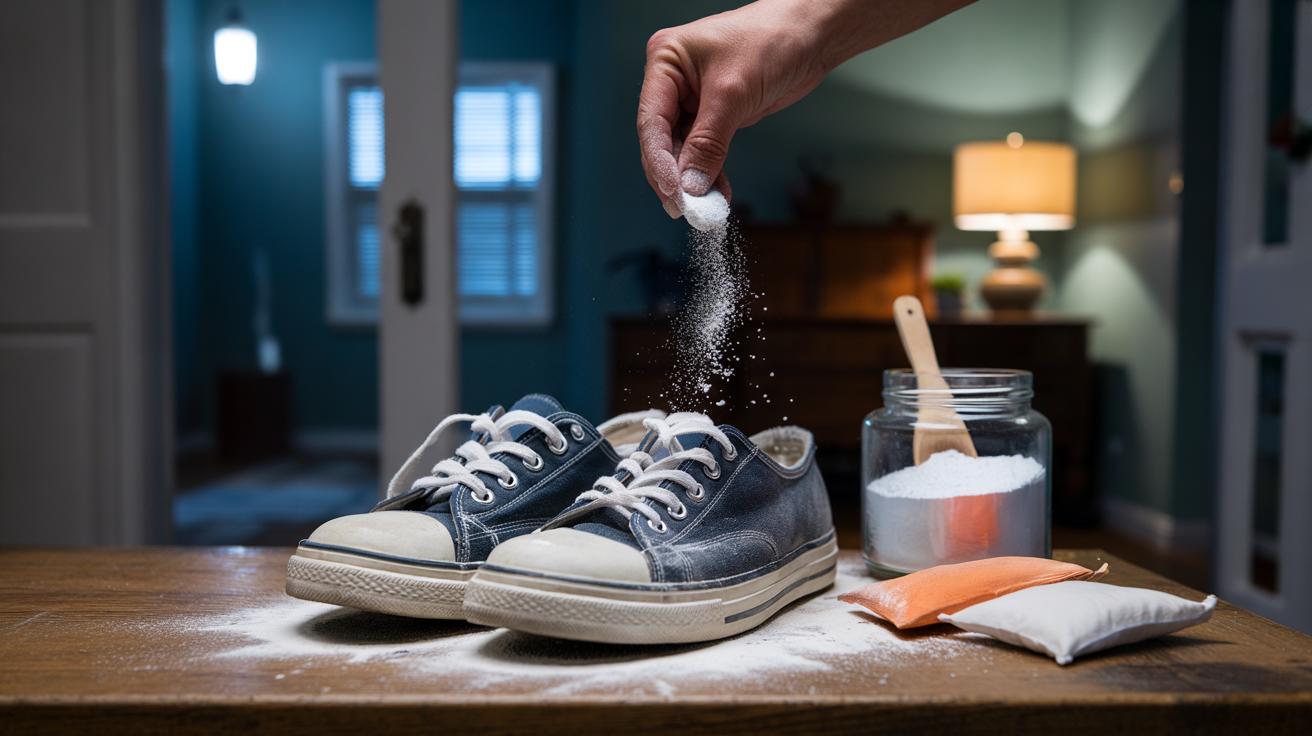
Start with clean, dry shoes. Remove insoles if possible, pat them dry, and loosen laces to open airflow. Sprinkle 1–2 tablespoons of baking soda evenly inside each shoe and on the insole, or spoon it into breathable sachets (coffee filters or cotton socks tied off). Leave the powder in place for at least eight hours, ideally 10–12. The goal is to give the powder time to pull moisture and neutralise acids, not just perfume the inside.
Tap or vacuum out residue in the morning. For delicate materials, use sachets to avoid gritty residue. Repeat nightly for two to three days if the smell is entrenched. Add a drop of tea tree or eucalyptus oil to the sachet if you like, but the odour control comes from bicarbonate, not fragrance. Spot‑test on dark suede or dyed leather to check for lightening. Keep a small jar of spare sachets in rotation so one pair can be working while another is in use.
Beyond Bicarb: Complementary Tools and When to Replace Shoes
For heavy sweaters or marathon trainers, combine baking soda with other moisture managers. Rotate pairs to allow full drying. Choose socks with wool or moisture‑wicking fibres and wash insoles weekly. Consider activated charcoal or silica gel sachets for deep drying; cedar shoe trees help leather hold shape while absorbing some humidity. If odour returns within hours of wear, you may be dealing with fungal overgrowth; address athlete’s foot and nail issues before blaming the shoe.
Some materials age poorly under constant damp. EVA foams compress, glues loosen, and linings harbour residues that powders can’t fully tame. When the midsole is tired or the lining is crumbling, it’s time to retire the pair. Use the guide below to match absorbents to your needs.
| Material | What It Does | Best For | Notes |
|---|---|---|---|
| Baking soda | Buffers acids, absorbs light moisture | Daily deodorising | Overnight, cheap, effective |
| Activated charcoal | High surface area adsorption | Deep stink, gym bags | Use sachets to avoid dust |
| Silica gel | Rapid moisture removal | After rain or washing | Regenerate by drying |
| Zeolite | Odour trapping via micropores | Persistent smells | Reusable, low mess |
| Cedar wood | Moisture control, light scent | Leather dress shoes | Helps maintain shape |
Baking soda succeeds because it changes the conditions that create odour: it dries the landscape and balances pH, rather than covering up the smell. Keep a small tub near your shoes, refresh sachets weekly, and pair the routine with sock rotation and airing time. A simple overnight treatment can reset even the sweatiest pair, saving a favourite set of trainers from the bin and your morning commute from embarrassment. How will you tailor this toolbox—powder, drying time, and smart rotation—to keep your shoes fresh without fuss?
Did you like it?4.5/5 (30)