In a nutshell
- 🗞️ Newspaper layers act as a breathable, absorbent matrix; cellulose fibres trap moisture and volatile compounds for reliable odour control.
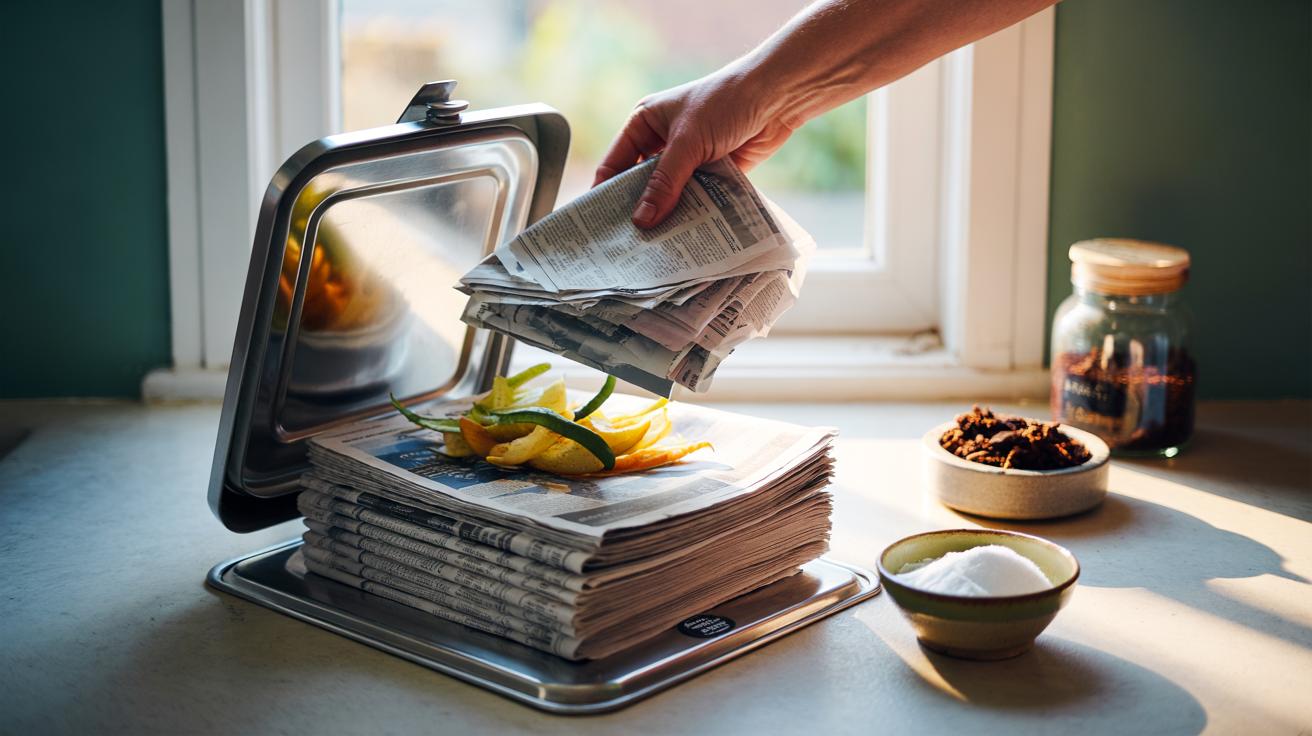
- 🧱 Build a three-part system: a thick bottom pad (8–10 sheets), overlapping side lining, and a crumpled top cap to suppress smells while preserving airflow.
- 🧪 Boost performance with light, dry add-ins: bicarbonate of soda, sparse coffee grounds, dried eggshells, or a small pouch of biochar; avoid glossy pages and wet pockets.
- 🧼 Prioritise hygiene and safety: refresh saturated layers, change the top cap frequently, wash bins with hot soapy water, and bag raw meat juices separately.
- 🌍 Improve sustainability and costs by reducing single-use plastic liners; where permitted, compost lightly soiled newsprint for a cleaner, lower-waste routine.
Bin odours are the stealthy saboteurs of an otherwise tidy kitchen. A simple, old-school trick—lining your bin with newspaper—is enjoying a revival because it works and costs nothing. The secret is in the layers. Folded pages create a breathable, absorbent matrix that soaks up drips and traps volatile molecules before they reach your nose. When layered correctly, paper turns a smelly bin into a fresher, cleaner corner of the home. For UK households keen to cut plastic use and save money, this modest hack delivers surprising results, keeping everyday waste more manageable between collections.
How Newspaper Layers Trap Odours
Newspaper excels at odour control thanks to its cellulose fibres. These fibres are riddled with microscopic pores that increase the paper’s surface area, allowing it to adsorb moisture and the small volatile compounds responsible for stink. Multiple sheets add depth, slowing air movement and creating a soft seal over wet scraps. The result is a physical and chemical net that keeps smells from escaping, much like a budget-friendly version of activated charcoal—without the mess or added cost.
Layers also manage liquid. Capillary action wicks drips away from the bin base, reducing bacterial bloom, which is often the real source of the problem. When you compress sheets—say, by pressing a stack into the base—you create a cushioned barrier that protects liners from punctures caused by tins or sharp offcuts. Add a final crumpled layer on top of food waste and you’ve built a light, breathable lid that quietly suppresses odours until collection day.
Building a Multi-Layer Bin Liner
Start by forming a base pad: eight to ten sheets folded to fit snugly. This thick layer acts as a spill sponge, capturing leaks before they pool. Next, line the sides with overlapping pages, rising about halfway up the bin. Tuck the paper behind the liner if you use one, or let it grip the rim in a liner-free setup. The goal is full coverage without blocking airflow, so avoid rolling the paper too tightly; gentle folds keep pathways open for moisture to dissipate.
As you add waste, sprinkle in a few crumpled pages every other layer, especially above wet items. These airy pockets break up compaction and provide fresh absorbent surfaces. If a spill happens, swap the top paper layer rather than the entire setup. For small kitchens or warm days, refresh the top “cap” daily—it takes seconds and keeps the rest working longer.
| Layer | Purpose | Tips |
|---|---|---|
| Bottom pad | Absorb leaks and cushion sharp edges | 8–10 sheets folded flat |
| Side lining | Protect liner and trap lateral odours | Overlap pages halfway up the bin |
| Top cap | Suppress smells from fresh scraps | Crumple 2–3 sheets for airflow |
Choosing the Right Paper and Add-Ins
Plain newsprint performs best. It’s porous, thin enough to layer, and widely available for free. Avoid glossy magazines and heavily coated inserts; they repel moisture and tear poorly. Most UK newsprint uses modern, low-tox inks, but if you’re composting later, keep coloured pages to a minimum. Dryness is your ally—damp paper loses structure and can breed odours. Store a small stack in a cupboard and rotate in sheets as needed so you’re never caught short on a bin day.
Optional add-ins can supercharge the system. A teaspoon of bicarbonate of soda scattered across the base pad neutralises acids. Dried coffee grounds add mild deodorising power, but use sparingly—they clump when wet. Crushed, oven-dried eggshells help absorb moisture while deterring pests. If space allows, slip a perforated envelope of biochar between layers; it can be re-dried and reused. The rule of thumb is light, dry, and evenly distributed—avoid creating wet pockets that suffocate the paper’s absorbency.
Hygiene, Safety, and Sustainability Considerations
Hygiene matters as much as odour. Replace the bottom pad weekly for general waste, or sooner if it becomes saturated. For food caddies, change the top cap daily and wash the container regularly with hot, soapy water. Never rely on paper to contain raw meat juices or medicinal residues; bag those separately to prevent cross-contamination. If a puncture occurs, bin everything and reset the layers—better a quick refresh than lingering bacteria. Keep the lid closed to deter fruit flies and maintain a cooler, drier microclimate.
From a sustainability standpoint, layered newsprint reduces reliance on single-use plastic liners and gives paper a useful second life. Where permitted by your council, lightly soiled newsprint can enter food-waste collections or home compost (avoid glossy or heavily printed sheets). Factor in weight: saturated paper is heavier and may strain thin liners, so pair layers with sturdy bags if needed. Consider your routine too; consistency beats complexity, and a simple paper system often outperforms scented sprays or gimmicky gadgets.
Newspaper layering is a practical fix hiding in plain sight—cheap, effective, and easy to adopt. By combining a wicking base, protective sides, and a breathable top cap, you create a quiet barrier that mutes smells without chemicals or fuss. The method scales from studio flats to busy family kitchens and dovetails neatly with recycling habits across the UK. The smartest solutions are often the simplest. What tweaks—different papers, natural add-ins, or refresh schedules—will you test this week to make your bin fresher and your routine smoother?
Did you like it?4.5/5 (29)