In a nutshell
- ✨ A simple paste of baking soda and water lifts burnt-on residue by combining mild alkalinity with gentle abrasion, safe for enamel and glass.
- 🧪 The science: low Mohs hardness (~2.5) crystals and smart tribology create self-limiting scrubbing that loosens carbonised films without scratching.
- 🛠️ Method: mix 3:1 baking soda to water, let sit 20–60 minutes, scrub lightly with a soft pad, and finish with a post-dwell vinegar spritz for lift.
- 🚫 Mistakes to avoid: don’t add vinegar early, don’t over-scrub, avoid bleach/ammonia mixes and steel wool; re-wet if the paste dries to chalk.
- ✅ Benefits: economical, low-odour cleaning that protects finishes by prioritising dwell time, light pressure, and particle control for a clear, streak-free oven.
In British kitchens, the quiet hero of oven revival is a simple paste of baking soda and water. It cuts through brown smears and stubborn, blackened crusts without the harsh fumes of caustic sprays. The secret is a blend of mild chemistry and mechanical finesse: a soft alkaline lift paired with gentle abrasion that coaxes, rather than gouges, residue from enamel and glass. Think low-risk, high-control cleaning that respects your appliance’s finish. For home cooks and landlords alike, this method is reliable, cheap, and forgiving. Below, we unpack why it works, how to do it well, and the small refinements that turn a weekend chore into a near-effortless routine.
Why Baking Soda Works on Burnt-On Residue
Sodium bicarbonate sits at a mild alkalinity (roughly pH 8–9), enough to begin loosening acidic and fatty compounds baked onto oven walls. In contact with water, the paste keeps residue hydrated, softening the polymerised film that binds crumbs, oils, and sugars. That softening primes the surface for the next act: the powder’s crystalline particles create a controlled, micro-abrasive effect. Gentle abrasion, not brute force, dislodges carbonised layers without scarring enamel or glass. The grains are hard enough to buff, yet softer than the coatings they clean, so they wear the grime instead of the oven.
There’s chemistry beyond alkalinity. Bicarbonate ions help break ester links in aged grease, nudging a light saponification that turns stubborn films into movable residues. Add a tiny drop of washing-up liquid and you bring surfactants to the party, lowering surface tension so the paste slides under grime. When you follow with a dab of vinegar at the end, fizzing can lift loosened particles from crevices. Used in stages, these actions coordinate like a safe, slow-motion peel.
The Science of Gentle Abrasion
Cleaning is a tribology problem: how particles, pressure, and motion interact on a surface. Baking soda crystals have a modest Mohs hardness of about 2.5—below glass and enamel—so the grains fracture and round off as you rub, creating what technicians call “self-limiting” abrasion. The key is light, consistent pressure and a paste thick enough to keep particles suspended. That suspension spreads the contact load across many tiny points, scrubbing micro-highs in the residue rather than ploughing grooves into the oven’s finish. Pressure plus patience outperforms harsh caustics and metal scourers.
Burnt-on residue is a brittle composite of carbonised sugars, oxidised fats, and trapped mineral dust. Under circular motion, the paste exploits tiny microfractures, shearing flakes from the surface. Re-wetting the paste renews capillary action, carrying loosened debris into the slurry so it can be wiped away. Keep movements compact and controlled; speed is less important than contact time. After the first wipe, a second light pass removes the film that often re-deposits as a dull smear—a sign you’re minutes from a clear shine.
How to Mix and Apply a High-Performing Paste
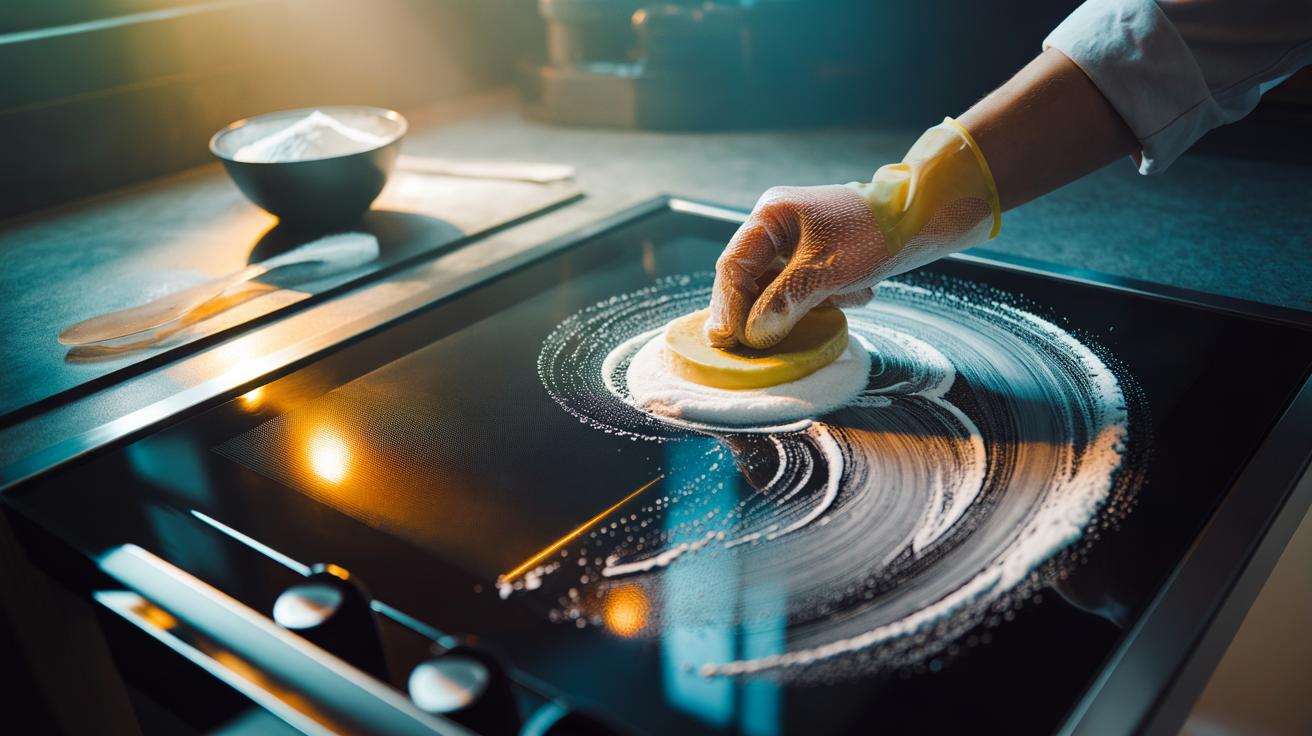
Mix three parts baking soda to one part water for a spreadable, toothpaste-thick paste. Add a pea-sized drop of washing-up liquid per tablespoon for extra wetting if grease is heavy. Spread with a silicone spatula or gloved fingers, aiming for 1–2 mm thickness. Let it sit for 20–60 minutes—longer for caramelised spills—then work in small circles with a soft, non-scratch pad. Wipe with a damp microfibre, refresh with clean water, and finish with a dry polish. Do not heat the oven while the paste is on; warmth helps, but heat accelerates drying and reduces effectiveness.
| Parameter | Recommendation |
|---|---|
| Paste ratio | 3:1 baking soda to water (by volume) |
| Dwell time | 20–60 minutes, keep slightly damp if drying |
| Tools | Soft sponge, silicone spatula, microfibre cloth |
| Optional boosters | Drop of washing-up liquid; post-dwell vinegar spritz |
| Surfaces | Safe on enamel, glass; avoid metal scourers |
For the oven door’s glass, let the paste rest a touch longer, then polish lightly to avoid rainbowing. Rinse cloths frequently—dirty slurry scratches. If racks are stainless, the paste is fine; for aluminium racks, skip vinegar and rinse promptly. The method scales: thin the paste slightly for large interiors, thicken it for vertical sides so it clings where it counts.
Common Mistakes and Smart Fixes
Two errors waste effort: adding vinegar too early and scrubbing too hard. Acid neutralises the paste’s alkalinity on contact, so save that satisfying fizz for the end to lift remaining film. Heavy pressure compacts particles into the coating; lighten up and let dwell time do the heavy lifting. When the paste dries to chalk, you’re polishing powder, not cleaning—re-wet it and resume. Another pitfall is over-watering the mix, which turns grit into gravy. Keep it dense enough to suspend crystals without dripping.
Don’t mix the paste with bleach or ammonia-based products; you don’t need them, and cross-chemistry is risky. Avoid steel wool on glass or enamel, which leaves scratches that harbour future grime. If residue persists, repeat with a fresh coat rather than escalating abrasives. For self-cleaning (pyrolytic) ovens, consult the manual and keep the paste off door seals. A final wipe with warm, clean water and a dry buff prevents streaks and leaves a neutral surface ready for the next roast.
The beauty of a baking-soda paste is its balance: a soft alkali that loosens, a fine grit that lifts, and a method that protects finishes we rely on. It’s economical, odour-light, and forgiving if you respect dwell time, pressure, and particle control. This is cleaning by design, not by force. The result is a clear door and a fresher-smelling oven without the sting of harsh chemicals or the risk of scratches. What tweaks—warmer water, a longer rest, a lighter touch—could make your next oven clean faster and gentler in your own kitchen?
Did you like it?4.4/5 (25)