In a nutshell
- 🫧 The steam-bowl trick works by filling the microwave with vapour that condenses on grime, delivering latent heat and moisture; this condensation softens dried splatters so they wipe away easily.
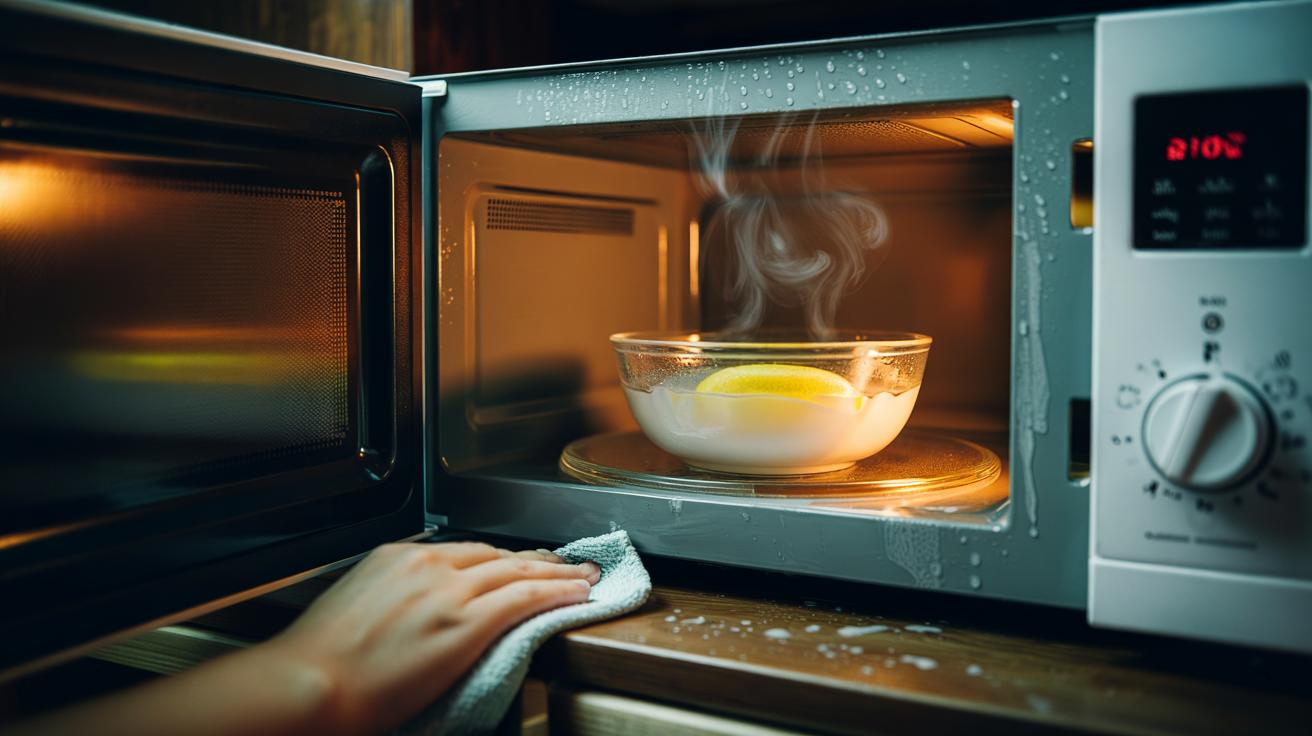
- 🔧 Method: add 250–400 ml water to a microwave-safe bowl, optionally lemon or vinegar, heat for 3–5 minutes, then allow a 2–3 minute steam soak before carefully wiping surfaces.
- ⚠️ Safety: place a non-metal stir stick to limit superheating, don’t seal containers, and never use metal or abrasive cleaners; this protects enamel, the door seal, and coatings.
- 🧪 Additives for odour control: use vinegar, lemon slices, or bicarbonate of soda; after cleaning, leave the door ajar to air-dry and keep smells at bay.
- 🕒 Efficiency: choose a wide, shallow bowl for faster steam, target corners, ceiling, and seals, and use a quick 90-second maintenance steam daily to prevent build-up.
Stubborn sauce freckles inside the microwave can feel baked on by the time dinner is done. Yet there’s a deceptively simple remedy: a bowl of hot water that floods the cavity with steam. As the vapour condenses on splatters, it loosens their grip so a cloth can lift them away without scrubbing. Leave the door closed for a short “steam soak” and the machine practically cleans itself. Whether you cooked curry, porridge or last night’s stew, the steam-bowl trick uses heat and humidity to soften residues quickly, sparing your elbows and the appliance’s interior from harsh abrasion.
How Vapour Softens Dried Food
When water is heated, it becomes vapour that circulates and collides with the cooler microwave walls and the dried food stuck to them. On contact, the vapour condenses into liquid microfilms, releasing latent heat directly onto the residue. That gentle, even warmth penetrates the crust, while moisture migrates into it and swells starches and proteins. Condensation is the secret: it delivers heat exactly where it’s needed without blasting the surface. With bonds slackened and sugars rehydrated, a wipe-down removes grime that previously resisted detergent and effort.
Many splatters are rich in sugar, salt, and fat. Salt and sugar attract moisture; fats soften when warmed. As the condensed water seeps into this sticky matrix, it lowers viscosity and breaks the dried “varnish” effect. Steam reaches crevices the turntable and vents don’t, so edges and ceiling patches loosen as readily as the middle. Because steam is gentle, it protects enamel coatings and door seals better than scouring pads. Think of it as a low-stress pre-soak that happens right where the mess lives.
Step-by-Step: The Steam-Bowl Method
Pour 250–400 ml of water into a microwave-safe glass or ceramic bowl. Add a splash of vinegar or a few lemon slices if odour is an issue. Heat on high until the water boils vigorously—typically 3–5 minutes in a 900–1,000 W oven. Do not open the door immediately; let the steam sit for 2–3 minutes so condensation can work. Open carefully, remove the bowl with oven gloves, and wipe the interior with a soft cloth or paper towel. For stubborn corners, reheat for another minute and repeat the “steam soak”.
| Option | Additive | Run Time (approx.) | Best For |
|---|---|---|---|
| Plain Water | None | 3–5 min @ 900–1,000 W | Routine loosening of splatters |
| Water + Vinegar | 1 tbsp per 300 ml | 3–5 min | Degreasing and neutralising odours |
| Water + Lemon | 2–3 slices or 1 tsp juice | 3–5 min | Fresh scent; light residues |
| Water + Bicarbonate | 1 tsp per 300 ml | 3–5 min | Persistent smells; gentle deodorising |
Always place a non-metallic stir stick (e.g., a wooden skewer) in the bowl to minimise superheating risk. If your microwave is 700–800 W, extend the run by 1–2 minutes. Wipe the door seal, ceiling, corners and behind the turntable ring—areas where condensation pools and grime lifts most readily. Finish by drying surfaces to prevent streaks and keep the cavity smelling clean.
Tips, Safety, and Odour Control
Use a wide, shallow bowl to create more steam quickly and increase the area of condensation. Keep the steam in by resisting the urge to peek—those two minutes of closed-door rest do the heavy lifting. Do not seal containers or cover bowls tightly; pressure must escape. If residues are thick, scrape gently with a plastic spatula after steaming, then repeat a shorter cycle. For daily maintenance, a 90-second steam followed by a quick wipe prevents build-up and reduces the need for deep cleans.
To tackle lingering smells from fish or curry, opt for vinegar or bicarbonate of soda in the bowl, then leave the door ajar to air-dry. Never use metal, abrasive pads, or harsh oven cleaners inside a microwave; they can damage coatings and affect performance. Replace the turntable and roller ring only when dry. If your appliance has a deodorise or steam-clean setting, this method complements it—steam first, then run the built-in cycle. The result is a clean interior with less effort and no harsh fumes.
Steaming is a small ritual with outsized payoff: it softens hardened splatters, lifts greasy films, and neutralises odours while treating the microwave gently. By harnessing condensation and latent heat, you transform a fiddly scrub into a swift wipe, protecting surfaces and saving time. A minute of patience with the door closed is the difference between smearing and a spotless finish. With a bowl, some water, and perhaps a dash of vinegar or lemon, you have a reliable reset button for busy kitchens. Will you make the steam-bowl trick part of your weekly routine—or even your nightly tidy-up?
Did you like it?4.8/5 (28)