In a nutshell
- 🧪 Why pillows yellow: a build-up of sweat, sebum, salts, and skincare oxidises on fibres; a bicarbonate of soda paste gently lifts stains via mild alkalinity and tiny CO₂ fizz that loosens residues and neutralises odours.
- 🥣 Mix and apply: combine 3 tbsp baking soda with 1–1½ tbsp warm water (yoghurt-thick); add ½ tsp mild detergent for grease, and only on white cotton add ½ tsp 3% hydrogen peroxide. Patch-test, spread 3–5 mm, leave 15–30 minutes, then wipe—repeat once if needed.
- 💧 Aftercare and drying: blot clear, launder removable covers at 40°C with an extra rinse, and dry inserts thoroughly. Deodorise by sprinkling baking soda, waiting 30 minutes, then vacuuming. Ensure the pillow is completely dry before use.
- 🛏️ Safety by material: avoid soaking memory foam, silk, and wool; use minimal moisture. Skip peroxide on dyed linens and bamboo viscose. White cotton tolerates more; always patch-test and keep moisture low to prevent mildew.
- 📋 Prevention and escalation: use a pillow protector, wash cases weekly, air monthly, and consider replacement about every two years. If yellowing is widespread or musty odour persists, launder per care label or replace the pillow.
Yellow pillow blotches are a quiet embarrassment of British bedrooms, born of warm nights, skincare residue, and time. The fix, happily, is humble. A simple baking soda paste—known here as bicarbonate of soda—uses a gentle fizz to loosen stubborn sweat marks without harsh bleach or ruinous soaking. The method is cheap, quick, and kind to most fabrics, yet remarkably effective. Always patch-test on an inconspicuous seam before tackling the main stain. With the right mix, contact time, and careful drying, your pillows can look fresher, smell cleaner, and last longer. Here’s the science, the step-by-step, and the safety you need to get it right first time.
Why Pillows Turn Yellow and How Fizz Fixes It
The yellow stains that creep across pillows are largely a cocktail of sweat, sebum, salts, and skincare, oxidised into visible discolouration. Sweat carries urea and minerals; sebum brings fatty acids. Over months, these compounds bind to cotton or polyester fibres and harden, especially in warm, humid rooms. Add hair products, night creams, and the odd spill, and you get deep-set chromophores that resist ordinary washing. Because the build-up is part chemical and part mechanical, you need a remedy that shifts pH, absorbs oils, and physically lifts soil. Enter bicarbonate of soda: mild, safe, and brilliantly multipurpose.
Bicarbonate of soda sits in a sweet spot—its mild alkalinity helps saponify light oils, while its fine particles act as a soft scrub. When moistened on a slightly acidic stain, it releases tiny bursts of CO₂ fizz that nudge residues from fibres. The paste also deodorises by neutralising volatile acids, softening stale odours that washing alone leaves behind. Crucially, the process is low risk for colours and fillings when applied locally and kept damp, not wet. Think of it as micro-bubbling plus oil-grab, without the drama of bleach.
Step-by-Step: Mixing and Applying the Baking Soda Paste
Make a spreadable paste: combine 3 tablespoons baking soda with 1 to 1½ tablespoons warm water. You’re aiming for yoghurt-thick. For very greasy spots, add ½ teaspoon mild, dye-free washing-up liquid. On white cotton only, you may fold in ½ teaspoon hydrogen peroxide 3%, but skip this for coloured fabrics or memory foam. Remove the pillowcase; lay the pillow on a clean towel. Lightly mist the stained area so it’s just damp—this seeds the fizz.
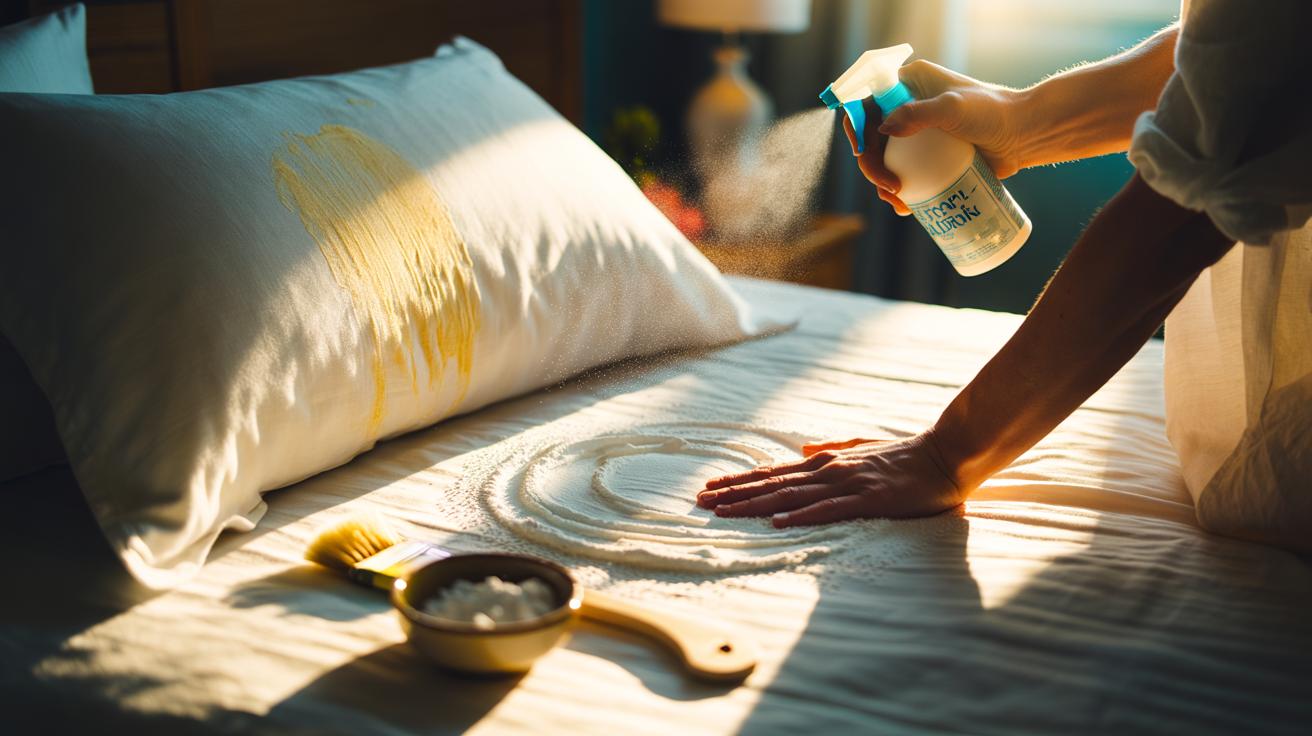
Glove up and smear a 3–5 mm layer over the stain. Massage gently with a soft brush or cloth, working from the outer edge in. Leave for 15–30 minutes; keep the paste moist with a fine mist if your room is warm. Do not saturate the pillow—excess water drives soils deeper and risks mildew. Wipe away the paste with a clean, damp white cloth, rinsing the cloth often. For stubborn patches, repeat once rather than scrubbing hard. Finish with a light vacuum on low to lift any dry residue.
What to Do After: Rinsing, Drying, and Odour Control
Once residue is cleared, tend the fabric properly. If your pillow has a removable cover, launder it at 40°C with a colour-safe detergent and an extra rinse. For inserts that can’t be machine washed, keep to damp-blotting only until the cloth wrings clear. A brief airing near a sunny window helps, as daylight nudges remaining chromophores towards paler tones. For down or feather pillows, tumble on low with two clean dryer balls to restore loft.
To banish lingering odour, sprinkle a light veil of bicarbonate of soda over the dry pillow, leave 30 minutes, then vacuum. It’s a fast, fragrance-free deodoriser that won’t clash with linens. If you prefer scent, add a drop of essential oil to the baking soda before sprinkling—never onto the pillow itself. Ensure the pillow is completely dry—inside and out—before putting the case back on and sleeping on it. Trapped moisture is the enemy of freshness and fibre integrity.
Safety, Materials, and When to Escalate
Material matters. Never drench foam, silk, or wool with liquid. For these, stick to minimal-moisture paste and swift blotting. White cotton tolerates the broadest treatment, including optional peroxide. Dyed linens and bamboo viscose prefer plain baking soda paste only. If stains persist after two gentle rounds, consider an enzyme pre-treatment aimed at proteins, then revert to the paste. Frequent heavy yellowing can signal hot bedrooms, rich night creams, or infrequent washing—tackle those causes alongside cleaning for lasting results.
When to escalate: a faint yellow cast embedded across the entire surface may need a full launder of the insert (if care label allows) with an extra rinse. If the pillow smells musty after thorough drying, mould may be present—replace it. Installing a pillow protector, washing cases weekly, and airing pillows monthly will curb future build-up. As a rule, replace everyday pillows every two years, or sooner if cleaning no longer restores loft and clarity.
| Pillow Type | Use Baking Soda Paste? | Contact Time | Notes |
|---|---|---|---|
| White cotton cover + polyester fill | Yes | 15–30 min | Optional 3% peroxide on stains; rinse well |
| Coloured cotton/linen | Yes (no peroxide) | 10–20 min | Patch-test colourfastness first |
| Down/feather | Yes, minimal moisture | 10–15 min | Dry thoroughly with dryer balls |
| Memory foam/latex | Yes, very sparingly | 5–10 min | No soaking; blot only; air-dry flat |
| Bamboo viscose blends | Yes (gentle) | 10–15 min | Avoid harsh scrubbing to prevent pilling |
A tub of bicarbonate of soda can reverse months of yellowing with a calm, controlled fizz that respects fibres and budgets alike. Keep the paste thick, moisture minimal, and drying thorough, and most pillow stains will yield without drama. If you pair the method with a protector and cooler sleep conditions, the fresh look lasts. The beauty is in its simplicity: chemistry doing quiet work in the background while you get on with your day. Ready to try the gentle paste on your own pillows—or will you test it first on a tired cushion and report back what lifts fastest in your home?
Did you like it?4.3/5 (26)