In a nutshell
- 🧪 Explains how baking soda (bicarbonate of soda) freshens bags via mild alkalinity that neutralises acids and crystal surfaces that adsorb volatile odorants, plus a gentle micro-abrasive lift.
- 🧼 Provides a precise rinse: 1 tbsp per 500 ml lukewarm water, 15–20 minute soak or wipe for rigid plastics, thorough rinse, then air-dry completely before storage.
- 👜 Distinguishes materials (cotton, blends, polypropylene, silicone) with tailored contact times and handling tips, including paste spot-treats for seams and avoiding very hot water on coated fabrics.
- ♻️ Emphasises safety and sustainability: food-safe, avoid mixing with strong acids, clean spills first, use sunlight for mild antimicrobial help, and adopt a regular deodorising routine to extend bag life.
- 🔁 Suggests back-ups for stubborn smells: store activated charcoal or silica gel inside, or follow with an oxygen-based stain remover for silicone and curry/garlic notes.
Reusable shopping totes, lunch sacks and produce bags often acquire a stubborn odour after repeated trips carrying groceries, gym kit or leftovers. Airing them helps, yet faint notes of onion, coffee or seafood seem to linger. A simple remedy lives in most kitchen cupboards: baking soda, also known as bicarbonate of soda. When whisked into a rinse, its fine, alkaline particles latch onto smell-causing molecules and make them easier to wash away. This piece explains the science behind that freshening effect, offers a precise method that works for both fabric and plastic bags, and sets out safety and sustainability tips for keeping your kit clean without harsh chemicals.
Why Reusable Bags Smell: The Science of Lingering Odours
Odours persist because volatile compounds hitch a ride on bag fibres and polymer surfaces. Garlic’s sulphur notes, coffee’s phenols and fishy amines wedge into microscopic irregularities, then re-evaporate slowly. Oils from snacks or takeaway containers act as carriers, spreading those molecules thinly while protecting them from water alone. Porous textiles such as cotton and jute absorb these substances deeply, while polyethylene and polypropylene can retain a film that traps them at the surface. Left untreated, these residues build up into a stubborn bouquet that simple airing cannot banish.
Moisture, warmth and limited airflow compound the problem, especially after a rainy shop or a sweaty gym run. Microbes can add their own metabolites to the mix, amplifying mustiness. The answer is not perfume but chemistry: shift the pH, break weak bonds and lift residues. That is where bicarbonate of soda shines, combining mild alkalinity with a gentle scrubbing action from its tiny crystals. The result is fresher bags without damage, bleaching or synthetic fragrance cover-ups.
How Baking Soda’s Alkaline Particles Neutralise and Adsorb Odours
Bicarbonate of soda works in two complementary ways. First, as a mild alkali (pH around 8.3 in solution), it reacts with acidic odorants such as short-chain fatty acids, converting them into less volatile salts that are easily rinsed away. Second, its microporous crystals provide a high surface area for adsorption, trapping neutral molecules like aldehydes and some sulphur compounds through weak intermolecular forces. This combination of neutralisation and adsorption tackles both the strength and the persistence of smells.
Water helps mobilise the chemistry. In a rinse, bicarbonate disperses across fibres and plastic surfaces, increasing contact with residues. A light mechanical swish or cloth wipe encourages particles to reach crevices where odorants hide. Because bicarbonate is amphoteric, it also buffers the rinse, preventing extremes of pH that can weaken natural fibres or cloud some plastics. The net effect is a targeted, gentle clean: odours are bound or neutralised and then carried off in the drain, with no heavy fragrances left behind.
There is a third, often overlooked action: the crystals provide a micro-abrasive lift. They are hard enough to dislodge films but soft enough to avoid scratching most bag interiors. That subtle scouring exposes and frees trapped molecules so the rinse can finish the job. You get noticeable freshness without the harshness of solvent cleaners or oxidising bleaches.
Step-by-Step Rinse Method for Fabric and Plastic Bags
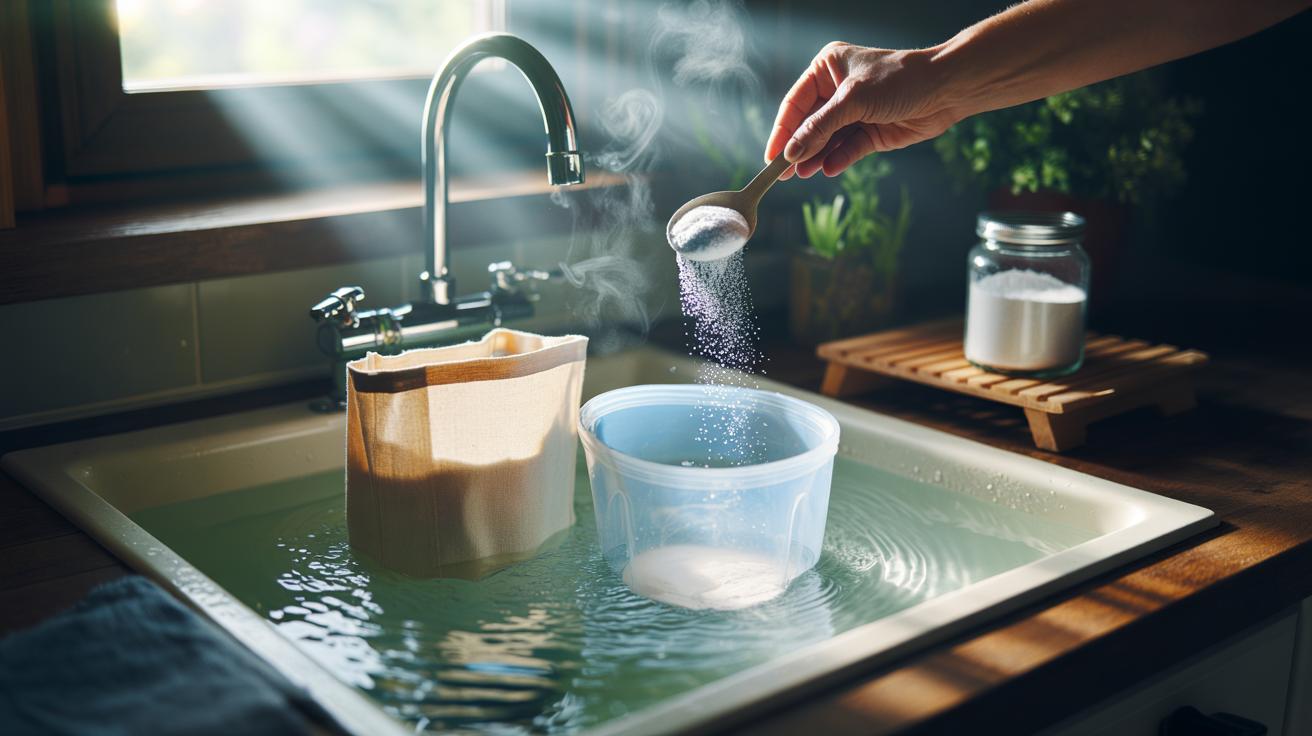
Prepare a basin with lukewarm water. Stir in 1 tablespoon of bicarbonate of soda per 500 ml until mostly dissolved. For heavy odours, double the dose. Turn bags inside out; remove inserts or boards. Submerge and agitate for two minutes, then let soak for 15–20 minutes. For structured plastics that should not be submerged, swish the solution and wipe interior surfaces with a soft cloth dipped in the mix. Rinse thoroughly with clean water. Air-dry completely, ideally outdoors or near a breezy window, before storing flat or hanging.
For oily residues, pre-wipe with a tiny drop of washing-up liquid, then proceed with the bicarbonate rinse. Stubborn hotspots respond to a light paste: mix soda with a splash of water, apply for five minutes, then rinse. Avoid very hot water on laminated fabrics and coated plastics, which can warp. If your bag is machine washable, a short cold cycle with a tablespoon of soda in the drum adds a helpful boost.
| Bag Material | Bicarbonate-to-Water Ratio | Contact Time | Notes |
|---|---|---|---|
| Cotton/Jute | 1 tbsp per 500 ml | 20 minutes soak | Air-dry in shade to prevent fading |
| Polyester/Canvas Blend | 1–2 tbsp per 500 ml | 15–20 minutes | Spot-treat seams with paste |
| Polypropylene (Woven/Recycled) | 1 tbsp per 500 ml | Wipe + 10 minutes rest | Avoid soaking rigid boards |
| Silicone/Re-sealable Plastics | 2 tbsp per 500 ml | 30 minutes | Rinse thoroughly to remove film |
Safety, Sustainability, and When to Try Alternatives
Bicarbonate is non-toxic and widely regarded as food-safe, but sensible handling still matters. Do not seal soaking bags in an airtight container, and avoid mixing bicarbonate with acidic descalers at the same time. If sanitisation is needed after raw meat leaks, wash with standard detergent first, then apply the soda rinse and dry thoroughly. Sunlight provides a mild antimicrobial boost and helps disperse residual volatiles. When dealing with mould, prioritise removal with appropriate cleaners before the deodorising step.
From a sustainability perspective, a reusable deodorising routine prolongs a bag’s life and reduces waste. If odours persist after two cycles, rotate in complementary adsorbents. Activated charcoal sachets or silica gel can be stored inside between shops to keep things fresh. For silicone food bags that trap strong curry or garlic notes, a brief soak with oxygen-based stain remover followed by a soda rinse often succeeds. If greasy films keep returning, reassess use habits: dedicate one bag to raw foods, wipe spills immediately, and dry after every outing. Consistency beats intensity for keeping odours at bay.
A bicarbonate rinse is the quiet workhorse of household care: simple, frugal and rooted in sound chemistry. Its alkaline particles neutralise acids, its porous crystals adsorb volatiles, and its soft abrasion lifts residues without scuffing. After a short soak and a patient dry, most bags smell like nothing at all—which is the point. With small habit changes and an occasional top-up from charcoal or sunlight, you can keep reusables pleasant for years. What tweaks would make this routine fit seamlessly into your weekly shop—timed so your bags are always dry, fresh and ready for the next trip?
Did you like it?4.5/5 (24)