In a nutshell
- 🍋🧂 Lemon-and-salt lifts odours: salt delivers natural abrasion while lemon’s citric acid dissolves residues and neutralises sulphur compounds.
- 🧭 Method that works: coat with coarse salt, scrub using a halved lemon, let the slurry rest, quick rinse, air-dry upright, then seal with food‑grade mineral oil.
- 🧪 Why it’s effective: salt crystals dislodge debris without gouging; acid breaks odour-bearing bonds; suits maple, bamboo, and end‑grain when moisture control is strict.
- 🔒 Care and safety: never soak wooden boards, dry on edge, avoid vegetable oils, sanitise after raw proteins, and rotate boards to segregate strong flavours.
- 🔍 Maintenance calls: watch for deep trenches or loose joints; consider resurfacing or retiring damaged boards while keeping lemon–salt as a weekly refresh ritual.
Every cook knows the frustration: a wooden chopping board that still smells of garlic or onions long after washing. The remedy sits in your pantry. A simple mix of lemon and coarse salt does more than refresh; it gently resurfaces the wood and lifts trapped odours without harsh chemicals. The method is quick, satisfying, and kind to the grain. As you rub, citric acid dissolves residue while salt provides natural abrasion. This is a low-tech, food-safe fix that preserves both the flavour of tonight’s meal and the life of your board. With a few minutes of work, you restore cleanliness, texture, and confidence.
Why Lemon and Salt Beat Persistent Kitchen Smells
Wood is beautifully porous, which makes it ideal for knives and presentation but vulnerable to lingering aromas. Oil-based compounds from garlic, fish, turmeric, and cured meats insinuate themselves into the surface fibres and resist simple rinsing. The lemon–salt approach works because each component targets a different problem. Coarse salt acts like micro‑sandpaper, loosening embedded particles; lemon juice, rich in citric acid and aromatic oils, breaks down fat-soluble residues and refreshes the scent profile of the board. Together, they create a gentle mechanical and chemical clean in one pass.
Unlike bleach or aggressive detergents, this method keeps the board’s protective finish intact. The salt crystals scour without gouging, and the mild acidity helps neutralise volatile sulphur compounds responsible for pungent odours. The rinse leaves no synthetic aftertaste, so bread won’t pick up soapiness, and fruit won’t carry ghostly garlic notes. In short, it’s a routine you can repeat weekly without fear of stripping or warping the wood, especially when followed by proper drying and oiling.
Step-by-Step: The Abrasive Clean That Resets Your Board
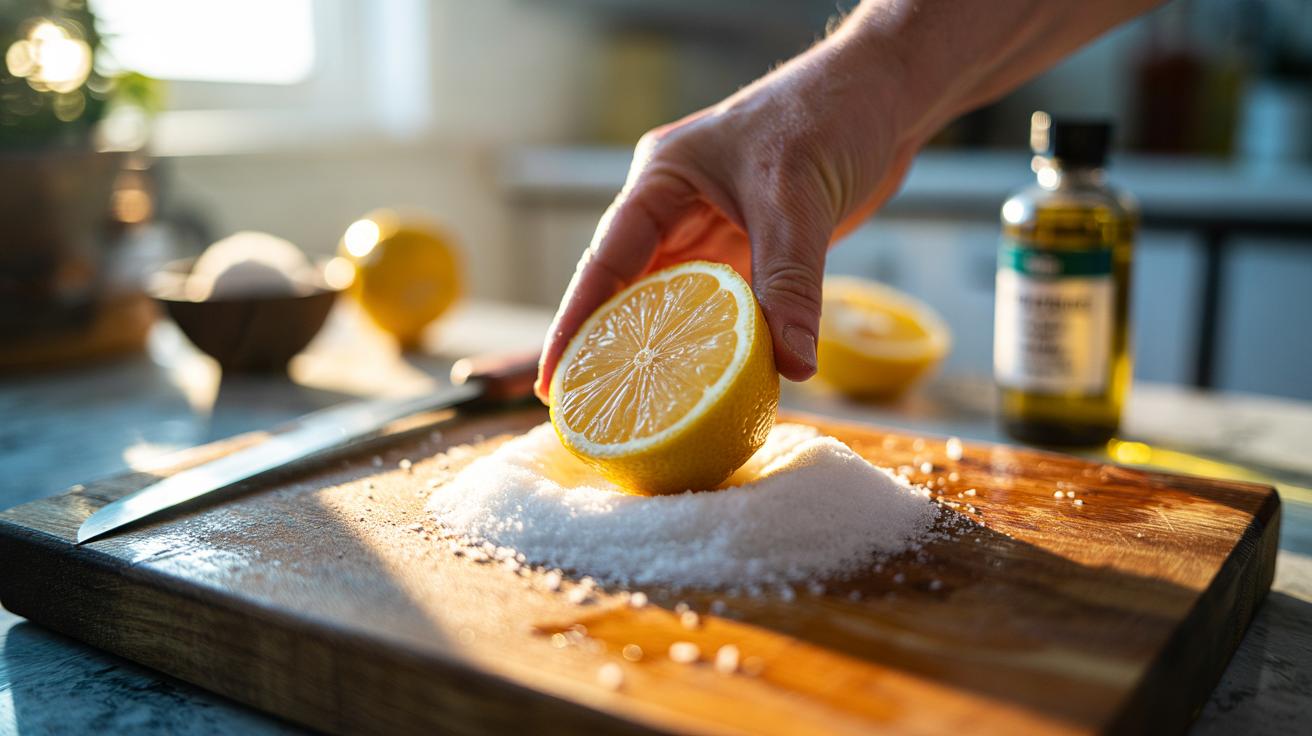
Sprinkle a generous layer of coarse sea salt or kosher salt over the dry board. Halve a fresh lemon and use the cut side as your scrubbing pad, pressing just enough to release juice as you move in small circles. Focus on knife-scarred zones where odours lodge. Let the slurry sit for a minute to soften stubborn films, then scrub again. Never soak a wooden board; prolonged water exposure warps fibres and splits glue lines. Rinse quickly with warm water, wipe, and stand the board upright to air-dry thoroughly on both faces.
When dry, condition the surface with a small amount of food-grade mineral oil to close the pores and slow future odour uptake. If you need added deodorising power, a pinch of bicarbonate of soda can be blended into the salt stage, but keep vinegar away from delicate finishes. Reserve hydrogen peroxide for occasional sanitising after raw meat, and avoid fragranced soaps. Finish by buffing with a clean cloth until the board feels satin-smooth and non-greasy to the touch.
| Step | Tool/Ingredient | Purpose | Time |
|---|---|---|---|
| Scour | Coarse salt | Natural abrasion lifts residue from pores | 1–2 min |
| Activate | Halved lemon | Citric acid loosens oils and neutralises odours | 1–2 min |
| Rest | Lemon–salt slurry | Softens stubborn films | 1 min |
| Rinse & Dry | Warm water, airflow | Remove residue; prevent warping | 10–30 min |
| Condition | Mineral oil | Seal fibres; reduce future odour uptake | 5 min |
The Science of Natural Abrasion on Porous Wood
Under a magnifier, even a smooth board resembles a landscape of valleys and ridges. Knife nicks create micro-canyons that trap juices, fats, and aromatic molecules. Natural abrasion works because salt’s angular crystals are large enough to dislodge debris yet soft enough not to carve new grooves. As the lemon juice wets the salt, edges round slightly, producing a controlled polishing effect while the acid breaks ester and sulphur bonds that carry strong odours. The combination restores a clean, neutral surface without thinning the board.
Wood species matter. Hard maple resists deep cuts, while bamboo, though tough, has tight pores that can lock in smells near glue lines. End-grain blocks absorb less impact but demand diligent drying. The lemon–salt technique adapts across these varieties, provided moisture control is strict. Pair it with regular conditioning: mineral oil for sealing and optional beeswax blends for a moisture‑shedding finish. This maintains capillary balance and reduces the capricious wicking that drags odours deeper into the board.
Care, Safety, and When to Upgrade Your Board
Adopt a simple cadence: quick rinse and wipe after use; lemon–salt refresh weekly or after intensely fragrant tasks; sanitise judiciously when handling raw proteins. Use only food-safe mineral oil, never vegetable oil, to avoid rancidity. Drying is non‑negotiable: stand the board on edge to let air circulate both sides and prevent cupping. Store away from direct heat. If your board retains a damp patch smell, give it a longer rest after cleaning and ensure household cloths are fresh; stale tea towels can re-seed odours.
Inspect for deep trenches or loose glue joints. When salt and lemon no longer glide evenly across the surface, a professional resurfacing or fine sanding may be due. Retire badly split boards from food prep and repurpose them for styling or serving packaged items. For day-to-day cooking, rotate tasks: dedicate one board to alliums and fish and another to fruit and bread. This sensible segregation, alongside the lemon–salt routine, keeps flavours honest and meals aromatic for the right reasons.
Refreshing a wooden board with lemon and salt is more than a cleaning hack; it’s a tactile ritual that renews a trusted tool. You harness chemistry and texture to erase yesterday’s garlic, honour the grain, and protect tomorrow’s ingredients. The method is frugal, fast, and delightfully fragrant, yet it rests on sound principles of porosity, acidity, and abrasion. With a few mindful minutes and steady care, your board stays safe, neutral, and ready for its next task. Which part of your kitchen kit would benefit most from a similar natural, low‑tech revival—and how will you start?
Did you like it?4.3/5 (23)