In a nutshell
- 🧦 A baking soda sachet neutralises odour and moisture while scent-based repellents (lavender, cedar) nudge moths away—no harsh chemicals, more prevention than poison.
- 🐛 Clothes moths target keratin-rich fibres (wool, silk, cashmere) in dark, humid drawers; clean, dry textiles form the first line of defence.
- 🧪 Step-by-step: mix 2–3 tbsp baking soda with 8–15 drops essential oil; fill a breathable pouch; place 1 per drawer (2 for deep ones); replace regularly every 4–6 weeks; avoid oil on fabrics.
- 🛡️ It’s a preventive, not a cure; manage sensitivities, keep away from children and pets, or use unscented soda if needed—safety first.
- 🧰 Use integrated pest management: launder or freeze/heat-treat garments, vacuum drawers, deploy pheromone traps, and store knits in airtight bags.
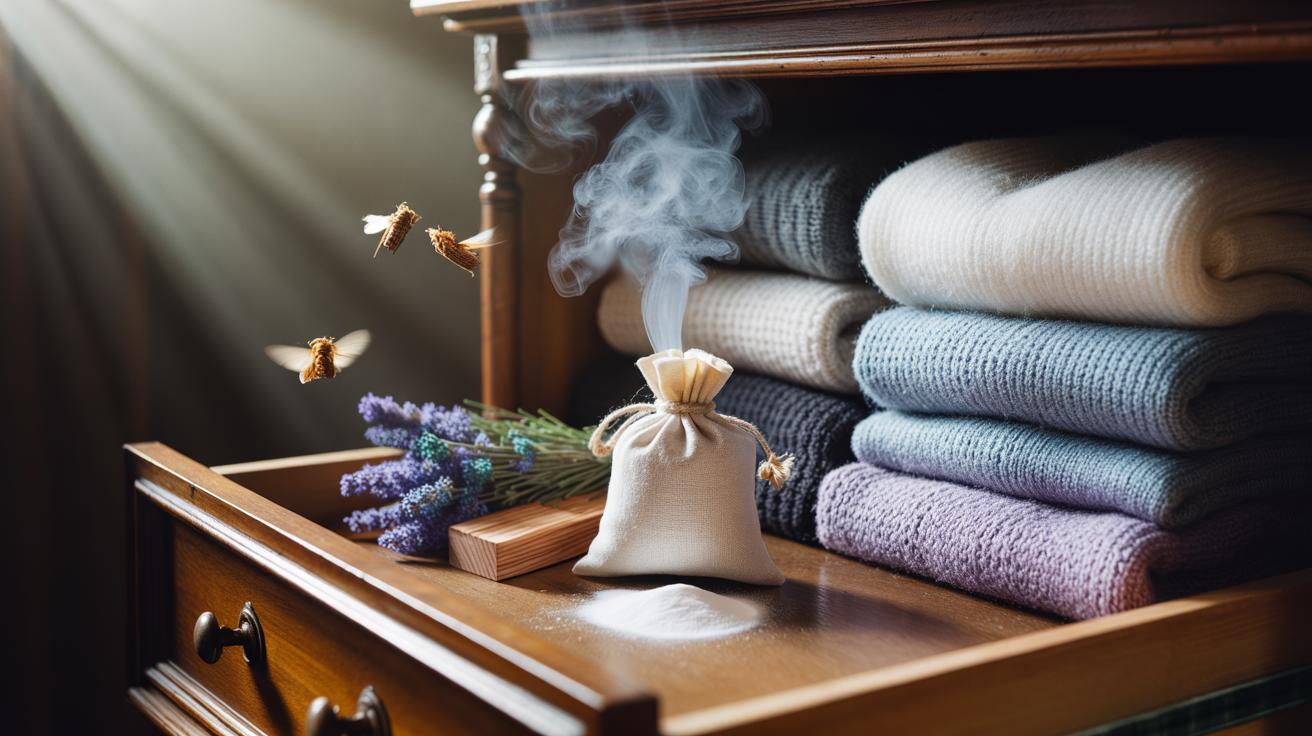
There’s a quiet home hack doing the rounds: slip a small sachet of baking soda into each drawer and moths stop treating your knitwear like a buffet. Unlike old-fashioned mothballs, this approach relies on scent and atmosphere, not harsh pesticides. The trick is simple: the bicarbonate base helps tame the damp, musty conditions that clothes moths adore, while a dash of plant aroma adds a targeted nudge for the insects to move on. This is a low-cost, low-fuss tactic that favours prevention over panic. Below, we unpack why it works, how to make it safely, and what to expect if your wardrobe is already under siege.
Why Clothes Moths Invade Drawers
Two species dominate UK homes: the common clothes moth (Tineola bisselliella) and the case-bearing moth (Tinea pellionella). They’re not interested in your cotton tees; larvae crave keratin found in wool, silk, cashmere, and feathers. Drawers offer ideal conditions: dark, undisturbed corners, lingering odours from skin oils, and a touch of humidity. Adults are weak fliers, so once inside a chest of drawers, they settle quickly and lay eggs along seams and hems.
Odours are crucial. On garments worn even briefly, sweat residues provide minerals that supercharge larval growth. Moisture amplifies the problem, softening fibres and helping eggs adhere. That is why expensive knits, stored after a single wear, often show the first pinholes. Clean, dry textiles are your first defence. The second is shaping the microclimate so moths feel unwelcome: less must, less moisture, and a background scent they instinctively avoid. That is precisely where a baking soda sachet earns its keep.
How a Baking Soda Sachet Works
Baking soda (sodium bicarbonate) is a mildly alkaline, crystalline powder. In a drawer, it helps keep the air drier and neutralises rancid, sweaty odours that signal a good nursery to moths. Pair it with a few drops of essential oil such as lavender, cedarwood, clove, or bay, and you add volatile compounds (for example, linalool and cedrol) that many insects avoid. The sachet’s core function is to repel and disrupt, not toxically poison. While desiccation can trouble delicate eggs or young larvae on direct contact, you shouldn’t expect consistent lethality. Think of it as quietly changing the odds in your favour.
It’s also kinder to homes than naphthalene or paradichlorobenzene mothballs. The scent is lighter, the ingredients are familiar, and maintenance is simple. If you already have a heavy infestation, treat sachets as a support, not a cure. Combine them with cleaning, traps, and rigorous storage to break the breeding cycle.
| Component | Role | Typical Amount | Notes |
|---|---|---|---|
| Baking soda | Absorbs moisture and neutralises odours | 2–3 tbsp per sachet | Keep dry; replace regularly |
| Lavender/Cedar oil | Scent-based repellent | 8–15 drops | Patch-test for sensitivities; avoid direct fabric contact |
| Breathable pouch | Allows airflow | 1 per drawer | Use cotton muslin, coffee filters, or unbleached tea bags |
Step-by-Step: Make and Use the Sachets
Add 2–3 tablespoons of baking soda to a small bowl. Drip in 8–15 drops of essential oil—lavender for a classic wardrobe note, cedarwood for a more resinous edge. Stir thoroughly so the fragrance spreads through the powder without clumping. Spoon the mixture into a breathable pouch such as muslin, a coffee filter, or an empty tea bag; tie shut with string. Avoid plastic, which traps moisture and scent instead of releasing it.
Place one sachet per drawer, tucking it towards the back or corners. For deeper drawers or heavy knits, use two. Replace every 4–6 weeks, sooner if the scent fades or clumping appears. To recharge, empty and refill rather than topping up—this keeps the deodorising effect strong. Do not place oily drops straight onto garments; plant oils can stain. If your fabric is very delicate or darkly dyed, keep the pouch in a tiny dish to prevent dusting. Vacuum drawers before restocking to remove hidden eggs.
Safety, Evidence, and When to Use Alternatives
Research on moth behaviour supports the role of volatiles (plant-derived scents) in deterring oviposition, and cedar and lavender are traditional favourites for good reason. Still, the effect is variable with airflow, temperature, and infestation pressure. A sachet is a preventive, not a silver bullet. If you see live adults or fresh holes, escalate. Wash or dry-clean vulnerable items, freeze garments for 72 hours, or heat-treat at 60°C where care labels allow. Add pheromone traps to catch males and map the problem.
Mind safety: keep essential oils away from pets and children, and store sachets out of reach. People with asthma or fragrance sensitivities may prefer unscented soda alone, combined with sealed storage. For persistent outbreaks, consider professional treatment or targeted insect growth regulators. Above all, maintain routine: clean clothes before storage, use airtight bags for seasonal knits, and keep drawers dry. Consistency beats any one product, however clever.
Used thoughtfully, a baking soda sachet turns your drawers into a less inviting habitat for clothes moths, taming odours and adding a gentle, targeted scent signal that encourages insects to look elsewhere. It’s inexpensive, easy to refresh, and compatible with the broader housekeeping habits that truly protect woollens and silks. While it won’t replace deep cleaning or traps during an outbreak, it is a smart baseline that quietly reduces risk season after season. What combination of cleaning, storage, and natural scent would best fit your wardrobe and space—and which drawer will you upgrade first?
Did you like it?4.4/5 (23)