In a nutshell
- 🧪 Why it works: Mildly alkaline bicarbonate of soda solution (buffered at around pH 8.3) deprotonates volatile acids into non‑volatile salts, reducing odour volatility rather than masking smells.
- 🧼 How to do it: Dissolve 60 g per litre of warm water, plug the sink so the solution reaches the overflow, soak for 30–60 minutes, lightly scrub, then flush with hot water; keep acidic steps separate to avoid neutralisation.
- 🧯 Safe and gentle: Suitable for stainless steel, ceramic, enamel, most composites and rubber gaskets; avoid boiling water on PVC, wear gloves if sensitive, and ventilate.
- ⚠️ Know the limits: Basic amine/fishy odours respond poorly to alkalinity—use a mild acidic rinse after thorough rinsing; persistent smells may signal a dry or faulty U-bend or biofilm needing mechanical clearing or enzymes.
- 🗓️ Make it routine: Do a monthly soak (or after oily/fishy cooking), empty strainers promptly, wipe residues, and run hot water for 20–30 seconds after greasy washing-up to prevent build-up.
Kitchen drains can harbour a cocktail of clinging food residues and microbial films that release persistent odours long after the dishes are done. Across Britain, the quiet hero is the humble bicarbonate of soda. Dissolved in warm water to create mildly alkaline water, it slips into crevices and the overflow channel, tackling sour and sulfurous notes where sprays and fragrances fail. The “sink soak” method works not by masking smells but by changing the chemistry that keeps them airborne. Here is how a simple, inexpensive solution restores freshness—and why the science behind it gives your nose a break without harsh chemicals.
Why Alkaline Water Disarms Stubborn Odours
Many kitchen smells arise from volatile fatty acids (think sour milk or rancid oil) and compounds formed by microbial activity. A warm solution of sodium bicarbonate establishes a buffered pH around 8.3. In that zone, acidic odour molecules are deprotonated into non-volatile salts, so far fewer reach your nose. By reducing volatility at the molecular level, alkaline water lowers the concentration of smell-carrying vapours above the sink. This is not perfume; it is chemistry nudging equilibrium away from the air.
There is a mechanical bonus. As the soak seeps into the trap and overflow, it loosens films that harbour odour precursors, especially when grease has locked particles onto surfaces. The bicarbonate’s ions help displace residues and make subsequent rinsing more effective. Bicarbonate of soda is a weak base, so it will not aggressively strip finishes or pipes, but it reliably tames sour, vinegary notes and many sulfur-laced smells common in kitchen drains.
The Step-by-Step Sink Soak: Ratios, Timing, and Safety
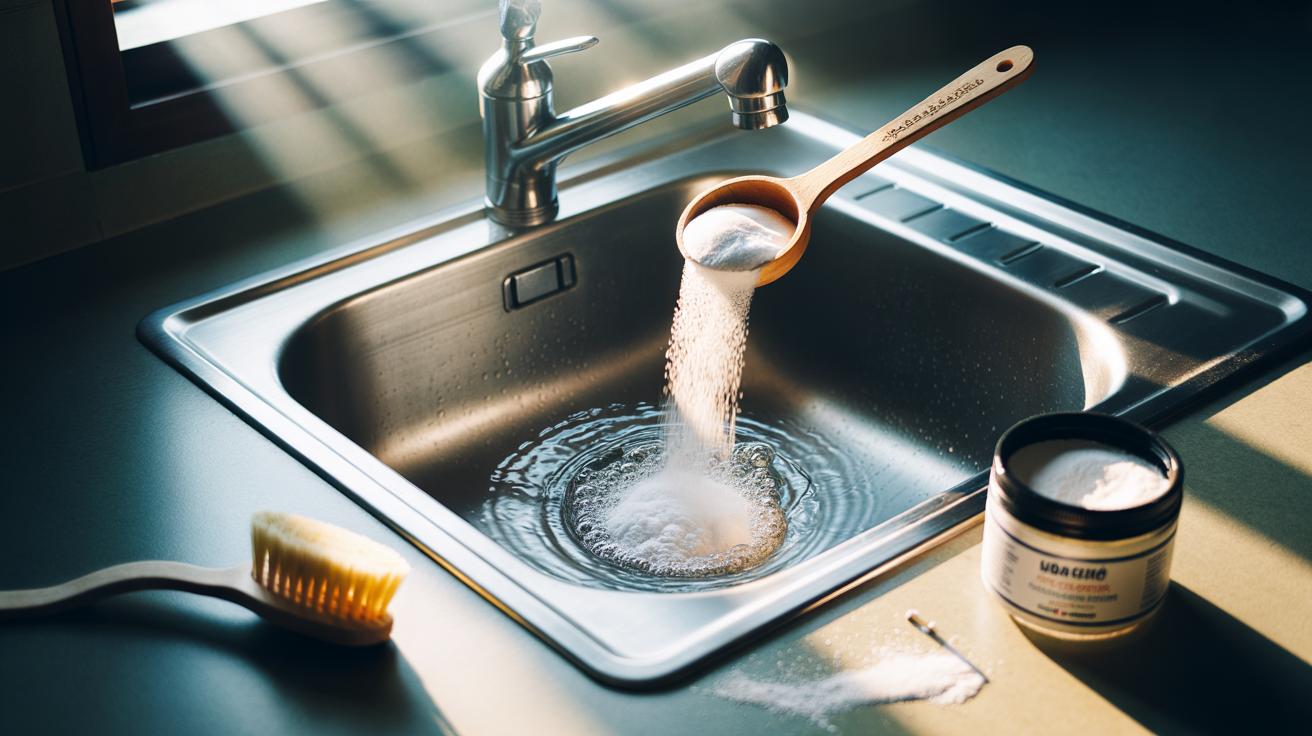
Fill a washing-up bowl or the sink itself with warm tap water—comfortably hot but not boiling—to protect finishes and PVC plumbing. Dissolve about 60 g of bicarbonate of soda per litre of water (roughly 4 level tablespoons per litre). Remove the strainer or basket and submerge it; plug the sink so the solution covers the drain and reaches the overflow channel. Leave for 30–60 minutes to allow the alkaline solution to work on acidic residues and biofilms. Time in contact matters: give the chemistry space to neutralise odour molecules and soften grime.
After soaking, scrub accessible areas lightly with a soft brush, then release the solution and flush with hot tap water. If you plan to use an acidic step (e.g., a mild citric acid rinse for limescale), do it after a thorough rinse so the agents do not neutralise each other prematurely. Wear gloves if you have sensitive skin, ventilate the area, and avoid mixing multiple cleaners at once. A monthly soak keeps odours at bay; increase frequency after heavy, oily cooking or fish preparation.
What It Works On—and Where It Falls Short
A baking-soda soak excels against sour, rancid, and sulfur-tinged odours tied to acidic by‑products. It is safe for stainless steel, ceramic, enamel, and most composite sinks, and it is gentle on rubber stoppers and gaskets. The method is ideal for treating the overflow slit—an overlooked odour source—and for pre-soaking strainers where food residues cling. Used regularly, alkaline soaks reduce the “reservoir” of molecules that re-ignite smells after the tap runs. If grime is visible, pair the soak with light mechanical cleaning for best results.
Limitations matter. Strong amine odours (fishy notes from decomposing proteins) are basic, so alkalinity will not neutralise them effectively; a separate mild acidic rinse may help there. Persistent “drain” smells can flag a dry or defective U-bend trap or a partial blockage feeding a biofilm—mechanical clearing or enzyme-based products might be necessary. Avoid boiling water if you have plastic plumbing, and do not use abrasive pastes on delicate finishes; the soak relies on solution chemistry, not scouring.
The Science in a Snapshot: pH, Buffering, and Volatility
At the heart of the method is buffering. Dissolved sodium bicarbonate creates an equilibrium with carbonic acid that stabilises the solution near pH 8.3. This steady alkalinity converts many carboxylic acids (key odour culprits) into their non-volatile salts. It also shifts the conditions that biofilms prefer, making residues easier to dislodge during the rinse. Odour is largely about volatility: fewer protonated acids in solution means fewer smelly molecules escaping into air. While not a disinfectant, the soak curbs the chemistry that keeps smells persistent.
Understanding typical values and compatible surfaces helps you plan a confident, repeatable routine. Use the ratios below, stick to warm—not boiling—water, and adjust dwell time if odours are entrenched. Pair the soak with good habits: wipe down the sink after oily washing-up, empty the strainer promptly, and run hot water for 20–30 seconds after disposing of greasy residues to limit build-up.
| Key Point | Typical Value or Guidance |
|---|---|
| pH of bicarbonate solution | Approximately 8.3 (buffered, mildly alkaline) |
| Mixing ratio | 60 g per litre (about 4 tbsp per litre) in warm water |
| Soak time | 30–60 minutes; extend to 90 minutes for heavy odours |
| Safe surfaces | Stainless steel, ceramic, enamel, most composites, rubber gaskets |
| Use frequency | Monthly routine; after strong-smelling meals as needed |
Done right, the baking-soda sink soak is a precise, gentle intervention that changes the fate of odour molecules rather than disguising them. Its buffered alkaline water neutralises acidity, lowers volatility, and frees residues for a thorough flush—all without harsh fumes or scratched finishes. This is the small, repeatable habit that keeps sinks from drifting into that background “pong.” Think of it as preventive maintenance with a chemist’s logic. What will your routine look like: a monthly soak, or a quick treatment after curry nights and roast dinners to keep the kitchen air crisp?
Did you like it?4.4/5 (30)