In a nutshell
- 🍋 A simple lemon‑rind simmer releases citrus vapour rich in limonene, citral, and linalool that neutralises stale kitchen odours, lightly dissolves greasy films, and leaves a clean, bright impression.
- 🔧 Method: simmer peel from two lemons in 500–700 ml water for 15–25 minutes on low heat, keep a window ajar, and avoid mixing with vinegar fumes; adjust the profile with orange peel, ginger, or a pinch of clove.
- 🔬 Effectiveness blends chemistry and perception: steam helps disperse volatiles, some compounds show mild antimicrobial action, and the result offers everyday freshness without heavy synthetic sprays—best used as a routine polish.
- 🛡️ Prioritise safety and sustainability: never leave the pan unattended, maintain water above the peels, ventilate for scent-sensitive people, reuse cooled liquid for quick wipe-downs, and compost spent rinds.
- 🇬🇧 Practical habits: turn leftover peels into a waste‑wise ritual, vary with rosemary, bay, or peppercorns, and pair the simmer with housekeeping—empty bins, hot-wash cloths, and clean extractor filters—for lasting freshness.
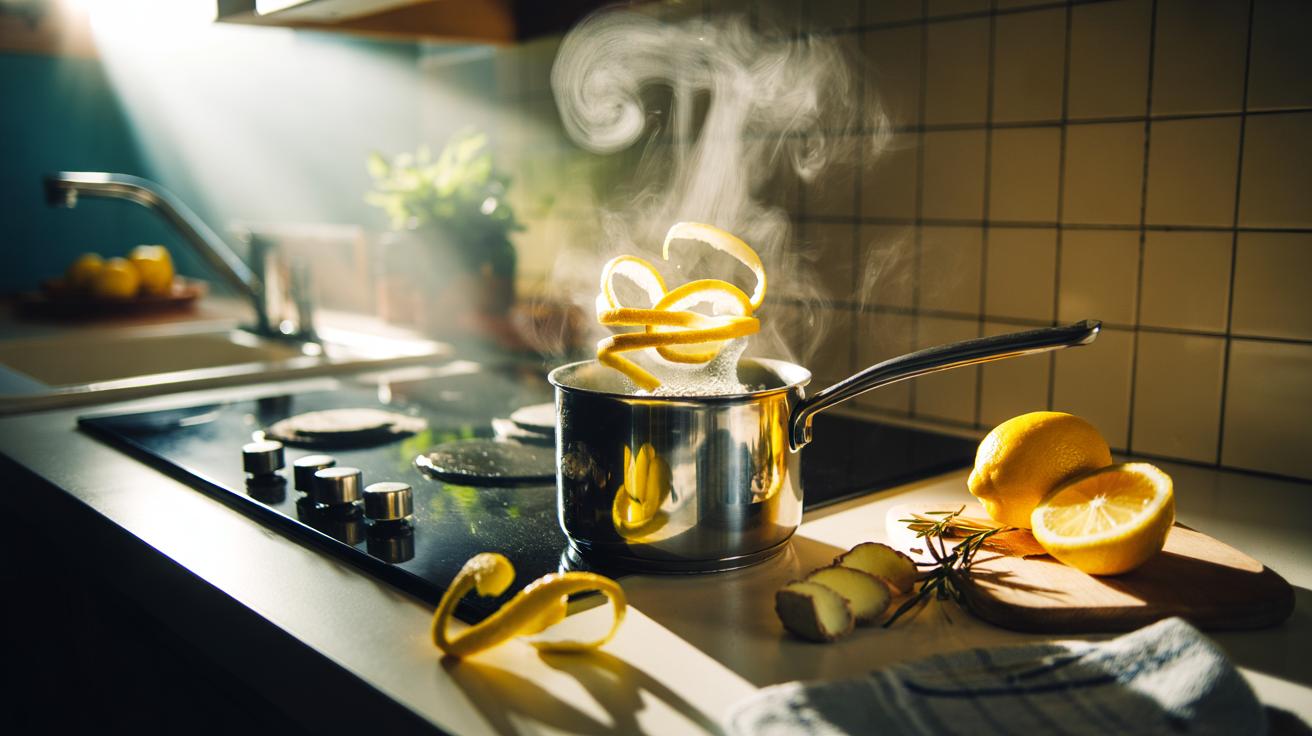
A saucepan whispering on the hob, a spiral of lemon peel releasing its fragrance: the lemon‑rind simmer is a small ritual with outsized impact. In kitchens where last night’s fry-up lingers, or bins shout louder than supper, citrus vapour can reset the room’s mood without chemical fireworks. A pan of gently simmering peel can clear the air in minutes, not hours. Beyond the pleasant scent, lemon rind carries plant compounds that interact with stubborn smells, loosen greasy residues, and leave a clean, lucid impression of freshness. Here is how it works, and how to make it work for you with confidence and care.
Why Citrus Vapour Works in Stale Kitchens
Lemon peel is rich in volatile organic compounds such as limonene, citral (a blend of geranial and neral), and linalool. When warmed, these molecules evaporate and disperse through the room, where they can both mask and mitigate odours from cooking fats, bins, and damp cloths. The secret is not brute force but volatility: these lighter molecules travel quickly, settling across porous surfaces and bringing brightness to the nose. Crucially, they bind to the air while avoiding the heavy, cloying effect of synthetic sprays.
There is a second act. Warm, moist air slightly lifts residues from tiles and countertops, and terpenes like limonene have a mild solvency for greasy films. That combination reduces surfaces’ ability to re-emit smells. Some citrus compounds display gentle antimicrobial activity, which can curb odours linked to bacterial growth on cloths and sponges. It’s a cumulative tidy-up: airborne freshness plus a modest clean, delivered by peel that might otherwise be binned.
How to Do the Lemon-Rind Simmer
Save the rind from two lemons, trimming most of the pith. Add to a small pan with 500–700 ml of water. Bring to a simmer, then reduce to the barest bubble for 15–25 minutes, topping up water if needed. Keep a window slightly open to prevent stuffiness. Low heat is the golden rule: boiling drives off compounds too quickly and can singe peels, creating a bitter note. For a softer edge, add a strip of orange peel; for a brisker profile, a thumb of sliced ginger.
For lingering malodours after fish or brassicas, include a teaspoon of bicarbonate of soda to help neutralise acidic notes, or a clove to lend warm spice. Do not combine strong vinegar fumes with citrus vapour in the same simmer—acetic sharpness can overwhelm. Instead, use vinegar separately for surface wipe-downs. Think of the pan as background music, not a foghorn: gentle, consistent, and easy to pause when the room feels balanced.
What Science and Sensibility Say About Effectiveness
Odour control is part chemistry, part perception. Citrus terpenes are excellent at lowering the perceived intensity of “stale” because the brain reads lemon as “clean” and “new”. At the same time, warm vapour helps disperse these volatiles while lifting light residues that re-seed smells. The table below outlines the key players and their roles.
| Compound | Aroma Note | Main Role | Practical Tip |
|---|---|---|---|
| Limonene | Bright, zesty | Masks stale fatty odours; mild grease-solvency | Favour peel over juice to maximise content |
| Citral | Lemony, sharp | Sharpens freshness; counters sulphurous notes | Use fresh peel; older rinds lose citral faster |
| Linalool | Floral, soft | Smooths harsh edges; improves blend | Add a pinch of crushed coriander seed for lift |
| Steam | Neutral | Humidity mobilises volatiles; loosens films | Keep heat low; top up water to avoid scorching |
How does it compare to commercial sprays? The simmer offers natural dispersion without heavy solvents or persistent synthetic fixatives. It won’t erase a burnt-toast incident on its own, but it excels at everyday freshness and pairs well with basic housekeeping: emptying bins, washing cloths hot, and wiping splashbacks. Treated as a routine rather than a rescue, it steadily reduces the “background hum” of kitchen odours.
Safety, Sustainability, and Smart Variations
Never leave a pan unattended, and keep the liquid level above the peels to avoid scorching. Those sensitive to fragrance should ventilate well and limit simmer time. If anyone at home has asthma or scent sensitivities, test for comfort with the smallest quantity first. Freshness should feel effortless, not imposing. After simmering, cool and strain the liquid for a quick wipe of the sink basket or bin lid—its mild acidity and terpenes help. Compost the spent peels to keep the cycle green.
For UK households aiming to trim waste, this is a satisfying habit. Use peel from weekend baking, weeknight salad dressings, or that lemon halved for tea. Vary the mood: rosemary adds a resinous “garden” note; bay leaves give subtle depth; a few black peppercorns provide a warm, dry lift. If damp smells persist, check extractor filters and wash textiles. The pan is a polish, not a proxy for proper cleaning, and it shines brightest alongside good ventilation and tidy basics.
The lemon‑rind simmer occupies that sweet spot between homely wisdom and gentle science: volatile compounds for the nose, light humidity for the room, and a ritual that recasts scraps as assets. It is quick, frugal, and pleasingly seasonal—brighter in winter, breezier in summer with a cracked window. Freshness is as much about tone as intensity, and citrus strikes the right note. Will you make the simmer part of your weekly kitchen rhythm—and if so, which peel-and-spice blend will become your signature?
Did you like it?4.5/5 (28)