In a nutshell
- 🔬 The baking soda soak raises alkaline water to pH ~8–9, disrupting Maillard residues and helping fats saponify, so burned-on films release without heavy scrubbing.
- 🔥 Method: add 1 tbsp bicarbonate per 250 ml, use gentle heat to a bare simmer for 10–15 minutes, scrape with non-metal tools, rinse, then finish with a vinegar splash to neutralise and restore shine.
- 🥘 Material guidance: stainless steel and enameled cast iron handle simmered soaks; keep non‑stick warm only and brief; use short, lukewarm soaks on aluminium; avoid long alkaline baths on seasoned cast iron.
- ⚠️ Safety: never mix baking soda with bleach or caustics, avoid metal abrasives on enamel and non‑stick, and keep ventilation decent while heating alkaline solutions.
- 🧰 Troubleshooting: repeat short cycles, add a drop of washing‑up liquid for emulsifying, use a fine bicarbonate paste with salt for corners, and treat discoloration with stainless cleanser or a vinegar rinse.
Burned-on gravy, caramelised sugars and polymerised oils can turn a favourite pan into a defeated relic. Yet a simple baking soda soak restores the shine without harsh scrubbing or pricey products. Dissolved in hot water, sodium bicarbonate raises the solution’s alkalinity, nudging stubborn residues to release their grip. Gentle heat boosts the effect, loosening carbonised films so they lift in satisfying sheets. Alkaline water weakens the bonds that glue burnt grime to metal surfaces. From stainless steel to enamel, the method is fast, frugal and forgiving when used correctly. Here’s how the chemistry works, how to apply it safely, and when to tweak the approach for different cookware.
The Science Behind Alkaline Soaks
A baking soda solution sits at a mildly basic pH (around 8–9). That’s enough to disrupt the sticky matrix of browned proteins and sugars from the Maillard reaction, as well as the varnish-like films formed by overheated fats. In warm water, bicarbonate ions help saponify traces of residual oil, turning them into soap-like compounds that slide off metal. With sustained heat, some bicarbonate converts to sodium carbonate, a stronger alkali, which speeds up the softening of carbonised layers. This is why a gently simmered soak often beats brute-force scrubbing.
Alkaline solutions also interfere with metal–soil interactions. Stainless steel’s passive chromium oxide layer is resilient, but a basic bath can break the adhesion of baked-on deposits without etching the surface. Enameled finishes resist alkali well, so the glaze beneath emerges intact. By contrast, reactive metals such as bare aluminium and copper can dull if left too long. The sweet spot is a controlled soak: hot water, a measured spoon or two of bicarbonate, and time for chemistry to do the lifting while you give the pan an occasional nudge with a wooden spatula.
Step-By-Step Method for a Safe, Effective Soak
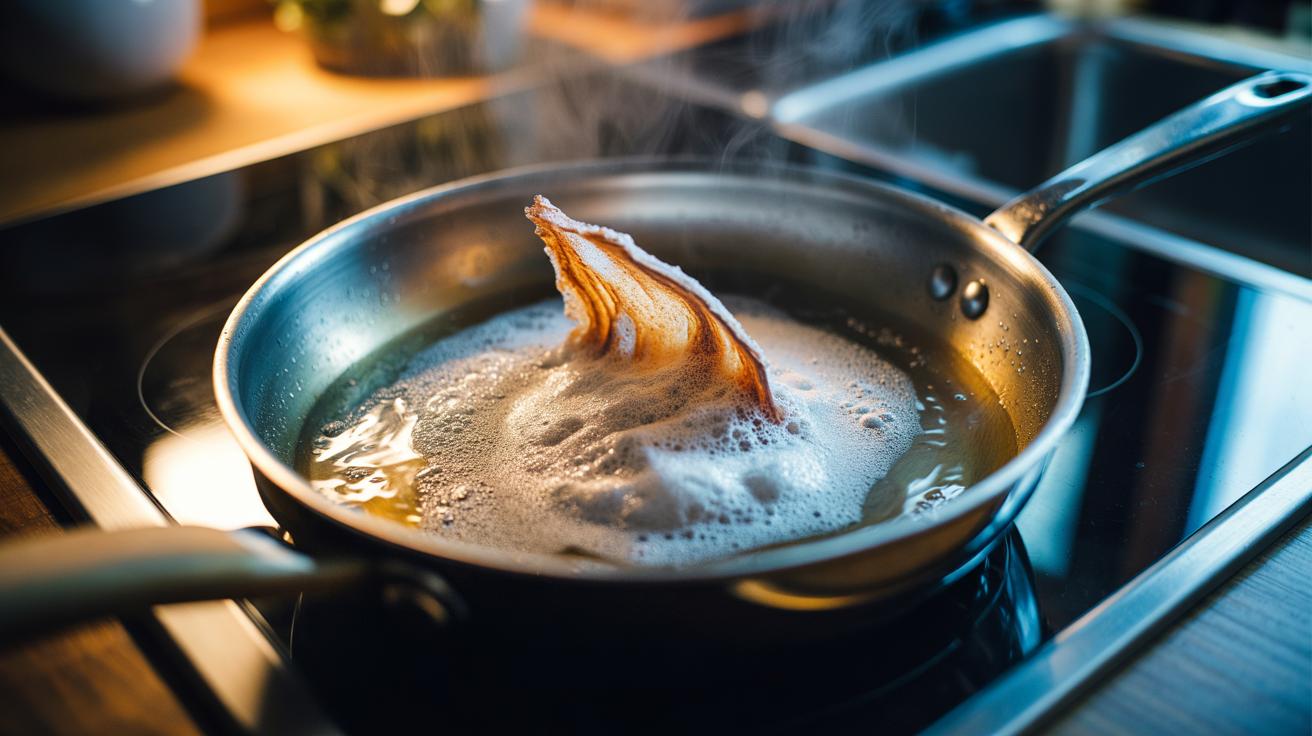
Start by dislodging loose char with hot water. Add 1 tablespoon of baking soda per 250 ml of water (roughly 2–3 tablespoons per litre), then heat the pan until the liquid is steaming or barely simmering. Maintain for 10–15 minutes for stainless steel or enamel. Gentle heat accelerates the alkaline action without damaging sound cookware. Scrape with a wooden or silicone tool, working from the edges toward the centre where residues collect. Let the pan cool, pour away the cloudy water, then use a non-scratch pad to wipe off the softened film. Rinse thoroughly. A splash of vinegar at the end neutralises traces of alkali and helps restore sparkle.
| Pan Material | Baking Soda per 500 ml | Water Temperature | Typical Soak Time | Notes |
|---|---|---|---|---|
| Stainless steel | 1–2 tbsp | Hot to gentle simmer | 10–20 min | Robust; ideal for simmered soaks |
| Enameled cast iron | 1–2 tbsp | Hot to gentle simmer | 10–15 min | Protect enamel; avoid metal tools |
| Uncoated aluminium | 1 tbsp | Warm, no simmer | 5–10 min | Short soaks; watch for dulling |
| Non-stick (PTFE/ceramic) | 1 tbsp | Warm only | 5–10 min | No abrasives; no high heat |
Never mix baking soda with bleach or caustic products. If stains persist, repeat once rather than pushing into aggressive scrubbing that risks surface damage.
Choosing the Right Pan: What Works and What to Avoid
Stainless steel thrives with alkaline soaks; it tolerates heat and the chemistry targets the grime, not the alloy. Enameled cast iron also responds brilliantly, provided you avoid metal scouring tools that could scratch glaze. With non-stick coatings, keep temperatures warm and limit time; the goal is a gentle lift, not a thermal shock that could shorten the coating’s life. When in doubt, lower heat and lengthen time by a few minutes. The method is also helpful for glass and glazed stoneware, especially when sugar syrups or cheesy bakes have fused to corners and rims.
Be cautious with bare aluminium and copper. Alkali can dull their sheen or stain if left unchecked. For aluminium, use warm water and brief soaks, then finish with a mild dish soap wipe. For copper, skip the simmer and lean on a short, warm soak, followed by a specialist cleaner to restore lustre. Avoid long alkaline soaks on seasoned cast iron; you risk softening the oil-based seasoning. Instead, use a paste (bicarbonate plus a few drops of water) applied only to soiled spots, then re-season lightly after cleaning.
Troubleshooting Stubborn Burned-On Messes
After a first soak, sticky islands of caramel or protein can cling on. Reheat with a fresh teaspoon of baking soda and add a drop of washing-up liquid: the mild surfactant helps emulsify loosened grease. For sugar-heavy residues, first dissolve the caramel with plain hot water, then apply the alkaline soak to tackle the browned film beneath. Work in cycles—short soaks, light scraping, rinse, reassess—rather than one brutal session. A pinch of fine salt in a damp bicarbonate paste offers controlled abrasion for corners and rivet heads without gouging the surface.
If discolouration remains on stainless steel, a quick pass with a dedicated stainless cleanser or a vinegar rinse can rebalance the finish. Clouding on aluminium signals too much time or heat; polish gently with a soft cloth and soapy water. Persistent polymerised patches may respond to patience: a second 10-minute simmer is often decisive. Above all, avoid mixing chemicals and keep ventilation decent; alkaline steam is mild, but good kitchen habits matter.
The humble baking soda soak proves that smart chemistry beats brute force, restoring pans with minimal elbow grease and zero drama. By understanding how alkaline water weakens bonds in burnt-on films, you can tailor time and temperature to the cookware in front of you. Small adjustments—lower heat here, shorter soaks there—protect finishes while freeing stubborn grime. With a spoonful of bicarbonate, a bit of heat and a calm method, yesterday’s scorch becomes today’s shine. Which pan in your cupboard is first in line for a gentle alkaline revival, and how will you adapt the steps to suit its material and mess?
Did you like it?4.5/5 (23)