In a nutshell
- 🧪 Vinegar’s acetic acid lowers pH, dissolving limescale and soap film that scatter light, restoring a crisp, streak-free shine on sealed, non-porous floors.
- 🧹 Use a 1:10 dilution for routine cleaning (1:5 for heavier haze), pair with a microfibre pad and a two-bucket method; work in S-patterns, wring well, and avoid overwetting.
- 🧱 Ideal for ceramic/porcelain tile, sealed vinyl, and many sealed laminates; be cautious on polyurethane-finished hardwood (try ~1:15) and avoid natural stone entirely.
- ⚠️ Prioritise safety: ventilate, keep away from children and pets, and never mix vinegar with bleach or chlorine-based products; a drop of essential oil is fine if you avoid heavy fragrances.
- 🌍 A thrifty, low-clutter choice with strong sustainability credentials—especially effective in hard-water areas—delivering shine for pennies per square metre.
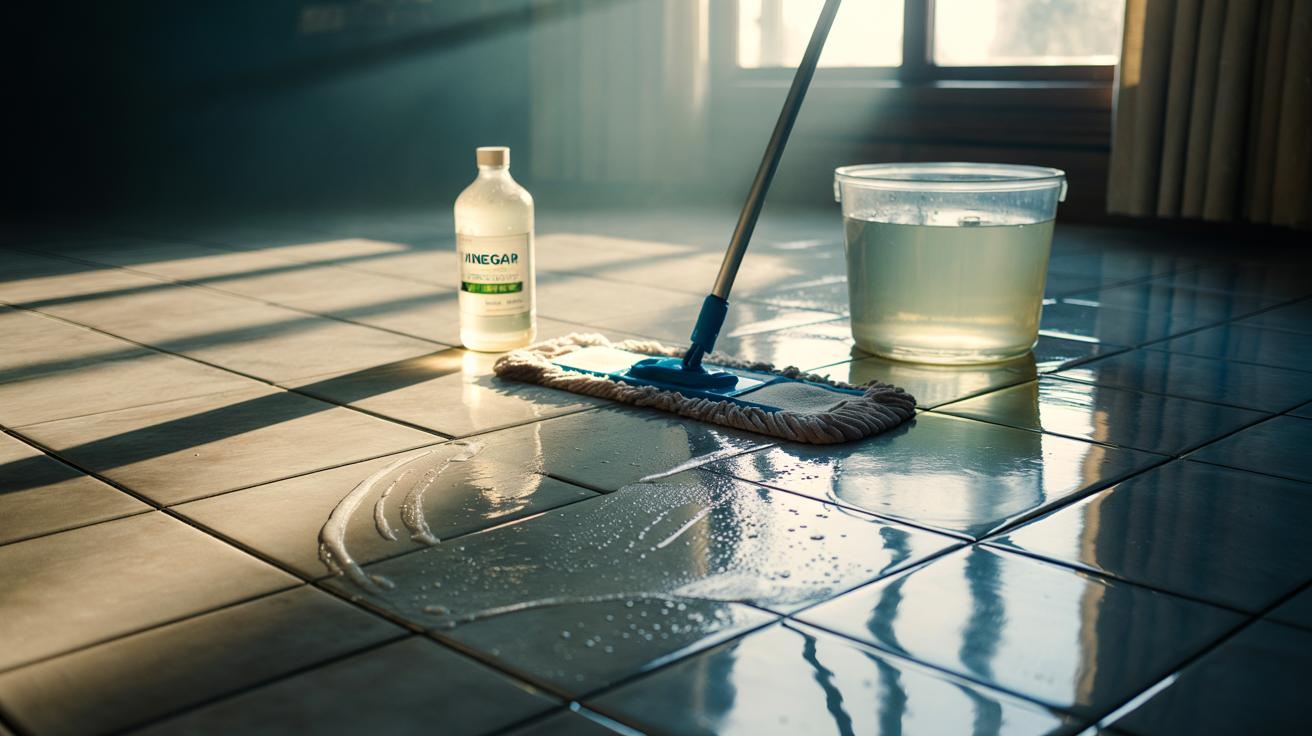
Across Britain’s homes, a simple vinegar mop is quietly displacing expensive floor sprays. The reason is chemistry, not nostalgia: household vinegar contains acetic acid, a mild agent that cuts through the dulling residue left by hard water minerals and detergent film. Instead of masking haze, it dissolves it, leaving tiles, vinyl, and many sealed surfaces bright under natural light. Used with a well-wrung microfibre mop, it’s quick, thrifty, and surprisingly sophisticated. Applied at the correct dilution, vinegar refreshes sheen without the sticky after-feel many cleaners leave behind, making it a pragmatic choice for high-traffic kitchens and hallways.
Why Acidity Lifts Dulling Residue
Hard water deposits and leftover surfactants create a thin film that scatters light, turning crisp finishes murky. Vinegar’s acetic acid lowers the solution’s pH, encouraging an acid–base reaction that breaks down carbonate-based haze and loosens soap scum. On ceramic or porcelain, these minerals are not bonded to the glaze, so the acid disrupts their grip and allows easy lift-off. The result is clarity: fewer micro-deposits to refract light, and a floor that looks newly polished without adding waxes or silicones that build up over time.
There’s a second effect at play. Acetic acid can complex with calcium and magnesium ions, disarming the hardness that amplifies streaking. A warm solution improves wetting, and a microfibre mop provides mechanical pickup, trapping loosened residue rather than pushing it around. Because vinegar evaporates cleanly, it leaves little to smudge underfoot. Kept at household strength, this mild acidity is safe for most sealed, non-porous floors, yet robust enough to tackle the haze that ordinary rinsing leaves behind.
Mixing Ratios and Mop Technique
The sweet spot for routine cleaning is a 1:10 dilution: about 100 ml of distilled white vinegar (5% acidity) per litre of warm water. For heavier film, move to 1:5 briefly, then return to the gentler mix. Always perform a small, inconspicuous test, especially on finishes that might be sensitive to acids. Less liquid is better: overwetting traps moisture in joints and under edges. A single drop of mild washing-up liquid can help wetting, but avoid suds that leave their own residue.
Adopt a two-bucket method: one for the vinegar solution, one with clean water to rinse the mop head. Wring thoroughly so the mop is damp, not dripping. Work in an S-pattern, overlapping strokes to collect loosened soil, and change solution when it clouds. For wooden or laminate floors, keep passes light and ventilation good. Never flood timber—moisture can creep into seams. Allow to air dry; a quick buff with a dry microfibre pad enhances the final shine.
Where Vinegar Works—and Where It Doesn’t
On ceramic and porcelain tile, sealed vinyl, and many sealed laminates, vinegar excels at lifting mineral haze and detergent film. It also refreshes sealed grout, though stubborn grout stains often need targeted cleaners. With wood, the finish is the deciding factor: factory-sealed planks may tolerate a very light vinegar solution used sparingly, while waxed or oiled surfaces can become dull. Natural stone—marble, limestone, travertine, terrazzo—should be kept away from acid altogether; vinegar can etch or open pores, worsening staining and removing the stone’s polish.
| Floor Type | Vinegar Use | Suggested Dilution | Notes |
|---|---|---|---|
| Ceramic/Porcelain Tile | Yes | 1:10 | Great for limescale haze and soap film. |
| Vinyl (Sealed) | Yes | 1:10 | Wring well to avoid pooling at seams. |
| Laminate (Sealed) | Yes, lightly | 1:10 | Minimal moisture; quick drying. |
| Hardwood (Polyurethane) | Cautious, sparing | 1:15 | Patch test; avoid on waxed or oiled wood. |
| Natural Stone (Marble, Limestone, etc.) | No | — | Use a neutral pH stone cleaner. |
In hard-water regions, such as much of southern England, vinegar’s edge is sharper because it targets limescale. For floors that should not see acid, switch to a neutral pH cleaner and microfibre. If a sticky polymer shine from past products persists, a one-off deeper clean using the stronger vinegar dilution and careful agitation can reset the surface. When in doubt, consult the flooring manufacturer’s care guide—finish chemistry varies, and warranties often specify compatible cleaners and tools.
Safety, Scent, and Sustainability
Household vinegar is low-risk, yet sensible handling matters. Keep rooms ventilated and store the bottle away from children and pets. Never mix vinegar with bleach or products containing chlorine; the reaction can release hazardous gases. If a fresh scent is preferred, add a drop or two of essential oil to the bucket, but avoid heavy fragrance, which can add film. A quick label check on microfibre pads ensures they’re detergent-free—fabric softeners can sabotage streak-free results by leaving a hydrophobic coating.
From a sustainability angle, vinegar is compelling. It’s inexpensive, widely available, and cuts the need for multiple specialist products. In areas with very hard mains water, it reduces reliance on rinse-aids by neutralising minerals at source. Packaging and transport footprints are typically lower per clean than spray-and-wipe alternatives. Because a little goes a long way, the cost per m² is pennies. Combined with a durable microfibre mop and a simple two-bucket routine, it’s a tidy route to gleaming floors without chemical clutter.
The humble vinegar mop wins on clarity, cost, and conscience. By harnessing acidity to dissolve the film that dulls surfaces, it restores a crisp, natural-looking shine rather than coating floors with gloss. For most sealed tiles and vinyl, a 1:10 mix and a well-wrung pad is all it takes. Wood and stone deserve extra care, but even there, the principles of low moisture and correct chemistry hold true. With a little testing and a light touch, your routine can become faster and streak-free. Which floor in your home would benefit most from a science-backed shine-up?
Did you like it?4.7/5 (23)