In a nutshell
- 🔬 Plastics trap smells as VOCs and oils seep into microscopic pores; water alone struggles, while glass and steel resist but lid gaskets often hold odours.
- 🧪 A mildly alkaline soak with bicarbonate of soda (around pH 8–9) deprotonates smelly acids/phenols, reduces volatility, and emulsifies greasy films that harbour odours.
- 🧼 Method: warm water (40–50°C) at 1 tbsp per 250 ml, submerge lids/gaskets, soak 2–8 hours or overnight; use a bicarbonate paste for stubborn stains, then rinse and air-dry open.
- 🧰 Materials & safety: suitable for PP, Tritan, silicone, glass, stainless; avoid very hot water on old plastics, brief soaks for aluminium; never mix with bleach; store boxes ajar to prevent future odours.
- ♻️ Practical value: a low-cost, low-waste routine that neutralises rather than masks smells; repeat soaks or brief sun exposure help finish off persistent aromas.
Lunch boxes work hard for us, then betray us with lingering smells of curry, tuna, or last week’s bolognese. In kitchens across the UK, an old staple still outperforms pricey sprays: a simple soak with bicarbonate of soda (baking soda). This mildly alkaline solution neutralises trapped odours without harsh perfumes, leaving containers genuinely fresh. The trick is not abrasion or masking but chemistry that disarms smelly molecules embedded in plastics and silicone. From schoolbags to office fridges, the method is thrifty, low-waste, and safe for most materials. Here’s how an everyday pantry powder renews lunch containers, why the science stacks up, and when to elevate the soak for stubborn cases.
Why Plastic Clings to Smells: The Chemistry of Odour Traps
Food containers, especially those made from polypropylene or flexible silicone, are slightly porous. Cooking oils carry volatile organic compounds (VOCs) deep into microscopic pits, where they hold fast. Odour molecules diffuse into these pores and bind to residue films, so a quick rinse barely touches them. Tomato sauces and spices are rich in aromatic compounds that are hydrophobic, which is why water alone struggles. Add time and warmth from dishwashers, and the odours set more deeply, explaining why older boxes smell stronger even when they look clean.
Plastics also pick up “background” scents from fridges. The polymers’ surfaces can adsorb small molecules, so onion, garlic, and fish linger as a faint bouquet. Glass and stainless steel resist this effect but their lids’ gaskets may not. Understanding that smell is often locked within a greasy matrix—not just on the surface—points to a solution that breaks chemical grip rather than scrubbing harder. A targeted, alkaline soak helps dissolve residue films and alters the odour chemistry itself.
How Alkaline Solutions Break Down Odour Molecules
Bicarbonate of soda creates a mildly alkaline solution (typically pH 8–9) that nudges smelly acids and phenols into less volatile, often odourless, forms. Raising pH shifts the balance of these compounds, reducing the amount that evaporates into your nose. Many stubborn kitchen smells ride along with fatty residues; alkalinity helps emulsify these films so they release their aromatic cargo. Bicarbonate also acts as a buffer, keeping the solution effective during a long soak even as it reacts with odour compounds.
There’s a physical dimension too. Finely dispersed bicarbonate can gently abrade soft coatings when applied as a paste, while dissolved ions ease residue from pores. By deprotonating acidic groups and disrupting hydrophobic films, an alkaline soak both alters the molecules and removes their carriers. Crucially, bicarbonate avoids the perfumed cover-up of fragranced cleaners. The result is a neutralised container, not one that smells of something else.
The Baking-Soda Soak: A Step-by-Step Method
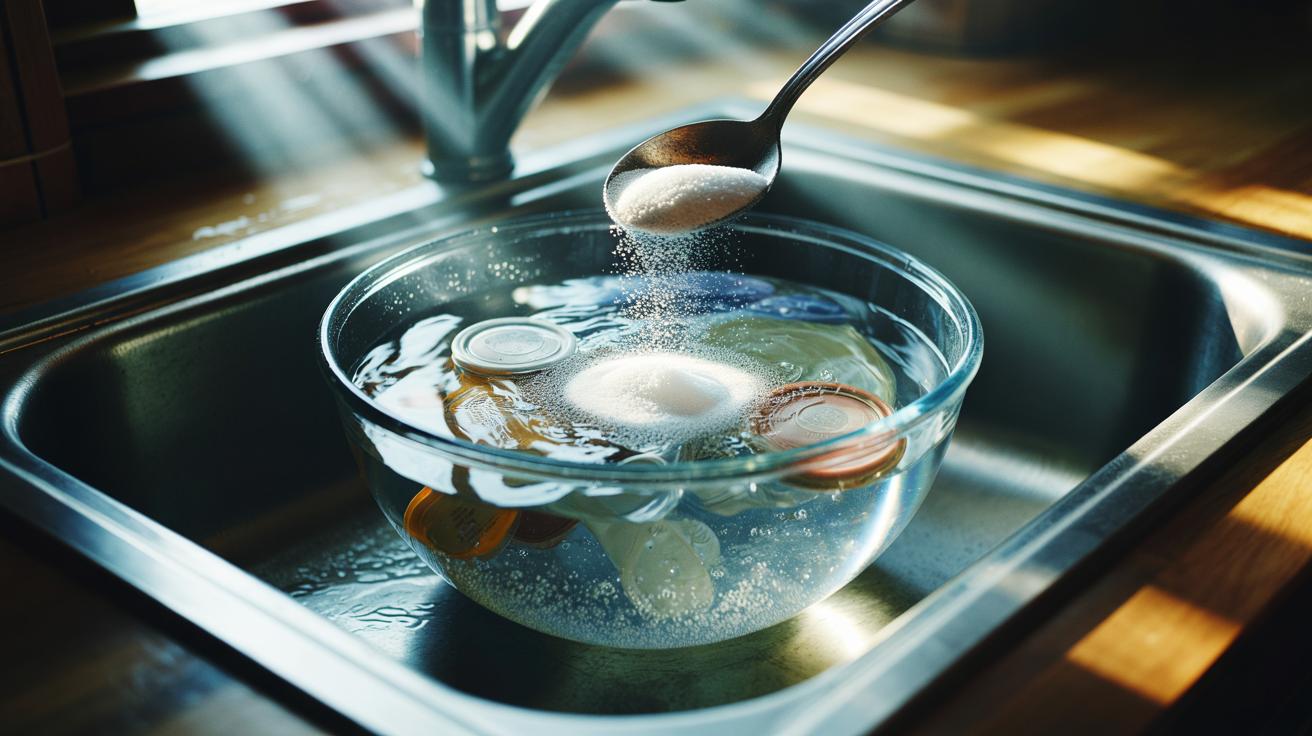
Start with clean but smelly containers. Separate lids and take out any removable gaskets. Fill with warm water (about 40–50°C), add 1 tablespoon (15 ml) bicarbonate per 250 ml, and stir to dissolve. Ensure the solution touches every surface—submerge lids and gaskets fully, or weigh them down. Soak for 2–4 hours for light odours; overnight for stubborn smells. For oily stains, pre-rinse with hot water and a drop of fragrance-free washing-up liquid to lift grease before the soak. Rinse thoroughly afterward, then air-dry open to let any residual CO2 escape.
| Container/Gasket | Ratio | Soak Time | Extra Tip |
|---|---|---|---|
| Polypropylene box | 1 tbsp per 250 ml | 4–8 hours | Use warm, not boiling, water |
| Silicone lid/gasket | 1 tbsp per 200 ml | Overnight | Knead solution into folds |
| Glass container | 1 tbsp per 300 ml | 2–4 hours | Focus on lid and seal |
For ingrained spice odours, make a paste: 3 parts bicarbonate to 1 part water. Spread thinly, leave 30 minutes, then rinse. A brief sun-bath on a bright windowsill can help dissipate residual volatiles. Avoid mixing with other chemicals; if you’ve used bleach previously, rinse thoroughly before the bicarbonate soak.
Materials, Safety, and Environmental Considerations
Bicarbonate is gentle on most container materials, including PP, Tritan, silicone, glass, and stainless steel. Avoid very hot water on warped or older plastics, which can open pores and lock in smells further. For aluminium lunch tins, keep solutions mild and soak briefly to prevent dulling. If containers carry a deep orange tint from tomatoes, a bicarbonate soak loosens the oily layer; staining may fade over several cycles. For wooden lids or bamboo inserts, wipe with a damp bicarbonate solution and dry promptly.
Skip aggressive scouring that can scratch plastics and seed future odour traps. Do not combine with bleach or strong acids; clean and rinse between products to keep chemistry simple and safe. Because bicarbonate neutralises rather than perfumes, it’s a low-waste, fragrance-free option suited to homes sensitive to synthetic scents. When containers are beyond help, repurpose for non-food storage. For future prevention, store boxes ajar so air circulates, and line with paper when packing aromatic foods.
The quiet brilliance of a bicarbonate soak lies in its economy: a spoonful of a pantry powder, time, and warm water. By changing the chemistry of the smell and lifting the film that holds it, you return lunch containers to a truly neutral state. It’s a practical fix for the cost-of-living era and a tidy win for households avoiding heavy fragrances. For the worst offenders, a repeat soak or a paste treatment usually closes the case. What stubborn kitchen odour would you put to the bicarbonate test next, and how would you tweak the soak to suit your own containers?
Did you like it?4.5/5 (28)