In a nutshell
- 🔬 The fizz comes from an acid–base reaction between baking soda and vinegar, releasing CO₂ bubbles that agitate and lift greasy films rather than dissolving them.
- 🧰 A safe method: 100–150 g baking soda, 200–250 ml vinegar, cover 5–10 minutes, then flush with hot (not boiling) water; repeat once if needed and never mix with bleach or ammonia.
- ⚠️ Know the limits: hair, grounds, and limescale may resist fizzing; consider a drain snake, P-trap clean, or enzyme-based cleaners—and call a pro if backups persist.
- 🌿 Greener for UK homes: reduces reliance on harsh chemicals, aligns with efforts against FOG and fatbergs, and is generally safe for septic tanks and common pipe materials.
- 🛡️ Prevention pays: wipe pans before washing, run hot water after greasy rinses, and use strainers—making the fizz a light maintenance ritual, not a cure-all.
The humble pairing of baking soda and vinegar has become a staple of British home care, credited with rescuing sluggish sinks without the sting of caustic cleaners. The fizz is dramatic, the method is frugal, and the results can be striking. Yet the magic is not mysticism; it is simple chemistry doing focused work in a cramped, oily pipe. This piece explores how that foaming surge pries at congealed grease, how to use it without harming modern plumbing, and when to call time on the bubbles. Think of it as a quick, low-impact intervention that nudges a drain back to health rather than a cure-all.
What Actually Happens When You Mix Baking Soda and Vinegar
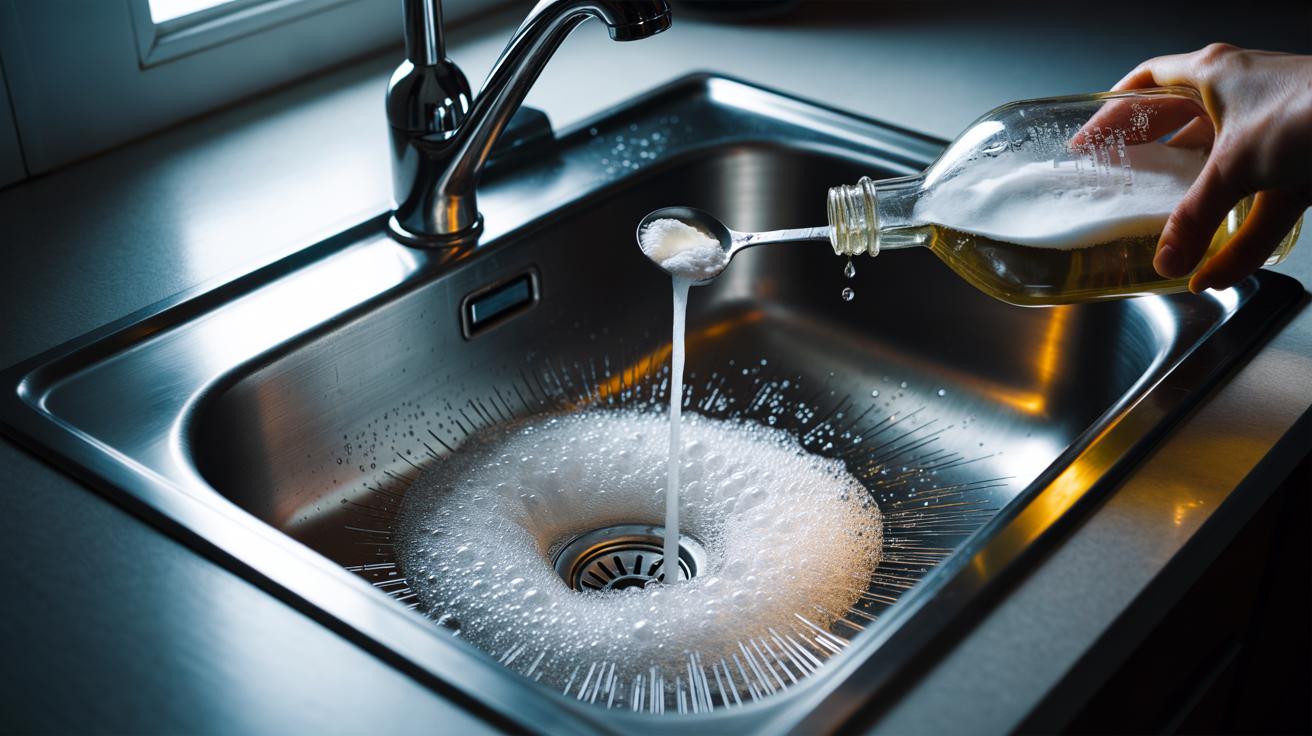
Drop baking soda (sodium bicarbonate) down a plughole and chase it with vinegar (acetic acid), and you trigger an acid–base reaction that releases carbon dioxide gas. Those CO₂ bubbles expand through the sludge, jostling and loosening greasy films that cling to pipe walls. As the bubbles lift and break, they carry fragments of softened residue toward the trap. The reaction also yields sodium acetate and water. While sodium acetate is not a detergent, the momentary effervescence produces agitation in tight spaces that a brush could never reach.
Crucially, the technique does not literally “eat” fat; it destabilises it. Dry baking soda offers gentle abrasion along with mild alkalinity, which can help nudge fatty deposits toward dispersion, especially where old dish soap residues are present. The vinegar phase lowers pH, tackling odours and light mineral crusts that can glaze over grime. The fizz is a mechanical assist, not a miracle solvent—its strength lies in penetration and disruption, not dissolution.
A Step-by-Step Method That Respects Your Pipes
First, bail standing water so the reaction occurs in the clog, not the sink. Add 100–150 g (around ½ cup) of baking soda directly into the drain, nudging it past the strainer. Follow with 200–250 ml (about 1 cup) of vinegar. Cap the opening with a plug or a saucer for five to ten minutes to force the foam downward. You may hear fizzing in the trap—good. After the foam subsides, flush with 1–1.5 litres of hot, not boiling, water to avoid stressing PVC joints. Repeat once if flow improves but remains slow.
For greasy kitchen sinks, this cycle after a hot, soapy washing-up session works best, because warm pipes keep fats malleable. A few plunges after the flush can amplify the benefit by moving loosened debris along the line. Never combine this method with bleach or ammonia—mixing chemicals in drains is hazardous. If the sink backs up instantly or the pipe gurgles in other rooms, stop and consider a mechanical clear or professional help.
| Step | Ingredient | Amount | Timing | Why it helps |
|---|---|---|---|---|
| 1 | Baking soda | 100–150 g (≈½ cup) | Immediate | Provides mild abrasion and alkalinity to disrupt greasy films |
| 2 | Vinegar | 200–250 ml (≈1 cup) | Within 1 minute | Generates CO₂ bubbles that agitate and lift debris |
| 3 | Cover drain | — | 5–10 minutes | Forces foam into the clog rather than back into the sink |
| 4 | Hot water flush | 1–1.5 litres | After fizz subsides | Washes loosened residue away; avoids overheating PVC |
When the Fizz Fails: Limits, Risks, and Smart Alternatives
Some blockages are not chiefly greasy. Hair snarls, coffee grounds, vegetable peelings, and limescale rings can resist fizzing. In hard-water areas common across the UK, fat can bond with calcium to form waxy “soap scum” that behaves more like scale than oil. Here, a plastic drain snake or a wet-and-dry vacuum can outperform chemistry. If water rises immediately in the sink or gurgles in a neighbouring appliance, the obstruction may sit beyond the trap, where mechanical clearing is safer and faster.
There are also practical caveats. Excessive heat can soften plastic traps; stick to hot, not boiling, water. Repeated acid–alkali cycles will not dissolve a solid plug, and the neutralised mix is mostly sodium acetate and water—harmless, but no longer active. Consider enzyme-based cleaners for organic build-up, especially in bathrooms, and remove and clean the P-trap if you are confident with basic DIY. If sewage odour or repeated backups persist, book a professional: it could be a venting issue or a partial mainline blockage.
Why It’s a Greener Choice for UK Households
Compared with caustic drain gels, the baking soda and vinegar approach is a low-toxicity, low-odour intervention that’s lighter on wastewater systems. UK water companies regularly warn about FOG—fats, oils, and grease—coagulating into “fatbergs” in combined sewers. While the fizz cannot cure street-level problems, using it at home encourages routine maintenance that keeps fats moving, reducing the chance they cool and stick. It also trims packaging waste: a bulk tub of bicarbonate and a glass bottle of vinegar can replace multiple single-use chemical products.
Cost and compatibility matter too. The pair is inexpensive, generally safe for septic tanks, and kinder to stainless steel and most plastics than corrosive cleaners. In very hard-water postcodes, regular light treatments can deter scale-glaze that traps grime. Pair the fizz with preventive habits: wipe pans with kitchen roll before washing, run hot water after greasy rinses, and use a strainer to intercept solids. Prevention remains the greenest—and cheapest—drain care strategy.
The fizzing duet of baking soda and vinegar earns its reputation by doing one job well: creating agitation where brushes cannot reach, then riding that momentum to shift greasy residue. It will not melt a solid clog or replace a plumber, yet as a weekly maintenance ritual it pays off in quieter pipes, fewer odours, and less reliance on harsh products. Next time your sink sighs rather than swirls, will you try a measured fizz, or will you reach for a different tactic—and what small habit could you change today to stop the clog from forming at all?
Did you like it?4.5/5 (22)