In a nutshell
- 🔥 Heat melts grease: Boiling water lowers fat viscosity so clogs break apart and flush away, while salt provides mild abrasion and a scouring brine.
- 🧂 Quick method: Add 100–150 g salt to the plughole, pour 2–3 L boiling water in two rounds, wait two minutes between, then run hot tap—don’t mix with chemical cleaners or use on toilets.
- 🛡️ Pipe safety: Fine for metal; for PVC/ABS/CPVC let the kettle rest 20–30 seconds and pour in stages to avoid thermal shock; wear gloves and eye protection.
- 🛠️ When it’s not enough: Clean the P-trap, use a plunger, or try an enzyme treatment overnight; if multiple fixtures back up, the blockage is downstream—call a professional.
- ♻️ Prevention: Wipe pans before washing, never pour oil down the sink, fit a strainer, and do a weekly hot-water flush to curb fatberg formation and keep drains odour-free.
In British kitchens, a blocked sink often points to a familiar culprit: cooled cooking fat clinging to pipe walls. The simplest remedy is surprisingly old-school: a careful pour of boiling water and a shake of salt. This pairing works fast, costs pennies, and spares you harsh chemicals. Heat liquefies congealed grease and reduces its viscosity, allowing it to slide away, while the salt acts like a gentle scourer that helps detach residue. Done correctly, it is safe for most domestic plumbing and can restore normal flow in minutes. Here’s how it works, how to do it properly, and when to escalate to more robust fixes.
Why Boiling Water and Salt Work on Greasy Drains
Grease blocks drains because it cools, congeals, and traps food particles, building a sticky plug that narrows the pipe. Applying boiling water reverses that process. Heat melts the fatty deposits and lowers their viscosity, so the softened mass breaks apart and shifts under gravity. Hot water does the dissolving; the flow does the carrying. The salt’s role is twofold: its crystals provide mild abrasion that helps shear softened fat from the pipe wall, and a strong brine discourages some biofilm that glues debris together. Together, they create a brief surge that scours the line.
Some swear the salt significantly raises the boiling point. The effect exists, but at household quantities it is marginal; the real benefit is mechanical. The crackle of coarse salt moving with hot water can dislodge the “lip” of a blockage, restoring a channel so the remainder can flush away. Think of it as a quick thermal reset of a fat-clogged pipe, not alchemy. Used early, it prevents minor slowdowns from turning into full-blown stoppages.
Step-By-Step Method for a Fast, Safe Unclog
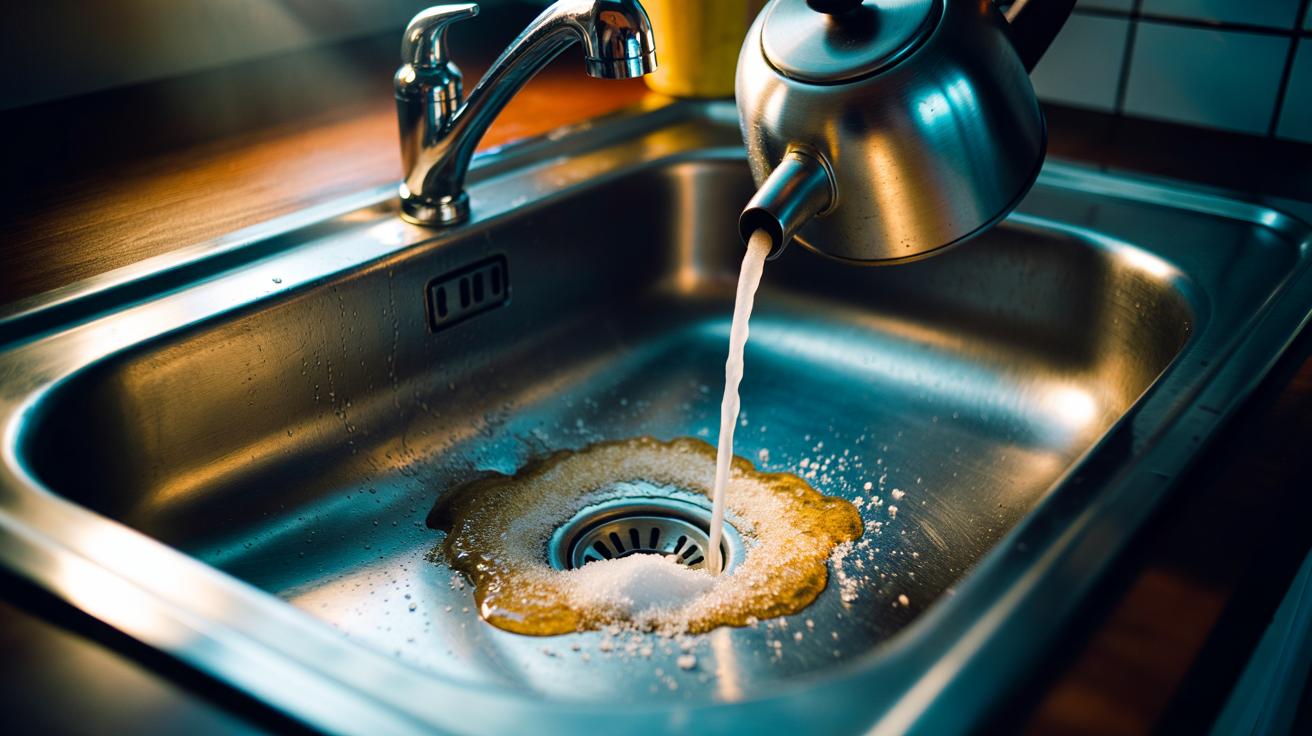
First, remove any standing water with a jug. Tip 100–150 g of salt (about half a cup) directly into the plughole. Boil 2–3 litres of water in a kettle; for plastic pipework, let it sit for 20–30 seconds off the boil. Pour steadily in two rounds: half the kettle to soften and shift the clog, wait two minutes, then the remainder to finish the flush. If you hear a gurgle and see the water level drop, you are winning. Follow with a one-minute run of hot tap water to carry loosened fats further down the line.
If flow is still sluggish, repeat once. Add a small squirt of washing-up liquid to the second round; surfactants help break oily films. Do not exceed two or three cycles in one session, and never use this method on a toilet. Do not mix hot water pours with chemical drain cleaners—combining heat with caustic or acidic products can cause hazardous reactions. If the sink remains slow, move to safe mechanical steps or call a professional.
Understanding Pipe Materials and Safety Limits
Boiling water is friendly to metal pipes, but plastic systems have temperature ceilings. PVC can soften at high heat, especially at joints; ABS and CPVC cope better, but caution still pays. A simple rule: for plastic plumbing, let the kettle rest briefly before pouring and use multiple smaller pours rather than one aggressive deluge. Avoid aiming a rolling boil at a cold, fragile basin or directly onto sealant. Always pour slowly into the drain, not across the sink surface.
Here are indicative tolerances and notes for common materials used in UK homes:
| Pipe Type | Typical Safe Water Temp | Practical Note |
|---|---|---|
| Copper/Steel | Near 100°C | Robust; watch older soldered joints. |
| PVC (uPVC) | Up to ~80–90°C | Let kettle rest 20–30 seconds; pour in stages. |
| ABS | ~90–95°C | Still use controlled pours. |
| CPVC | ~95°C | Tolerant, yet avoid thermal shock. |
Never combine this method with lye-based or acid cleaners, which can flash, fume, or etch. Gloves and eye protection are sensible. If in doubt about your pipework, test with a smaller volume first.
When the Simple Fix Isn’t Enough: Troubleshooting and Prevention
Persistent clogs often hide in the P-trap or further along a greasy branch line. If the hot-water-and-salt pour restores only brief flow, remove and clean the trap (place a bowl beneath, loosen the slip nuts, and rinse the U-bend). A plunger can then create the pressure pulse needed to clear a deeper plug. For heavy build-up, an enzyme cleaner overnight can digest residual fats safely. If multiple fixtures back up, the blockage is downstream—call a professional.
Prevention is cheaper than a call-out. Wipe pans with kitchen roll before washing; never tip oil down the sink; fit a fine strainer. Once a week, run a kettle of hot water through after washing up to keep films from re-setting. In cities battling fatbergs, these habits protect both your pipes and the public sewer. A little diligence and the occasional hot flush will keep your drains moving and odour-free.
This humble combination—boiling water plus salt—works because it exploits physics, not fairy dust: heat melts fats, and a briny surge helps scour them away. Used with care for your pipe type and paired with good kitchen habits, it is a reliable first response to sluggish sinks. Act early, and small clogs rarely become emergencies. If the problem recurs often, investigate upstream behaviour: how much oil reaches the plughole, and is the trap clean? What tweaks could make your routine kinder to the plumbing you rely on every day?
Did you like it?4.7/5 (22)