In a nutshell
- 🧪 Bicarbonate of soda neutralises carpet odours by balancing pH and absorbing moisture, reducing volatile compounds rather than masking them with fragrance.
- 🧼 Apply a light dusting via a sieve, work gently into fibres, allow a suitable dwell time (30–120 minutes or overnight for stubborn smells), then vacuum slowly and empty the canister.
- 🐾 Mind materials and health: use less on wool/silk, ensure areas are dry, avoid wet-on-wet, choose HEPA-filtered vacuums for sensitive lungs, and keep pets away during dwell time.
- 🧰 For persistent issues, use an enzymatic cleaner first on protein-based accidents, manage humidity, repeat light applications, and extend the method to rugs, car mats, and pet beds (avoid leather/suede).
- 📏 Quick guide: routine refresh 1–2 tsp/m² for 30–60 mins; pet spots ~1 tsp for 2–8 hrs; whole rooms 2–4 tbsp for 1–2 hrs—always ventilate and vacuum thoroughly.
Amid the swirl of scented sprays and pricey deodorisers, a quiet hero sits in almost every British cupboard: bicarbonate of soda. Sprinkled lightly across carpets, this gentle powder tackles stale odours from pets, spills, and city living without leaving a synthetic trail. It does not perfume your home; it neutralises smells at their source. As budgets tighten and cleaning routines shift toward simpler routines, the bicarbonate sprinkle has become a small act of domestic savvy—low-cost, low-effort, remarkably effective. Here’s the science behind it, the method that works, the pitfalls to avoid, and the ways to stretch its benefits beyond the sitting room floor.
How Bicarbonate Neutralises Odours
At its heart, sodium bicarbonate is a mild alkaline salt with a talent for balancing pH. Odours often come from volatile compounds, many of which are acidic. Bicarbonate binds with these molecules and reduces their volatility, so less smell reaches your nose. It also absorbs some moisture, curbing the damp conditions in which bacteria thrive. The result is not a cover-up but a genuine reduction in odour intensity. That’s why a sprinkle in the carpet pile works: the powder sits among fibres, intercepting problem compounds until the vacuum lifts everything away.
It’s kinder than many chemical deodorisers because it doesn’t rely on heavy fragrance or harsh oxidisers. Yet it remains surprisingly versatile, coping with pet accidents, lingering cooking aromas, and the mustiness that flats near busy roads can harbour. Key point: if the source is ongoing—like a leak or a pet-marking habit—bicarbonate helps, but removal of the cause still matters.
Step-by-Step: The Perfect Carpet Sprinkle
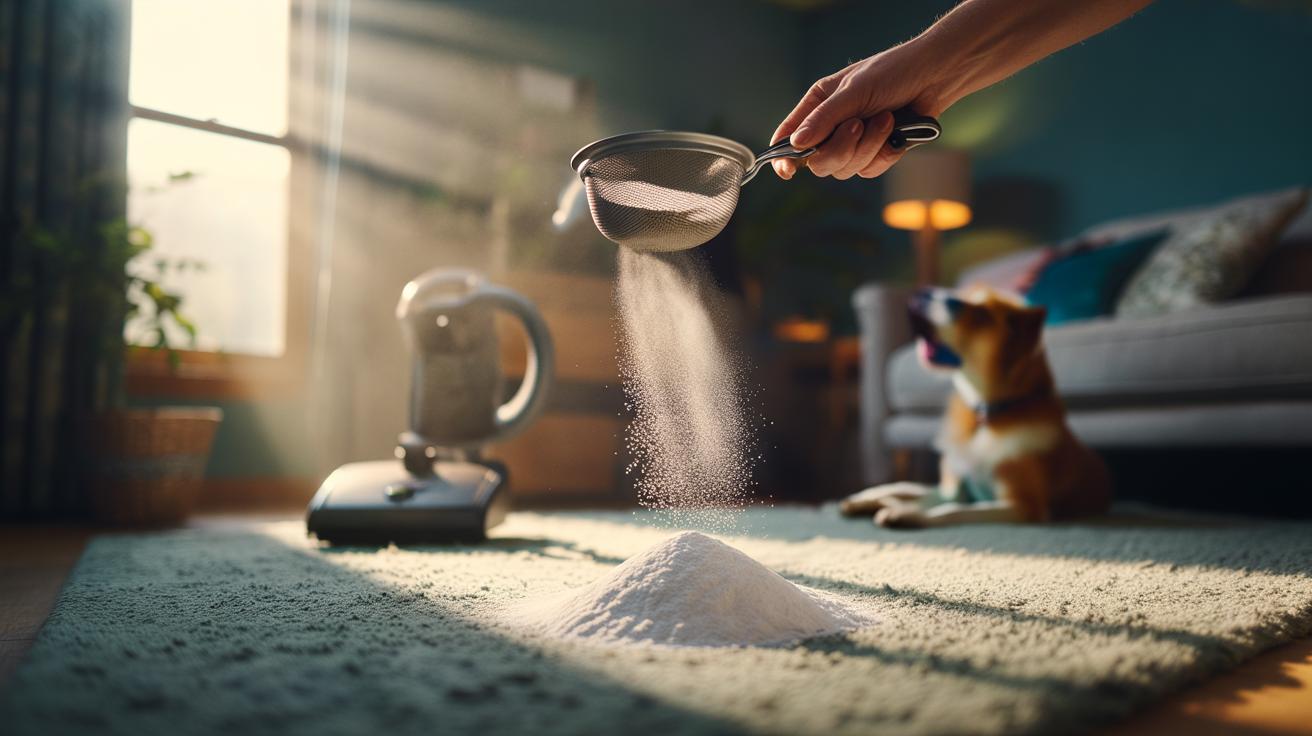
Start with a dry carpet and a clean vacuum. Decant bicarbonate of soda into a fine-mesh sieve or shaker for even coverage. Lightly dust the area, aiming for a barely-there snowfall rather than dunes. Work the powder gently with your hand or a soft brush to reach the base of the fibres. Leave it to dwell for 30–120 minutes for routine refreshes, or overnight for stubborn odours. For wool-rich carpets, err on the shorter side to avoid unnecessary dryness in the pile. Before vacuuming, open a window; moving air aids the process and lifts any musty vapours.
Vacuum slowly, overlapping passes to collect both powder and loosened particles. Empty the canister promptly—odour molecules will sit there otherwise. A patch test is wise on delicate dyes or vintage rugs, and avoid sprinkling on damp patches until fully dry. Optional: repeat the light sprinkle for persistent smells rather than piling it on; thin, repeated applications are safer and more effective than a heavy dump of powder.
| Area | Amount | Dwell Time | Notes |
|---|---|---|---|
| Routine refresh (1 m²) | 1–2 tsp | 30–60 mins | Light, even dusting |
| Pet odour spot (20–30 cm) | 1 tsp | 2–8 hrs | Ensure stain is dry first |
| Whole room (12 m²) | 2–4 tbsp | 1–2 hrs | Ventilate and vacuum slowly |
Safety, Fabrics, and Pet Considerations
Most modern carpets tolerate bicarbonate well, but fibres differ. Wool and silk are naturally more delicate; use less powder and shorter dwell times. Jute or sisal can darken if they’re slightly damp when sprinkled—confirm dryness first. Latex-backed rugs sometimes trap fine dust; vacuum thoroughly from both sides. Never rub wet bicarbonate into a wet spill—dry the area first; then treat odour. For asthmatics, choose vacuums with HEPA filtration to prevent fine particles from re-entering the room. Keep pets away during dwell time so paws don’t track powder or lick it up.
As for add-ons: some people stir in essential oils. Use caution—oils can spot certain fibres and may irritate pets, especially cats. A safer twist is a teaspoon of ground coffee in the vacuum canister after you’ve finished; it deodorises the bin without touching the carpet. If a smell returns quickly, look for hidden causes: a leaking radiator valve, underlay dampness, or a pet-marking pattern that needs behaviour training or enzyme cleaners.
Beyond Carpets: Odour Hotspots and Troubleshooting
The bicarbonate sprinkle thrives in other places where smells linger. Try it on rugs, runners, car mats, and fabric doormats—always dry, always lightly applied. For sofas and upholstered chairs, a minuscule shake via a sieve works, followed by a careful vacuum with an upholstery tool. Avoid leather and suede—stick to specialist cleaners there. Shoes benefit from a pinch left overnight inside a coffee filter sachet. Pet beds respond well to a shake, dwell, and vacuum routine between washes, cutting the wet-dog note without perfumed overload.
When results disappoint, diagnose the chemistry. Protein-based accidents need an initial enzymatic cleaner to break down the culprit; bicarbonate then mops up residual odour. Smoky rooms may need repeated cycles and proper ventilation. If humidity’s high, run a dehumidifier—dry air helps both odour control and vacuum efficiency. If the underlay or subfloor is saturated, only drying and remediation will solve the problem. At that point, bicarbonate is a support act, not the star. Document what works—amounts, dwell times—so future refreshes become swift and predictable.
The charm of a bicarbonate sprinkle lies in its simplicity: a pantry staple that quietly restores balance to busy homes. It’s frugal, low risk, and anchored in straightforward chemistry rather than perfumed theatre. Used thoughtfully—light dusting, proper dwell, diligent vacuuming—it can keep fibres crisp and rooms calm without an aerosol in sight. Think of it as routine care, not an emergency fix. The next time the sitting room smells lived-in rather than lovely, will you reach for bicarbonate of soda, fine sieve in hand, or experiment with another trick to make your carpets smell freshly walked-on again?
Did you like it?4.3/5 (21)