In a nutshell
- 🪑 Fabric cushioning spreads load, lowers friction, and traps grit, turning scraping into gliding to prevent scratches on hardwood, laminate, tile, and vinyl.
- 🧵 Material choices: wool for plush quiet glide, cotton for easy washing, and synthetic blends for high durability; seek elastic collars and reinforced bottoms for a secure fit.
- 📏 Fit and care: measure legs for a snug, no‑bunch fit; balance glide on rugs; vacuum weekly, wash at 30°C in a mesh bag, rotate pairs, and replace when the weave thins or turns shiny.
- 🧶 DIY hack: upcycle wool jumpers or thick socks—cut, hem, add an elastic channel, stitch darts for square legs, and optionally bond a felt disc for heavy chairs, saving money and waste.
- 🔕 Everyday benefits: quieter rooms, protected finishes, renter‑friendly setup, washable and reversible protection with instant results and no adhesives or drilling.
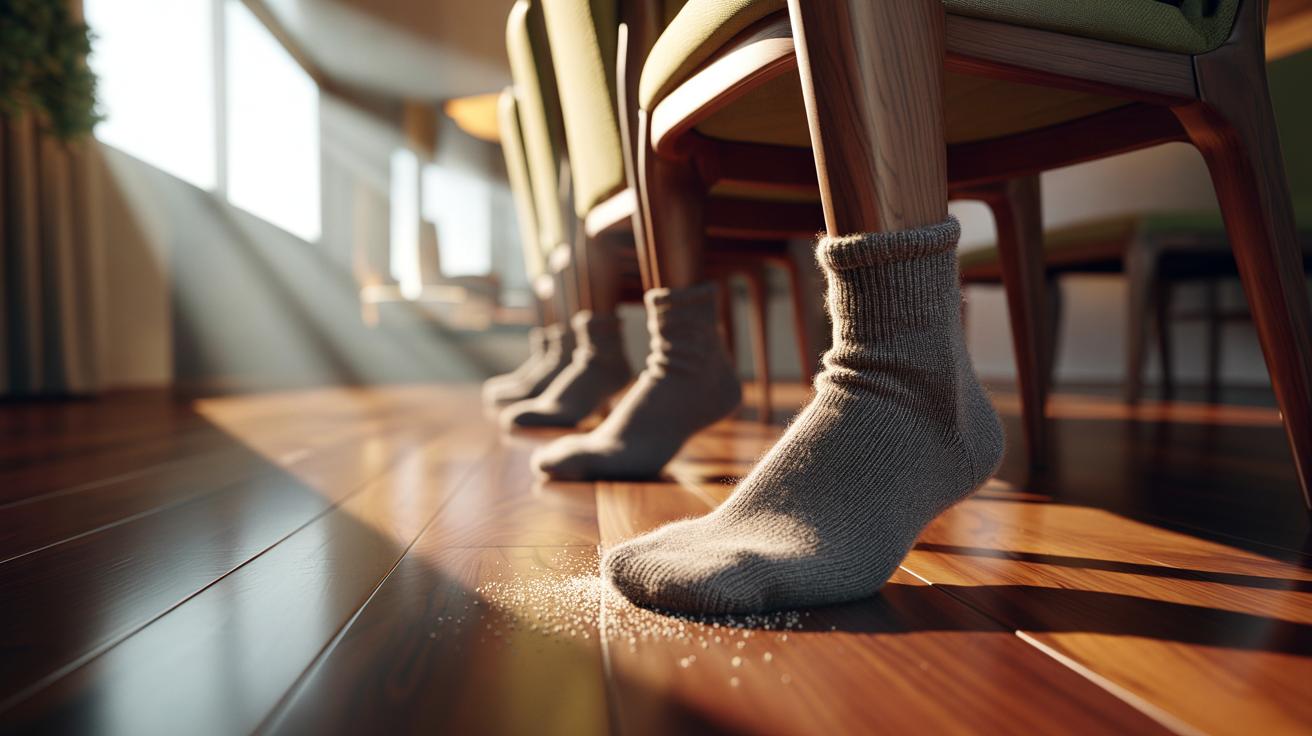
Scuffed boards, grey arcs on luxury vinyl, and tiny chips in tiles are the quiet tax of everyday dining. A simple fix is hiding in your sock drawer: chair‑leg socks. This low-cost hack slips fabric over furniture feet to create a soft, durable buffer between leg and floor. The result is less abrasion, gentler contact, and muted movement. By inserting a layer of cushioning, you change the physics of contact from scraping to gliding. The socks collect grit before it grinds under pressure, dampen harsh edges, and curb noise. For renters, families, and home workers alike, they deliver immediate protection without adhesives or drilling—and they’re washable.
How Fabric Cushioning Stops Scratches
The science is delightfully simple. Bare chair legs concentrate force on a small footprint, and trapped particles act like sandpaper. A fabric sleeve spreads that load, while fibres create a micro-cushion that captures grit before it can score the surface. The textured weave reduces the effective coefficient of friction, so chairs slide with less resistance and less energy lost to abrasive wear. On hardwood and laminate, this shift from hard-to-hard contact to soft-to-hard contact is transformative.
There’s also a noise dividend. Dense knits and felt-like fabrics dampen vibration, so movement becomes a glide rather than a rasp. By reducing both pressure peaks and particle-to-floor contact, fabric socks cut the two main drivers of scratches: point load and debris. On tiles, they blunt edge chipping at grout lines; on vinyl, they prevent the tiny swirls that dull a surface over time. For best results, choose snug socks that won’t twist or bunch as chairs move.
Choosing Materials: Wool, Cotton, and Synthetic Blends
Different fibres change glide, grip, and durability. Wool offers thick, resilient cushioning and quiet movement, ideal for timber floors in busy households. Cotton is breathable and easily washable but can wear faster on rough grout lines. Synthetics (acrylic, polyester, nylon) deliver hard-wearing fibres and consistent slide, often with a tighter knit that resists snagging. Blends add elasticity so socks stay put without cutting into the leg. Match material to floor: softer knits for hardwood, denser blends for tile or stone. Dark colours disguise dust; lighter tones help you spot debris early.
In UK shops and online marketplaces, options range from simple knitted tubes to reinforced bottoms with double-layer pads. Look for elastic collars or silicone bands for a steady fit, and avoid rough seams that could mark softer finishes. Here’s a quick comparison to steer your choice:
| Material | Glide on Hard Floors | Durability | Washability | Best For | Typical Price (UK) |
|---|---|---|---|---|---|
| Wool | Very smooth | High | Hand/low-temp | Hardwood, noise control | £5–£10 (4–8 pcs) |
| Cotton | Smooth | Medium | Machine, 30°C | Laminate, vinyl | £4–£8 (4–8 pcs) |
| Synthetic Blend | Moderately smooth | Very high | Machine, easy-care | Tiles, stone, heavy use | £6–£12 (8–16 pcs) |
Fit, Maintenance, and Hygiene Tips
A secure fit matters as much as material. Measure the leg circumference or diagonal if square, then select socks with a slightly smaller resting size for a firm grip. Deep cuffs stop slippage; reinforced bottoms prevent premature wear. If chairs sit on rugs and hard floors, balanced glide is key—too slippery can be unsafe on woven rugs. The sock should hug the leg without wrinkling, because bunching creates friction points that defeat the purpose.
Maintenance is simple. Tap or vacuum socks weekly to remove grit, then machine wash at 30°C in a mesh bag every month or two. Skip fabric softeners; they can reduce fibre grip and attract dust. Rotate socks between chairs to even out wear, and replace when the weave thins or the bottom feels shiny. For households with pets, choose tighter knits that resist snagging. A quick check under the chair after sweeping ensures no trapped debris scratches on the next slide.
DIY Chair-Leg Socks: Step-by-Step and Cost-Saving Tips
Repurposing textiles turns this hack into a thrifty, sustainable project. Old wool jumpers, thick socks, or fleece sleeves make excellent blanks. Cut a length 3–5 cm longer than the leg height you want covered, fold inside-out, and hem the bottom with a tight zigzag or blanket stitch. Sew a narrow channel at the top and thread 6–8 mm elastic, then knot for a snug collar. Square legs benefit from a small dart at each corner to keep the sock aligned.
For heavy chairs, add a circular felt disc or a second fabric layer to the base before turning right-side out. A set for four chairs can cost pennies if you’re upcycling, versus retail prices on the high street. Choose colours that echo skirting boards or chair frames for a discreet look, or go bold to signal a design choice. Keep a spare pair per chair; swapping them during washing keeps protection continuous.
From terrace flats with sensitive oak planks to rentals with vinyl, chair‑leg socks are a small adjustment with outsized results. They lower friction, isolate grit, and hush the scrape that travels through a room. Because they’re removable and washable, you can protect floors without adhesives or hardware—and reverse the change in seconds. Whether you buy reinforced blends or stitch your own from cast-off knits, you’ll extend the finish of your floors and keep movement quiet. What chairs in your home would benefit most from fabric cushioning, and which material would you try first for a perfect glide?
Did you like it?4.6/5 (28)