In a nutshell
- 🚿 Hard-water minerals form limescale and biofilm on showerheads, narrowing jets and reducing pressure while distorting spray patterns.
- ⚗️ Household vinegar’s acetic acid reacts with calcium carbonate to create soluble calcium acetate and CO₂—fizz signals deposits dissolving without harsh abrasion.
- 🧰 The overnight vinegar soak (6–12 hours) uses a bag or bowl; follow with a nylon brush, jet clearing, and thorough rinse—never mix vinegar with bleach and avoid contact with natural stone.
- 🧪 Alternatives: citric acid is mild and effective; stronger cleaners with sulfamic acid act faster; hydrochloric acid is not recommended for finishes and seals—choose the mildest option that works.
- 🔁 Ongoing care: schedule periodic soaks and wipe-downs to maintain performance, save water, and extend fixture lifespan with minimal cost and effort.
Across the UK, stubborn limescale narrows showerhead jets, steals water pressure, and leaves a chalky halo around chrome. The simplest fix costs pennies: an overnight vinegar soak that quietly dissolves mineral deposits while you sleep. As a weak acid, acetic acid chews through calcium carbonate without harsh fumes or special tools. In this piece, we unpack why showerheads clog, the chemistry behind vinegar’s bite, and a precise method for bringing back a clean, even spray. Handled correctly, a routine soak restores performance, saves water, and extends your showerhead’s life. It’s a small ritual with outsized impact on comfort and efficiency.
Why Showerheads Clog in Hard-Water Homes
Hard water—common in swathes of southern and eastern England—carries dissolved calcium and magnesium. When hot water jets from a shower, droplets evaporate and microbes colonise surfaces, leaving behind calcium carbonate and magnesium hydroxide as crusty scale. Each grain adds friction, roughens the internal pathways, and slowly pinches spray nozzles until streams sputter or spray sideways. The result is deceptively familiar: a hissing, uneven flow that feels weak even when the boiler is doing its best. You pay for the same water, yet less of it reaches you.
Modern showerheads often use tiny rubber nipples to shape spray patterns. Scale grows around these flexible edges, locking them in place and reducing the number of active jets. Scale also traps soap scum and biofilm, adding a slippery, grey film that resists ordinary wipe-downs. Over time, thread connections can seize and O-rings stiffen. What appears as cosmetic residue is a mechanical problem: mineral buildup literally remodels the water channels. Fortunately, the right acid breaks that architecture apart.
How Acetic Acid Dissolves Mineral Buildup
Household vinegar (typically 5% acetic acid) attacks the alkaline nature of limescale—largely calcium carbonate. The acid reacts to form soluble calcium acetate, water, and carbon dioxide. That faint fizz you see is CO₂ escaping, a visual cue that the deposit is surrendering. Because acetic acid is relatively weak, it preferentially targets the mineral, leaving chrome-plated and many plastic parts unharmed during a short soak. It’s chemical specificity on your side, swapping brute force scrubbing for a gentler, targeted reaction.
Temperature and time matter. Warmer solutions accelerate the reaction, but room-temperature vinegar still works overnight. Thick deposits benefit from a longer contact window, ideally 6–12 hours. After the reaction loosens the crust, a nylon brush or an old toothbrush clears the residue from crevices. Take care with natural stone around the shower area: acids can etch marble or limestone. Always keep vinegar off sensitive surfaces and rinse diligently after treatment. A focused soak limits collateral contact and maximises results.
The Overnight Vinegar Soak: Step-by-Step
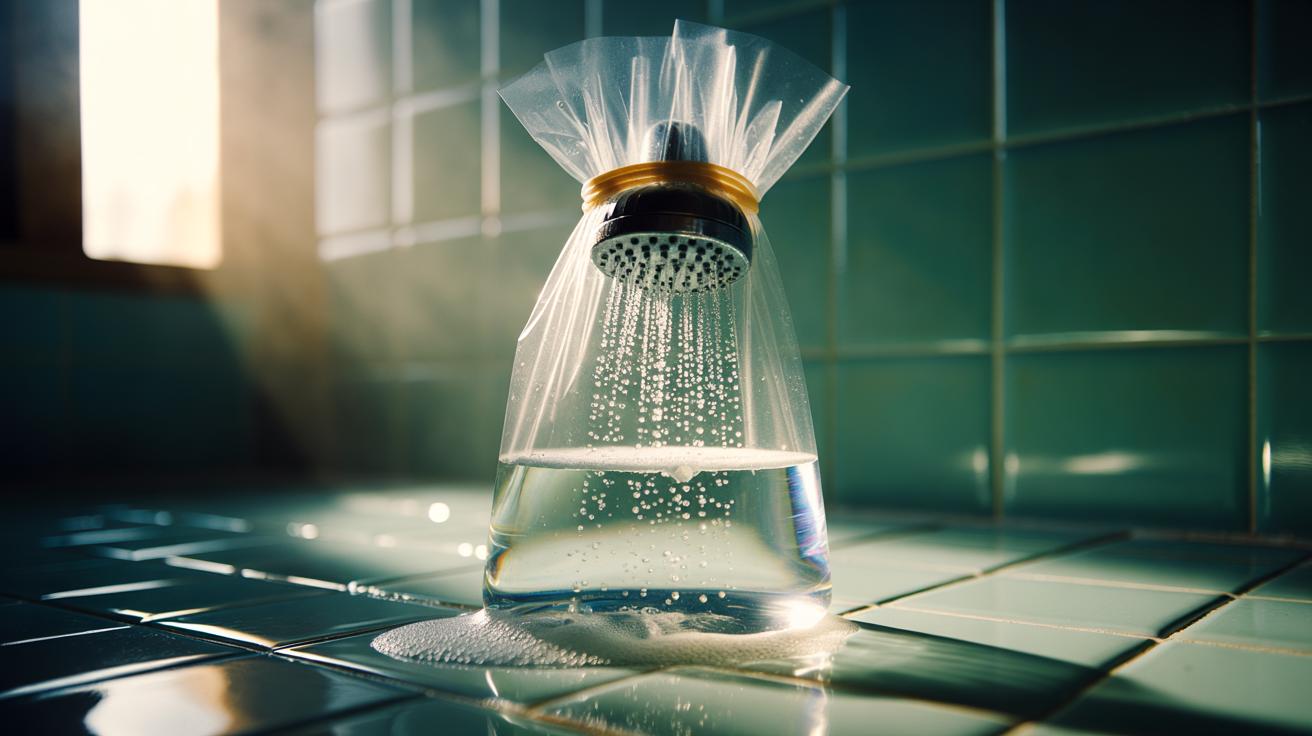
For a fixed showerhead, fill a sturdy bag with enough white vinegar to submerge the nozzles and secure it with a rubber band or zip tie so the head sits fully immersed. For removable models, detach and place the face in a bowl of vinegar. Aim for 6–12 hours; heavy limescale may need the upper range. In most cases, eight quiet hours are enough to free clogged jets and restore a uniform spray pattern by morning. A light warm-up of the vinegar speeds the process.
When time is up, discard the liquid, scrub gently with a nylon brush, and poke any stubborn jets with a plastic toothpick. Rinse thoroughly, then run hot water for a minute to flush debris. Add a final wipe with a microfibre cloth to polish chrome. Never mix vinegar with bleach—the reaction releases dangerous chlorinated gases. If your showerhead has an oil-rubbed bronze or unlacquered brass finish, limit exposure and test first; you can soak only the nozzles by positioning the bag carefully.
Vinegar Versus Other Acids: What Works and When
Vinegar is the safest first resort for most household limescale, but alternatives have their place. Citric acid crystals make a strong, food-safe solution that smells milder and can be more effective on heavy deposits. Commercial descalers often use sulfamic acid for faster action, while hydrochloric acid is generally too aggressive for domestic fixtures. The goal is targeted dissolution without sacrificing finish or seals. Always follow manufacturer guidance for plated or specialty surfaces, and keep acids away from natural stone.
| Acid | Typical Strength | Pros | Cons | Suitable Surfaces | Soak Time |
|---|---|---|---|---|---|
| White vinegar (acetic) | 5% | Cheap, low odour, gentle | Slower on heavy scale | Chrome, plastic, rubber (short soaks) | 6–12 hours |
| Cleaning vinegar | 6–10% | Faster than standard vinegar | Harsher on finishes if overused | Most chrome/plastic (test first) | 2–6 hours |
| Citric acid solution | 5–10% | Food-safe, pleasant smell | May need warm water to speed up | Chrome, plastic, rubber (short soaks) | 3–8 hours |
| Sulfamic acid (descaler) | Varies | Rapid on thick deposits | Requires PPE; follow labels | Most metals/plastics (check) | 0.5–3 hours |
| Hydrochloric acid | Strong | Very fast | Corrosive; risks finish and seals | Not recommended for showerheads | — |
For routine maintenance, vinegar’s balance of safety and effectiveness is hard to beat. Use stronger options only when scale defeats repeated soaks, and always ventilate well, wear gloves, and protect nearby stone. Choosing the mildest acid that reliably dissolves your deposits will preserve gaskets, plating, and peace of mind.
A regular, gentle acid treatment keeps showers crisp, quiet, and efficient. Schedule a quick inspection each month: if jets start to stray, a targeted vinegar soak is quicker than wrestling with a wrench. Pair it with a weekly wipe of the faceplate and a periodic descaler for kettles to tame household minerals at the source. Small habits prevent big blockages, stretching the life of fixtures and lowering water waste. What will your routine look like—an overnight soak on the first weekend of the month, or a quick check whenever the spray starts to wander?
Did you like it?4.6/5 (22)