In a nutshell
- 🌫️ Mustiness stems from trapped humidity in confined wardrobes, fuelling microbes that release VOCs and produce stale odours.
- 🧪 Activated charcoal works via adsorption, using vast microporous surfaces to capture moisture and odour molecules—passively and without fragrance.
- ⚖️ Compared with silica gel (strong moisture absorber) and baking soda (limited odour control), charcoal offers a dual action on humidity and smells and is reusable.
- 🧥 Choose breathable pouches of bamboo charcoal (200–300 g for a standard wardrobe), position for airflow, and pair with good habits like fully drying clothes and addressing visible mould.
- ☀️ Maintenance is simple: recharge in sunlight for 2–3 hours monthly; expect an 18–24 month lifespan and the option to repurpose spent charcoal in soil.
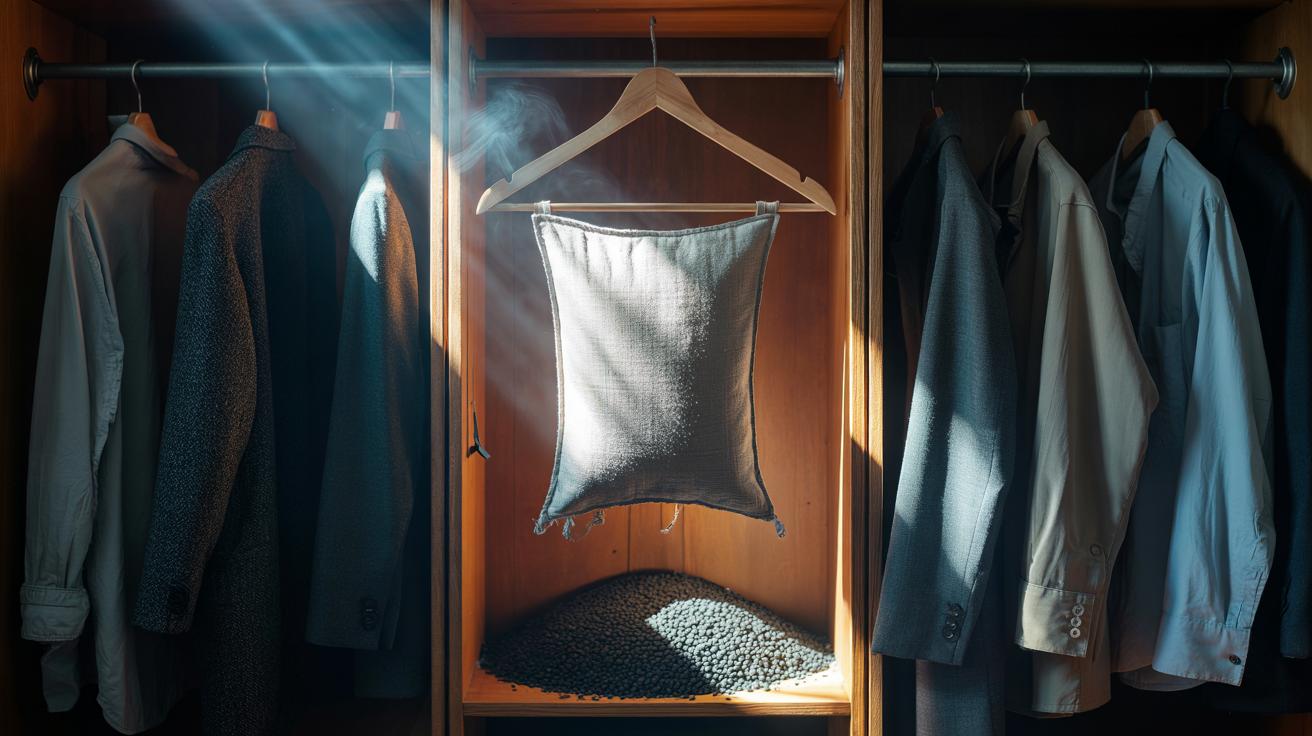
Musty wardrobes are a peculiarly British headache: rainswept commutes, radiators humming, then clothes shut away while still carrying a trace of damp. The quiet culprit is trapped humidity, which feeds microbes and the stale odours they exhale. A simple fix has gathered momentum: the humble charcoal bag. Filled with porous carbon—often bamboo-derived—it pulls moisture and smells from the air with no fragrance, batteries, or bin-bound plastic refills. Used correctly, a charcoal bag can keep a closed wardrobe fresh between airings. Here’s how the carbon works at a molecular level, what to buy, and how to use it properly so mustiness stops lingering in your clothes.
Why Wardrobes Smell: The Science of Mustiness
Mustiness is more chemistry than mystery. A wardrobe is a confined box, short on airflow and long on textiles that hold water. After a rainy walk or a hasty iron, minute quantities of moisture remain in fibres. In stagnant conditions, that damp nudges relative humidity upwards, encouraging mould spores and bacteria to metabolise skin oils, natural dyes, and detergent residues. The result is a cocktail of volatile organic compounds (VOCs) your nose reads as “stale”. Even a small rise above 60% relative humidity can set this microbial machine in motion, especially in older homes with cool, external walls.
Odour molecules also cling to textiles and wardrobe linings. Chipboard interiors can off-gas, adding a gluey note. Fragranced sachets often veil rather than fix the problem. What’s needed is a non-messy way to lower ambient humidity and pull VOCs out of the airspace. That’s where a bag of highly porous, activated carbon earns its keep.
How Activated Carbon Traps Moisture and Odours
Activated carbon works by adsorption—molecules adhere to its internal surface rather than being absorbed like a sponge. During production, carbon is steam- or chemically-activated to create a labyrinth of micropores and mesopores, giving a single handful a surface area rivaling a football pitch. Water vapour and odour compounds are drawn onto that surface by weak electrostatic and Van der Waals forces. The process is passive, silent, and continuous—no plugs, pumps, or perfumes. While silica gel is a stronger desiccant, carbon’s advantage in wardrobes is its twin action: it moderates humidity and scrubs VOCs responsible for that “cupboard” smell.
Because the binding is reversible, a monthly recharge in sunlight or near a warm window encourages trapped moisture and odours to desorb, restoring capacity. That means fewer consumables and less waste. Here’s how carbon compares with familiar options:
| Material | Primary Mechanism | Reusable | Typical Lifespan | Best For |
|---|---|---|---|---|
| Activated Charcoal | Adsorbs moisture + VOCs | Yes (sunlight recharge) | Up to 2 years | Wardrobes, shoe cupboards |
| Silica Gel | Absorbs moisture strongly | Sometimes (oven recharge) | 1–2 years | Very damp spaces, toolboxes |
| Baking Soda | Neutralises some acids | No | 1–3 months | Fridges, small containers |
Choosing and Using a Charcoal Bag in the UK Home
Look for a breathable linen or cotton pouch filled with bamboo charcoal or coconut-shell carbon. Size matters: a 200–300 g bag suits a single wardrobe; larger or walk-in spaces may need 500 g or a pair of smaller bags placed high and low. Position the bag where air can circulate—on a hanger or a shelf—not buried behind coats. For homes with persistent damp, pair carbon with good basics: dry garments fully, crack the doors after ironing, and wipe any visible mould with a suitable cleaner before deploying the bag.
Maintenance is simple. Recharge in bright daylight for 2–3 hours every month; on gloomy weeks, a warm, sunlit window or airing cupboard helps. Avoid washing the bag; moisture ruins the pores. Keep out of reach of children and pets, and replace after 18–24 months when capacity wanes. Thoughtful brands use plastic-free packaging and offer guidance on repurposing spent charcoal in soil to improve drainage—another quiet win.
Charcoal bags succeed because they tackle the physics of stale air rather than perfume it away. The fine carbon labyrinth trims humidity, starves microbes of their favourite conditions, and captures the odour molecules that make clean clothes seem less than fresh. If you set the right size, the right spot, and the right routine, a wardrobe can stay crisp through bad weather and busy weeks. What change would have the biggest impact in your home: upgrading ventilation, switching to a smarter activated carbon bag, or rethinking the way you store and dry clothes between wears?
Did you like it?4.7/5 (20)