In a nutshell
- 🧪 The science: activated carbon with immense surface area and micropores captures odour molecules via adsorption (van der Waals), not absorption, neutralising sulfur compounds, amines, and aldehydes.
- 🥣 Setup that works: Use food‑grade granules (not BBQ briquettes), 50–150 g in a shallow dish for maximum airflow, place on a shelf, uncovered or with mesh, and double up for intense smells.
- ⏱️ Performance: Micropores trap small volatiles while mesopores guide them; moisture can compete, so keep the fridge cool and uncrowded; typical reduction in 12–48 hours and refresh every 4–6 weeks.
- 🔄 Maintenance and safety: The carbon is inert; gently handle to avoid dust; “bake off” at 120–150°C to refresh capacity, then replace after a few cycles; choose coconut‑shell sources and repurpose retired granules.
- 🧰 Troubleshooting and alternatives: Remove the source (clean seals, drain, drip tray), add a second bowl or larger dose, and consider bicarbonate of soda or low‑dust pelleted carbon as complementary options.
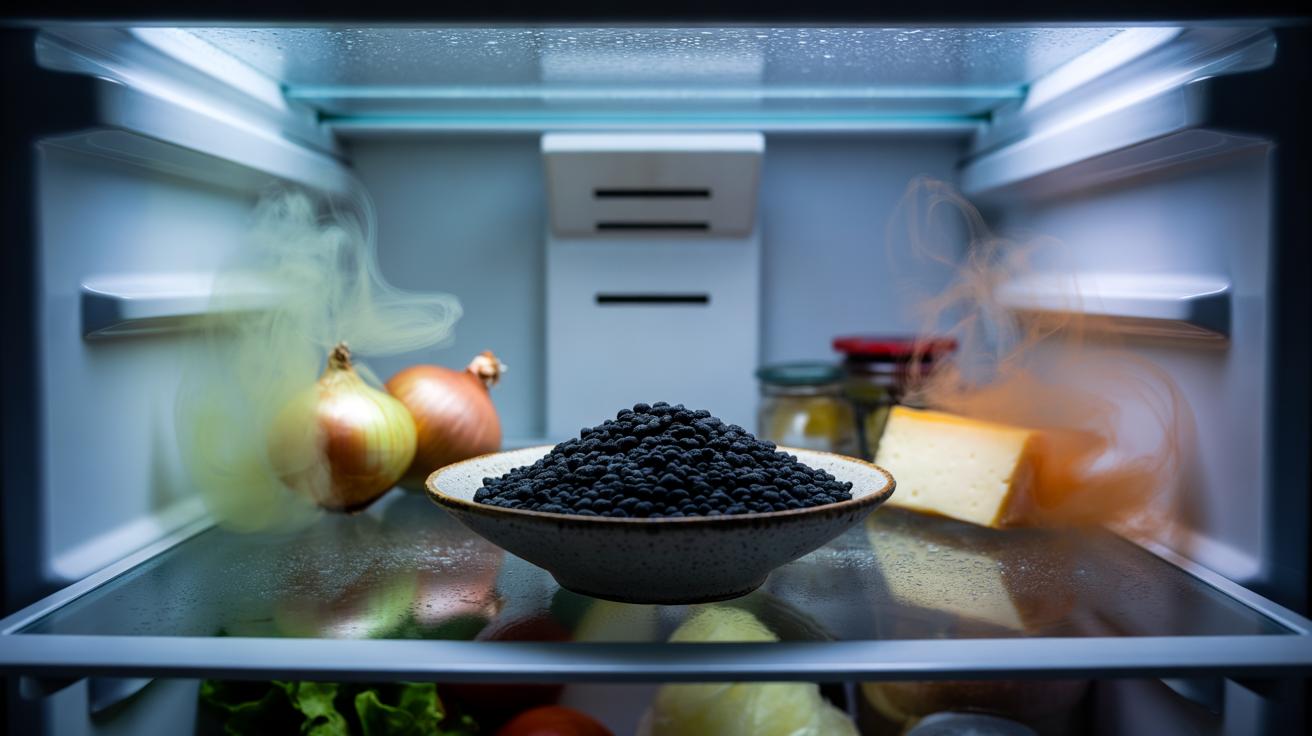
The humble bowl of charcoal in the fridge has become a quiet sensation for households tired of mystery whiffs. It is not a perfume or a gimmick; it is chemistry doing the heavy lifting. By using activated carbon—a form of charcoal treated to create a labyrinth of pores—you can strip away stubborn odours from fish, onions, and last week’s leftovers without masking them. No sprays, no artificial scents, just physical capture of smelly molecules. This low-cost trick is safe, fast and, with a little maintenance, long-lasting. Here’s how it works, why it works, and how to set it up so your fridge smells like nothing at all—which is exactly how freshness should smell.
Why Activated Carbon Works Inside Your Fridge
Activated carbon has an extraordinary microporous structure—a honeycomb of tiny cavities, many less than two nanometres wide. That creates a colossal internal surface area, often 800–1,200 m² per gram, where odour molecules stick by weak electrical attractions called van der Waals forces. This is adsorption (molecules cling to a surface), not absorption (soaking in). The pores are tuned to catch the culprits behind fridge funk: sulfur compounds from eggs and brassicas, amines from fish, and aldehydes from ageing fats. When these volatiles meet activated carbon, they are held fast without adding any new scent.
Two pore sizes matter indoors: micropores trap the smallest volatiles, while mesopores funnel bigger molecules towards the tight spaces that hold them. Moisture can compete for sites, which is why a steady, cool fridge and a shallow, well-ventilated bowl help. Unlike gels or ionisers, carbon’s action is passive and predictable; performance depends on surface area, contact time and clean, open pores. Used correctly, the “charcoal bowl trick” doesn’t mask odours—it removes them from the air until the carbon’s capacity fills. No deodoriser works forever without maintenance.
Setting Up the Charcoal Bowl the Right Way
Choose food-grade activated carbon granules or pellets (often sold for water filters or aquariums). Do not use barbeque briquettes or anything impregnated with lighter fluid. Tip 50–150 g into a shallow ceramic or glass dish to maximise airflow, then place it on a shelf, ideally near the rear where circulation is steadier. Keep it away from drippy containers and let it sit uncovered; a bit of mesh over the bowl limits dust without blocking air. If odours are intense after a spill, start with two bowls on different shelves.
Quantity and timing depend on fridge size and the strength of the smell. Strong fish or curry residues may need a larger dose for the first 24–48 hours. For routine freshness, a smaller bowl maintained regularly works well. Do not ingest the carbon, and avoid stirring near fans to keep dust out of the air channel. If you’re cleaning anyway, wipe seals, clear the drain hole, and store cut onions and pungent cheeses in sealed containers to reduce future loads.
| Fridge Size (litres) | Activated Carbon (g) | Expected Odour Reduction | Refresh/Replace |
|---|---|---|---|
| Under 150 L (small) | 50–75 g | 12–24 hours | Every 4–6 weeks |
| 150–300 L (standard) | 75–120 g | 24–48 hours | Every 4–6 weeks |
| 300 L+ (large) | 120–180 g | 24–72 hours | Every 4–6 weeks |
Safety, Sustainability, and When to Replace
Activated carbon is inert and odourless. It is safe to use around food, though dust can smudge shelves, so handle gently. If granules look damp or smell faintly of what they captured, it is time to refresh. You can “bake off” moisture and some volatiles by spreading the carbon on a tray and heating at 120–150°C for 60–90 minutes. Home ovens rejuvenate capacity; they do not fully re-activate carbon as factories do. After two or three cycles, performance drops and replacement makes sense.
Look for coconut-shell or sustainably sourced carbon. Retired granules can still work in a kitchen caddy, shoe cupboard or under-sink cupboard to tame musty notes. They are landfill-safe and can be mixed into potting soil in small amounts as an odour buffer, though they’re not fertiliser. A simple rule: if your nose notices the fridge again, either clean the source or give the carbon fresh legs. Odours always return if the cause—spoiled food, leaks, or poor sealing—is not addressed.
Troubleshooting Stubborn Odours and Smart Alternatives
If the smell lingers, you may be dealing with an ongoing source. Check for drips under crisper drawers, clean the drain channel with a pipe cleaner, and inspect door seals for trapped crumbs. Add a second bowl or increase the dose temporarily. Keep the temperature near 4°C and avoid overpacking; odour control improves with circulation. For smoky curry residues or potent fish, leave a bowl in the freezer compartment too; cold air recirculates and shares volatiles. Always remove the cause before expecting miracles from any deodoriser.
Complementary options help. Bicarbonate of soda buffers acidic vapours, while coffee grounds absorb and mask—use them only if you don’t mind a faint aroma. Sealed containers for cut onion, garlic, and ripening cheeses cut emissions at source. A quick wipe with diluted vinegar after spills reduces bacterial by-products that smell. For households sensitive to dust, choose pelleted carbon; it sheds less than powder. If a week passes with no improvement, the culprit could be the drip tray at the back of the appliance—clean it to prevent stale water odours.
The charcoal bowl trick earns its reputation because it does the quiet, relentless work of removing odours instead of hiding them. With its micropores and vast surface area, activated carbon traps the very molecules that make your fridge smell tired, and it does so safely and cheaply. Treat the carbon as a serviceable filter—refresh it, replace it, and give it airflow. Pair that with good storage habits and swift clean-ups, and your fridge can stay genuinely neutral for months on end. What change will you make this week—bigger bowl, better containers, or a complete clean—to reclaim that blissfully scentless cold cabinet?
Did you like it?4.7/5 (21)