In a nutshell
- 🧺 Charcoal sachets keep hampers fresh by adsorbing odour molecules (ammonia, sulphur compounds) and buffering humidity via a maze of micro/mesopores.
- 🌬️ They work fragrance-free and passively, reducing the damp microclimate that fuels bacterial growth—ideal for laundry baskets, gym bags, and shoe cupboards.
- 🛠️ Usage tips: choose bamboo or coconut-shell activated carbon in breathable cotton/linen, place near the lid or sides, refresh in sunlight monthly, and replace every 6–12 months.
- ⚖️ Compared with alternatives, charcoal balances odour control and moisture; silica gel targets water only, baking soda is weak in damp setups, and scented sprays merely mask smells.
- 🌱 Sustainability: opt for plastic-free packaging; spent charcoal can be scattered into soil if additive-free, supporting a lower-waste, cleaner indoor-air approach.
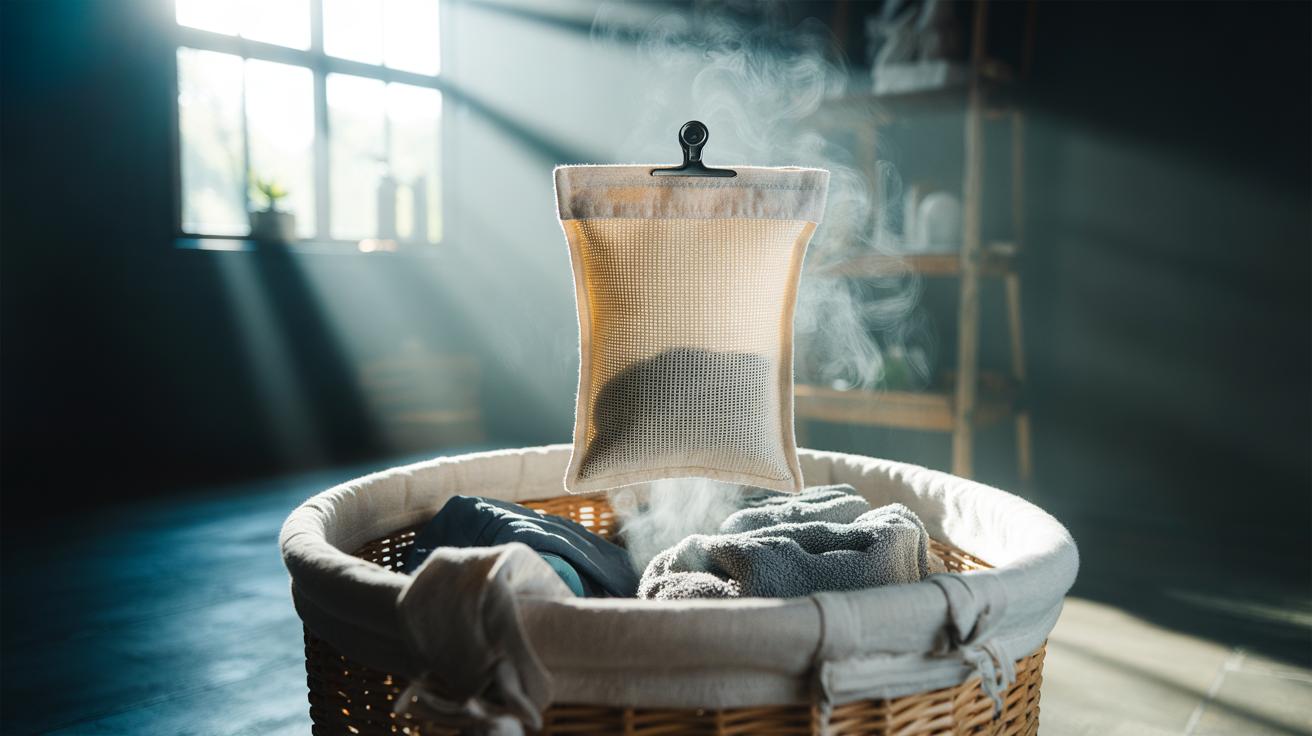
Stuffed with sweaty gym socks and damp towels, the laundry basket can turn pungent fast. Charcoal sachets offer a low-tech, high-impact answer: tiny pillows filled with activated carbon that quietly lock away moisture and stubborn odours. Their magic lies in a maze of microscopic pores that attract water vapour and smell-causing molecules, reducing the humid microclimate that bacteria enjoy. Unlike sprays, they add no fragrance and leave no residue on fabrics. They work continuously, passively, and without power, which makes them ideal for homes aiming to cut chemical use and energy bills. Here’s how the science stacks up, and how to get the best from them in everyday laundry routines.
How Activated Charcoal Works in a Laundry Basket
Activated charcoal is carbon that has been heat-treated to create an enormous internal surface area—often 800–1,200 m² per gram. Those micropores and mesopores capture molecules through adsorption (binding to surfaces) rather than absorption (soaking in). Odour culprits such as ammonia, short-chain fatty acids, and sulphur compounds are drawn into the porous network by weak electrostatic and van der Waals forces. Crucially, charcoal removes smells instead of masking them, keeping the hamper fresher without clashing with detergent scents.
Moisture matters as much as smell. By taking up water vapour, charcoal reduces relative humidity inside the basket, which slows bacterial growth and the conversion of sweat into volatile stink. It acts as a gentle humidity buffer, smoothing peaks between steamy showers and cool nights. While it can’t dry sopping garments, it cuts the dampness that turns clean cotton musty. In practice, this means fewer odours setting in before wash day and less need for aggressive fragranced products.
Choosing and Using Charcoal Sachets Wisely
Look for sachets filled with bamboo charcoal or coconut-shell activated carbon, stitched into breathable cotton or linen covers. A typical 60-litre basket benefits from 150–200 g of charcoal, split into two or three small pouches for better airflow. Place sachets where air circulates—near the lid or along the basket’s sides—rather than burying them at the bottom. If your hamper has a mesh pocket, use it to keep pouches dry and accessible.
Maintenance is simple. Every four weeks, refresh sachets in direct sunlight or on a warm windowsill for two to three hours; the gentle heat drives off adsorbed moisture and some trapped molecules. Avoid microwaves or ovens unless the maker explicitly allows it. Replace pouches after six to twelve months, depending on humidity and load. If the basket hosts very wet towels, use a hanger or rack for initial drying; charcoal stabilises humidity, but it cannot replace proper ventilation.
Charcoal Versus Other Deodorisers
Charcoal’s key advantage is selective adsorption without fragrance. Scented beads and aerosols perfume the space, which can clash with detergents and aggravate sensitivities. Baking soda absorbs some acids but performs poorly in humid, enclosed hampers and creates dust. Silica gel is a strong desiccant, yet it targets water more than odour molecules and often needs careful regeneration to avoid cracking. If you want fewer chemicals and less maintenance, charcoal is a balanced middle ground.
Cost and reusability tip the scales. A pack of sachets can last many months with occasional sun refreshes, while sprays and gels demand frequent replacement. Pairing a small sachet with regular hamper airing yields consistent results. For households with sports kit or baby clothes, consider a mix: charcoal for odours, a small, labelled desiccant canister for peak humidity days. Always keep any loose powders away from children and pets.
| Option | Targets | Reusable | Notes |
|---|---|---|---|
| Activated Charcoal | Odours + moderate humidity | Yes (sun refresh) | Fragrance-free; steady, passive effect |
| Silica Gel | High humidity | Yes (heat regeneration) | Less effective on odours alone |
| Baking Soda | Acidic odours | No | Messy; weak in damp baskets |
| Scented Sprays/Beads | Masking smells | No | Fragrance adds chemicals to air |
Materials, Sustainability, and End-of-Life
Many sachets use bamboo charcoal, made by pyrolysing fast-growing bamboo, or coconut-shell carbon, a by-product of the food industry. Both have strong sustainability credentials when produced in efficient kilns. Choose plastic-free packaging and natural-fibre covers to keep the whole product compostable at end-of-life. When the charcoal is spent, you can scatter the carbon into garden soil as a mild soil improver, provided the pouch fabric is removed and no synthetic additives were used.
Performance varies subtly by source: coconut-shell carbons often have more micropores for small molecules, while bamboo offers a broader pore distribution, helpful for mixed odours. In real-world baskets, both work well. Prioritise brands that disclose iodine number or surface area, and instructions for safe reactivation. Transparent data beats vague “extra strength” claims. By swapping throwaway perfume products for reusable carbon, you cut waste and keep indoor air simpler.
Charcoal sachets are a quiet fix for a noisy problem: they tackle the chemistry of humidity and odour instead of fighting it with perfume. With smart placement, routine sun refreshes, and attention to materials, they deliver cleaner-smelling hampers and fewer lingering whiffs on clothes. The approach scales too—gym bags, shoe cupboards, and airing cupboards all benefit from the same principles. Odour control becomes maintenance, not firefighting. How will you redesign your laundry corner—charcoal by the lid, a breathable liner, or a rotation of refreshed pouches to keep every basket crisp between washes?
Did you like it?4.5/5 (21)