In a nutshell
- 🧥 Activated charcoal keeps UK wardrobes fresh by true adsorption, trimming humidity and trapping odour molecules without masking, safe for wool, cotton, and leather.
- 🧪 The science: a maze of micro-/meso-/macro-pores delivers huge surface area (>1,000 m²/g), capturing vapours via van der Waals forces and capillary condensation—a physical, scent-free process.
- 📏 How to use: place 150–250 g across multiple breathable pouches, refresh monthly in sunlight or at 80–90°C; expect up to 2 years of life, then reuse carbon in soil or bins.
- 📊 Balanced performance: charcoal moderates moisture and excels at odour capture, outperforming cedar and baking soda, while being gentler than silica gel on delicate fibres.
- ♻️ Buy better: choose bamboo or coconut shell sources with recyclable packaging, avoid perfumes, budget £6–£20, and pair with ventilation or a dehumidifier if damp is chronic.
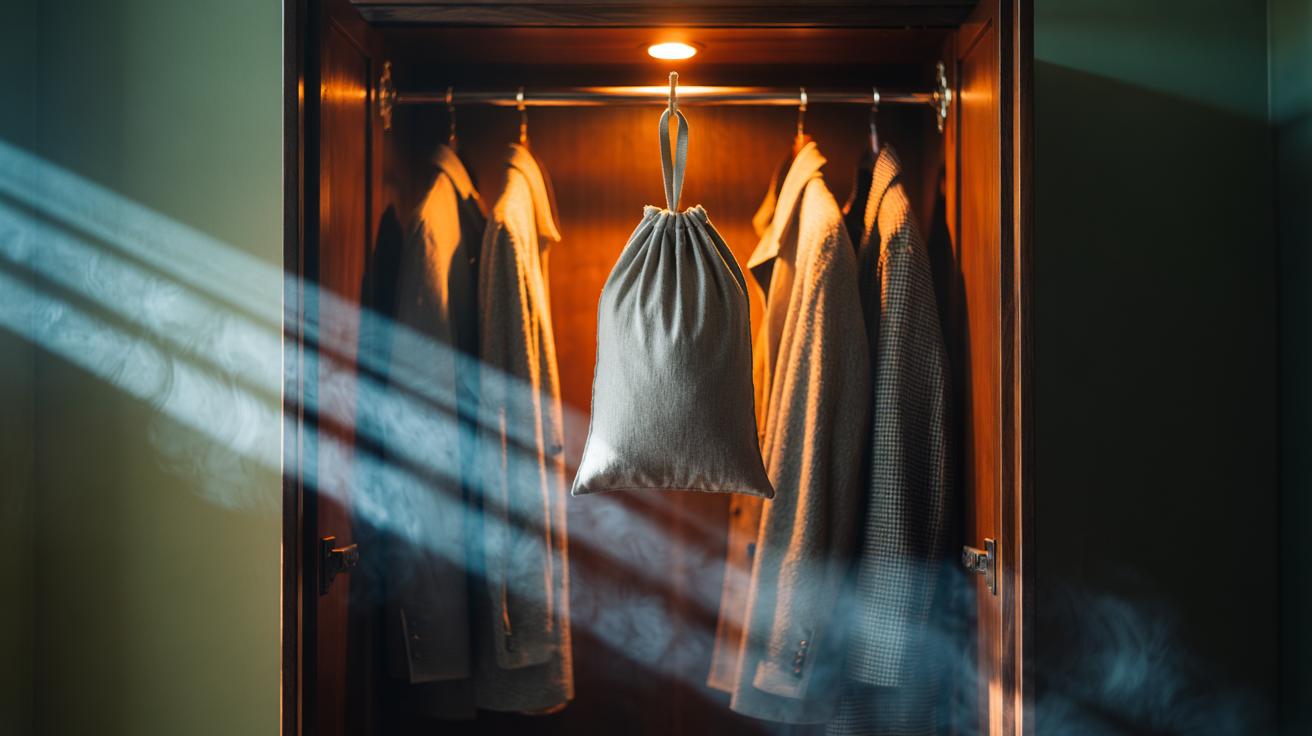
Open a wardrobe in a British home after a week of rain and you’ll often notice a faint, musty tang. A simple solution is a small, reusable piece of activated charcoal, the quiet workhorse of fresh wardrobes. Unlike scented sachets that simply mask smells, charcoal targets the source by trapping moisture and the volatile compounds that cause odours. Its effectiveness is rooted in physics, not perfume, so it’s safe around wool, cotton, leather, and delicate linens. Because it operates passively and silently, it keeps garments fresher for longer without fuss. For households seeking low-maintenance freshness, carbon offers a practical, low-waste path to tidy, breathable storage.
Why Charcoal Works in a Damp British Wardrobe
The UK’s maritime climate means elevated humidity for long stretches, a perfect recipe for mustiness inside enclosed spaces. Charcoal addresses this by adsorption—a surface phenomenon in which moisture and odour molecules cling to the carbon’s immense internal area. Unlike sponges that soak liquid into their bulk, activated carbon captures vapour and smell-causing compounds onto its surfaces. When a wardrobe door stays shut, the air inside grows stale; carbon acts as a quiet buffer, lowering moisture peaks and reducing the pool of volatile organic compounds that moulds and bacteria feed on.
That’s why a palm-sized pouch can make a difference. The charcoal’s micro-porous matrix draws in molecules from the air, helping fabrics dry between wears. For wool suits and knitwear—material that easily harbours damp—this is invaluable. Odour control follows naturally: by reducing both moisture and the molecules that read as “musty,” charcoal improves air quality without adding a competing fragrance. It’s a measured, reliable fix for everyday wardrobe care.
The Science: Pores, Surface Area, and Silent Chemistry
Activated charcoal is processed to create a labyrinth of micro-, meso-, and macro-pores. Those tiniest pores host the bulk of the action, delivering surface areas that can exceed 1,000 m² per gram. The result is a vast molecular car park where water vapour and odour compounds settle via weak attractions known as van der Waals forces. At higher relative humidity, “capillary condensation” in small pores holds onto moisture, trimming the wardrobe’s damp spikes. Because the process is physical, not chemical, charcoal doesn’t impart smells or leach into clothes; it simply reduces the ingredients that make stale air.
| Material | Primary Mechanism | Moisture Handling | Odour Control | Typical Lifespan |
|---|---|---|---|---|
| Activated Charcoal | Adsorption on pores | Moderate, buffers humidity | Strong, broad-spectrum | Up to 2 years (regenerable) |
| Silica Gel | Adsorption with strong water affinity | High, dries air quickly | Limited to mild odours | Months (rechargeable) |
| Cedar Wood | Aroma masking and mild repellence | Low | Masking more than trapping | 1–2 years (can be sanded) |
| Baking Soda | Surface reaction and mild adsorption | Low | Moderate, best in small spaces | Weeks to months |
For wardrobes, charcoal’s blend of odour capture and gentle humidity moderation is well judged. It doesn’t over-dry wool fibres—important for garment longevity—yet steadily trims musty notes that grow in stagnant air.
How to Use and Regenerate Charcoal Deodorisers
For a standard double wardrobe, aim for around 150–250 g of activated charcoal, split into two or three breathable pouches. Hang them near shoulder level or place on a shelf to catch the general air flow; avoid direct contact with pale fabrics if the pouch sheds dust. Two small pouches often outperform one large block because they distribute adsorption sites across the space. In very damp homes, pair charcoal with a small desiccant like silica gel during winter peaks, then rely on charcoal alone once humidity eases.
Maintenance is simple. Once a month, place pouches in direct sunlight by a window or outside for several hours; gentle warming drives off accumulated moisture and volatiles. In deep winter, use a low oven (80–90°C) for 30–60 minutes—check the maker’s guidance. Expect up to two years of useful life with regular refreshes. Retire pouches when they feel sluggish, then cut them open and mix the carbon into compost or soil to improve drainage and reduce odours in bins.
Sustainability and Buying Tips for Conscious Households
Look for charcoal made from bamboo or coconut shell rather than coal-based sources; these agricultural by-products carry a lighter footprint. Packaging matters: choose recyclable paper over plastic, and avoid products laced with added perfumes, which only mask smells and may transfer to clothes. A good pouch lists its weight, regeneration instructions, and expected lifespan clearly. In the UK, reputable brands sell refillable fabric sleeves, letting you top up with loose granules over time—an economical, low-waste option.
As for cost, expect £6–£12 for a pair of small pouches and £10–£20 for larger sets. If you struggle with chronic damp, consider combining charcoal with better ventilation or a compact dehumidifier; carbon won’t solve structural moisture issues, but it will keep wardrobes fresher in everyday use. When the media is spent, scatter it in potting mix or use in food-waste caddies to curb smells—a useful second life that keeps more out of landfill.
Charcoal’s appeal is disarmingly simple: a silent, scent-free way to keep garments smelling as clean as they look. By trimming humidity spikes and trapping odour molecules, it creates kinder conditions for wool coats, shirts, and treasured knits. Because it leans on physics rather than perfume, it complements—rather than competes with—your laundry routine. For households navigating Britain’s changeable weather, that’s a small, steady win for comfort and care. How might you combine charcoal with better airing habits or storage tweaks to build your ideal, low-maintenance freshness strategy?
Did you like it?4.6/5 (20)