In a nutshell
- 🧪 The science: activated carbon works by adsorption, binding moisture and odour molecules to its vast pore surface, gently lowering local relative humidity without adding fragrance or ozone.
- 🗄️ Choosing and placing: Opt for breathable bamboo or coconut-shell pouches; match size to space (about 50–200 g per drawer), use two smaller sachets for wider coverage, and avoid sealing drawers so air can circulate.
- 🔄 Maintenance: Recharge monthly in sunlight, an airing cupboard, or a low oven (if permitted); expect a lifespan of 6–24 months and rotate pouches to maintain continuous performance.
- 🌿 Safety and sustainability: Sachets are non-toxic; keep away from pets and children, don’t cut them open, and if fragrance-free, retire spent carbon to soil as biochar for a low-waste finish.
- 📏 Practical gains: Follow the article’s coverage guide for drawer volume, use a humidity card to fine-tune recharge frequency, and enjoy fresher fabrics, crisper papers, and calmer timber interiors.
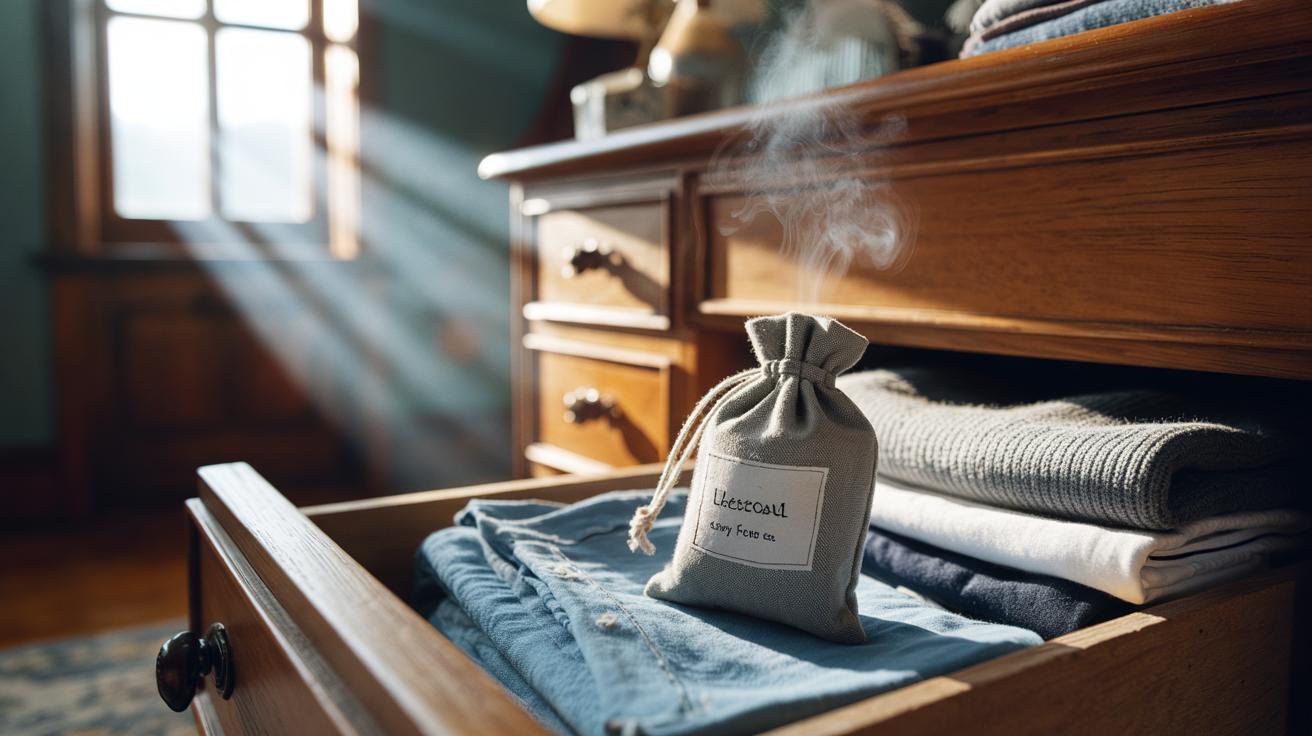
Pull open a neglected drawer and you know the scent: a flat, stale tang that clings to fabrics and refuses to budge. The quiet fix gaining ground in British homes is the charcoal sachet—a palm-sized pouch that clears the air without sprays, power or fuss. Inside, billions of micropores in activated carbon trap dampness and odour molecules, restoring freshness while leaving your clothes’ natural scent intact. Instead of masking smells, the sachet removes their source, working continuously in the background. The result is a drier microclimate that helps protect delicate fibres, timber, and paper from the creep of mould. Here is how the science plays out inside your drawers, and how to choose, use, and care for these quiet purifiers.
How Activated Carbon Works Inside a Closed Drawer
The secret of a charcoal sachet is adsorption—not absorption. Rather than soaking things up like a sponge, activated carbon’s labyrinth of pores binds water vapour and odour-causing compounds onto its vast internal surface. That includes musty aldehydes, fatty acids from skin oils, and trace VOCs released by ageing wood or finishes. In a closed drawer, these molecules accumulate quickly; the carbon simply gives them somewhere to go and stay. Because the process is passive, it works continuously and silently, day and night, smoothing the humidity swings that encourage mould.
By gently lowering local relative humidity, a sachet helps prevent mildew spores from blooming on cottons, leather, and paper. It won’t dehumidify a room, but in a small volume—like a lingerie drawer or camera cabinet—it’s remarkably effective. Crucially, it doesn’t add perfumes or ozone; it simply removes what’s there. That makes it a strong fit for people sensitive to fragrance, and for spaces where you want textiles to smell of nothing at all.
Choosing and Placing a Charcoal Sachet
Look for bamboo charcoal or coconut-shell activated carbon in a breathable cotton or linen pouch; avoid plastic-lined bags that throttle airflow. As a guide, a 50–100 g sachet suits a standard clothing drawer; for deeper or damper spaces, use two smaller pouches rather than one bulky one to spread coverage. Tuck the sachet where air naturally circulates—on a corner, beneath a divider, or pinned to the side. Do not seal the drawer completely: tiny gaps help odours reach the carbon, and the carbon to equilibrate with ambient air.
Pairing helps: a sachet plus a clean drawer liner breaks the cycle of trapped skin oils and fibres that feed mustiness. Avoid placing the pouch directly against scented items, which can saturate it prematurely. If a drawer stores leather or photo albums, step up to a higher-capacity pouch. If you can smell a stale note after opening, the sachet is due a refresh or upgrade in size, not a spritz of fragrance.
Safety, Maintenance, and Life Cycle
High-quality sachets are non-toxic and scent-free, but common-sense handling matters: keep them away from infants and pets that might chew the fabric, and avoid cutting them open—the dust is messy. To keep performance high, recharge the carbon monthly. Place the pouch in warm sunlight on a dry day or in an airing cupboard for a few hours; gentle heat drives off moisture and many adsorbed molecules. In winter, a low oven (no more than 60–70°C) for 60 minutes works, but skip this if the pouch has metal grommets or synthetic threads not rated for heat.
Expect a lifespan of six months to two years, depending on humidity and pollutants. When it’s finally spent, check the label: fragrance-free bamboo charcoal can be crumbled into soil as a form of biochar, helping retain nutrients and improve structure. If the product contains added scents or binders, dispose of it with household waste per local guidance. Proper care keeps your sachet effective and cuts waste, aligning fresh drawers with greener habits.
Quick Reference: Sizes, Coverage, and Care
Choosing the right pouch is easier with a snapshot of what size does what. The goal is to match carbon mass to the air volume of your drawer and the typical load of odours it holds. Small underwear drawers and bedside tables need less capacity than a deep chest storing woollens. If in doubt, start modestly and scale up—two medium sachets in opposite corners often outperform one large pouch by improving airflow across more surfaces. Coverage estimates are guides, not absolutes, because homes, seasons, and furnishings differ.
| Sachet Size (g) | Typical Drawer | Coverage (approx litres) | Refresh Interval | Expected Lifespan | Regeneration Method |
|---|---|---|---|---|---|
| 50 g | Small bedside/underwear | 20–40 L | Every 3–4 weeks | 6–9 months | Sunlight or airing cupboard |
| 100 g | Standard clothing drawer | 40–80 L | Every 3–4 weeks | 9–12 months | Sunlight; low oven if label allows |
| 200 g | Deep chest/woollens | 80–140 L | Every 2–3 weeks | 12–18 months | Sunlight; low oven (no metal parts) |
| 2 × 100 g | Wide drawer or high humidity | Up to 160 L | Every 2–3 weeks | 12–18 months | Alternate recharges for continuous use |
For timber furniture prone to seasonal swelling, pairing a 200 g sachet with a humidity card helps you spot trends and adjust recharge frequency. Keep pouches breathable—no plastic tubs—and rotate them between drawers while one is recharging. If you notice lingering odours after consistent recharges, the carbon may be saturated beyond easy revival; retire it and replace. Simple, light-touch maintenance is the price of that just-washed neutrality every time you slide a drawer open.
Charcoal sachets work because they respect physics, not fragrance trends: they pare back humidity spikes and trap odour molecules before they settle into fibres. The effect is subtle but unmistakable—fabrics feel fresher, paper stays crisp, and wooden interiors lose that damp tang. Activated carbon does all this without plugs, refills, or chemical fog. With the right size, placement, and a monthly recharge, a drawer can stay quietly fresh all year. If you’ve battled mustiness before, where would a small, silent pouch make the biggest difference in your home—and what would you store there once it does?
Did you like it?4.4/5 (27)