In a nutshell
- 🔬 Old newspaper dries shoes overnight via interlocking cellulose fibres, crumpled surface area, and rapid capillary action that wicks moisture from toe to heel.
- 🧪 It tackles odour through adsorption of smell molecules and by lowering shoe water activity, slowing bacteria that produce pungent compounds like isovaleric acid.
- 👟 How-to: loosely crumple and fill toe to heel, don’t over-stuff, swap paper after an hour for soaked pairs, place in an airy spot, avoid direct heat, and optionally add bicarbonate of soda under insoles.
- ⚖️ Versus other methods: newspaper wins on cost, availability, and gentleness; silica gel is fast but scarce in volume, while electric dryers are quick yet can stress glues.
- 🌱 Practical extras: choose plain matte newsprint (not glossy), shield delicate linings with a sock, and keep freshness by rotating footwear, washing insoles, and wearing breathable socks.
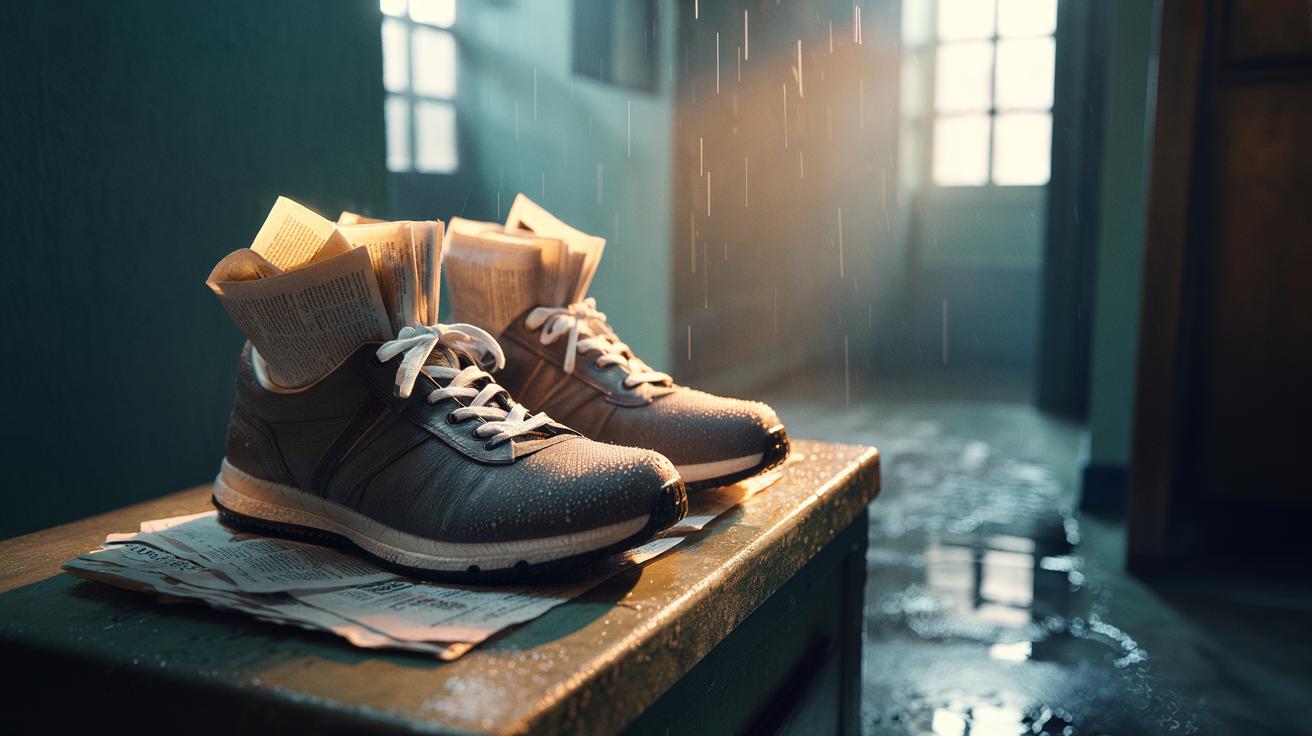
Few home hacks feel as disarmingly effective as sliding old newspaper into damp trainers and waking to shoes that are dry, fresh, and ready for the day. This low-cost trick has been passed down through households and dressing rooms for decades. It works not by magic, but by materials science hidden in everyday print. Stuffing newsprint into footwear overnight dramatically cuts moisture and odour without plugs, sprays, or waiting for sunshine. Here’s how those humble pages do the heavy lifting, why they outperform pricier products in a pinch, and the simple steps to deploy them properly for consistently fresher shoes.
Why Newspaper Works
Newsprint is a mat of interlocking cellulose fibres that behaves like a sponge. When crumpled, it creates thousands of microscopic channels that pull moisture from leather, canvas, and lining fabrics via capillary action. The fibres are naturally hygroscopic, meaning they attract and hold water molecules. Crumpling increases surface area and introduces airflow spaces, accelerating the draw from toe box to heel. Because water moves along the fibres, not just into them, the wicking is fast and surprisingly thorough, especially compared with leaving shoes to “air dry” on a radiator or by the back door.
Odour isn’t just about wetness; it’s volatile chemicals released by thriving microbes. Newsprint’s porous network provides ample area for adsorption of these odour molecules. Modern inks are typically soy-based and low-odour, so they rarely compete with smells. Avoid glossy magazine stock, which can be treated and less absorbent. Plain, matte newspaper remains ideal: flexible, breathable, and thirsty. By morning, you’ll often find the paper cool and damp, proof it has pulled moisture out of the footwear microclimate.
How to Use Newspaper for Overnight Deodorising
Tear several sheets and loosely crumple them into soft balls. Fill the forefoot first, gently pushing paper into the toe box where sweat accumulates, then pack the mid-foot and heel. Don’t over-stuff; leave some give for air to circulate. For heavy saturation—post-run shoes or rainy commutes—swap the paper after the first hour to remove the initial water load. Consistency matters: refreshing the paper once makes a big difference to morning dryness.
Place shoes somewhere temperate with light airflow—an airing cupboard or hallway shelf works well. Avoid direct heat, which can warp leather and adhesives. If odour lingers, sprinkle a teaspoon of bicarbonate of soda under the insole before adding paper, then tip it out in the morning. Stick to newsprint, not glossy magazines or heavily dyed inserts. For delicate linings, insert a thin sock over the paper balls to prevent any ink transfer. Most pairs will feel dry and smell markedly fresher by sunrise.
The Science of Moisture and Odour in Footwear
Sweat itself is mostly water, but in the warm, oxygen-poor environment of a shoe, skin bacteria metabolise residues and produce malodorous compounds such as isovaleric acid. The wetter the shoe, the higher the water activity (aw), and the faster these microbes multiply. Cutting moisture overnight interrupts that growth window when odour tends to bloom. Newspaper reduces available moisture, shrinking habitat and cooling the microclimate through evaporation drawn into the fibres.
There’s a secondary benefit: many odour molecules are hydrophilic or bind to porous surfaces. As the paper absorbs water, it also adsorbs volatile compounds, trapping them in its fibre lattice. Some strains, including common Staphylococcus epidermidis, struggle when materials dry quickly and remain oxygenated. That’s why shoes dried with paper typically smell cleaner than those left soggy in a kit bag. Pairing swift moisture removal with occasional washing of insoles keeps odour precursors to a minimum.
Newspaper vs. Other Drying Methods
There are many ways to dry shoes, from cedar trees to electric warmers. Newspaper wins on price, availability, and gentleness to materials. It works without power, suits most fabrics, and can be recycled after use. Silica gel packets are efficient but rarely on hand in the necessary volume. Bicarbonate of soda neutralises odour but is slower to pull bulk moisture. Electric dryers speed things along, though they add cost and can be harsh on glues if too hot.
Here’s a quick comparison to help you choose for different situations. For drenched trail shoes, combine methods: a brief towel squeeze, one hour with paper (swap once), then a room-temperature shoe tree for shape.
| Method | Moisture Removal | Odour Control | Reusability | Cost |
|---|---|---|---|---|
| Newspaper | Fast for overnight | Good | Single-use | Low |
| Silica gel | Fast | Moderate | High | Medium |
| Bicarbonate of soda | Slow | Very good | Single-use | Low |
| Cedar shoe trees | Moderate | Good | High | High |
| Electric dryer | Very fast | Good | High | High |
Old newspaper remains a quiet hero of British households: cheap, sustainable, and effective at tackling damp shoes and the odours they harbour. It leverages physics, not perfume, and respects the materials of your favourite pair. Use it as an overnight reset and combine with smart habits—rotating footwear, washing insoles, and choosing breathable socks—to stay ahead of smells. What tweaks could make this method work even better for you—would a routine paper swap, cedar trees for shape, or a dash of bicarbonate be the upgrade your shoes have been waiting for?
Did you like it?4.5/5 (30)