In a nutshell
- 🍋 DIY disinfectant from citrus peel + white vinegar; cuts grease, reduces microbes, smells fresh; ideal for daily cleaning but not hospital-grade.
- ⚗️ Science: acetic acid lowers pH to stress microbes, while citrus oils like d‑limonene dissolve oils and lift soil; efficacy hinges on a 5–10 min contact time.
- 🧪 Method & ratios: pack peels, cover with vinegar, steep 10–14 days, strain; dilute 1:1 for routine use, go neat for bins/loos; label and store in the dark.
- 🧼 Best uses and no-go surfaces: great on sealed counters (not stone), tiles, glass, stainless; avoid marble/granite, unsealed wood, aluminium, and electronics; rinse food-contact areas.
- ⚠️ Safety essentials: wear gloves if sensitive, ventilate, keep from pets/kids; never mix with bleach or ammonia; patch-test grout and finishes first.
Plastic spray bottles under the sink rarely tell the full story. Many hide harsh chemicals, heavy fragrances, and a sizeable price tag. There’s a simpler route. A jar of citrus peel steeped in white vinegar produces a bright, low-cost cleaner with a reputation for cutting grease and tackling microbes. The chemistry is elegant. Acetic acid lowers pH; citrus oils supply d‑limonene, a potent solvent. The result is a natural-smelling, effective disinfectant for everyday messes. It’s a smart, eco‑friendly swap for many household jobs, provided you use it correctly and respect its limits. With careful contact time and sensible surface choices, this humble infusion can transform your cleaning routine.
How the Citrus-and-Vinegar Combo Works
The power pairing relies on two pillars. First, acetic acid in household vinegar (about 5%) creates an acidic environment that many microbes struggle to tolerate. Low pH disrupts cell membranes and protein structures. Second, citrus peels release d‑limonene and other terpenes. These plant-derived solvents excel at dissolving oily films, making germs easier to dislodge and improving the “spread” of the solution across surfaces. Together, they lift soil and reduce bioburden. Allowing adequate contact time is essential: a quick spritz and wipe won’t deliver the best results.
Realistic expectations matter. This infusion is robust for general household hygiene, from kitchen counters to bathroom tiles. It deodorises, too. But it isn’t a laboratory-validated, broad-spectrum sanitizer for outbreaks. It is not a replacement for hospital-grade disinfectants when pathogens are a concern. Think of it as a daily driver: effective, affordable, and kinder on indoor air. Used properly—wet the surface thoroughly, wait several minutes, then wipe—it offers a pragmatic balance of cleanliness and simplicity.
Step-by-Step Method: From Peel to Spray
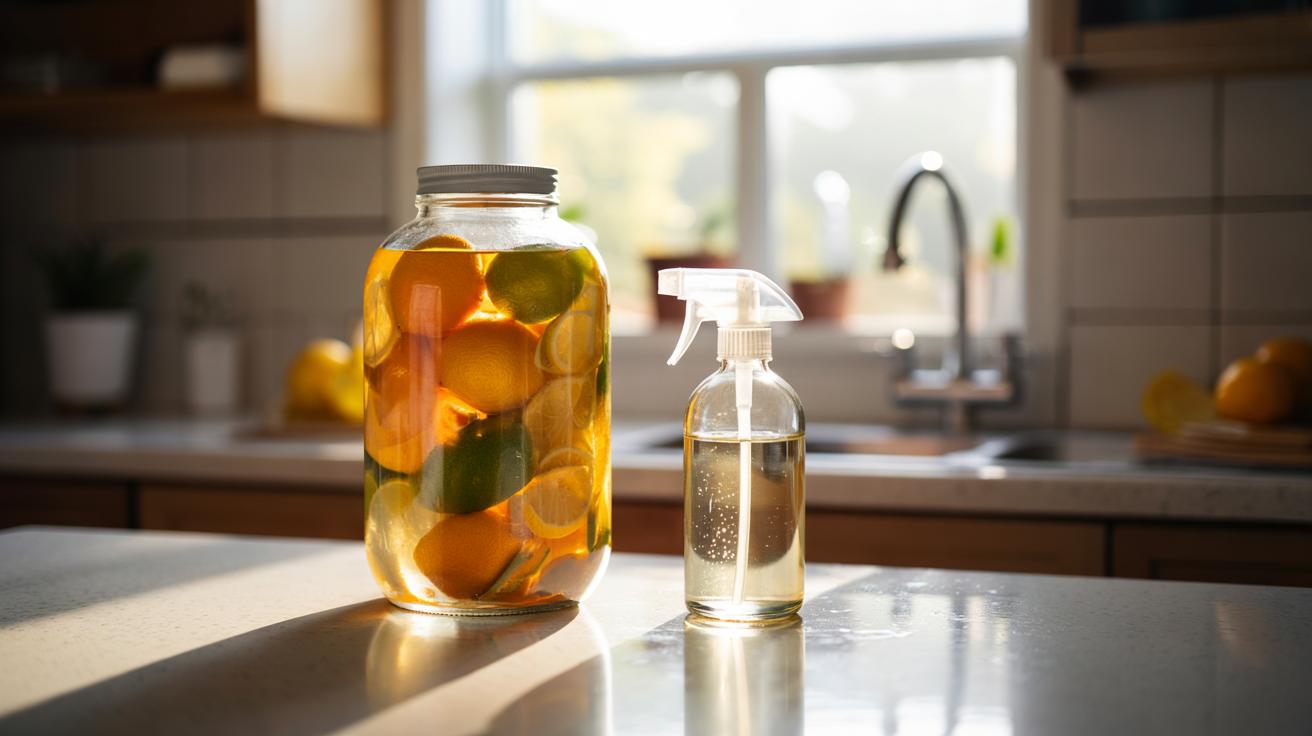
Start with clean peels from oranges, lemons, limes, or grapefruit. Pack a glass jar halfway with the peels, then pour in white vinegar until everything is submerged. Cap loosely and tuck it in a dark cupboard for 10–14 days, shaking every couple of days to coax out the oils. The liquid turns amber and citrusy. Strain through a fine sieve or cloth; press the peels to capture every drop. For an everyday citrus peel cleaner, dilute 1:1 with water. For tougher jobs, use it neat.
Decant into a spray bottle, label the date, and store away from direct sunlight. For disinfection, saturate the surface and leave for 5–10 minutes before wiping. Rinse food-contact areas afterwards. A stainless-steel nozzle and an amber bottle help protect the infusion’s aroma. Optional: add a teaspoon of high-proof alcohol per cup to aid evaporation on glass. Never mix with bleach or products containing hypochlorite—do not mix with bleach. Keep out of reach of children and pets.
Where It Shines—and Where to Avoid It
This infusion excels on sealed worktops (not stone), ceramic tiles, glass, plastic bins, loo seats, inside fridges, and sinks. It handles splash-back grease, stale odours, light limescale, and soap scum. Stainless steel appliances shine after a 1:1 spritz and a dry buff. For bins and toilet exteriors, use it neat and allow time to work. The citrus fragrance is natural yet punchy, masking musty notes without cloying. Expect streak-free glass if you buff quickly and avoid over-application. It’s versatile. It’s frugal. It’s surprisingly satisfying to make.
There are red lines. Skip natural stone such as marble, limestone, and granite: acidity etches and dulls. Avoid waxed or unsealed wood, cast iron, aluminium, and electronics. Don’t pour on grout repeatedly; sporadic use is fine, but acids can weaken cementitious joints. Rinse rubber gaskets after cleaning. Pet owners: citrus oils can irritate; ventilate rooms and keep animals away until dry. When in doubt, patch-test on an inconspicuous spot and wait 24 hours. Sensible caution preserves surfaces and confidence alike.
Ratios, Contact Time, and Safety at a Glance
Getting the basics right amplifies results. Use a 1:1 vinegar-to-water dilution for routine wipes on non-stone surfaces. Go neat for bins, loos, and limescale. Always wet the surface thoroughly; dryness defeats efficacy. Contact time is your hidden powerhouse—aim for 5–10 minutes before wiping. Rinse areas that touch food, baby gear, or pet bowls. Ventilation keeps the fresh citrus aroma pleasant rather than overpowering.
| Use Case | Dilution (Vinegar:Water) | Contact Time | Notes |
|---|---|---|---|
| Kitchen counters (not stone) | 1:1 | 5–10 min | Rinse food-contact areas |
| Glass, mirrors | 1:1 | 3–5 min | Buff dry to prevent streaks |
| Toilets, bins | Neat | 10 min | Let air-dry before reuse |
| Floors (sealed tile/vinyl) | 1:3 | Mop, no dwell | Spot test grout first |
| Do not use | — | — | Stone, unsealed wood, aluminium, electronics |
Safety is straightforward. Wear gloves if you have sensitive skin. Store the infusion in a clearly labelled bottle, out of sunlight. Never combine with bleach or ammonia; harmful gases can form. Keep away from eyes, and avoid inhaling mist at close range. If the scent feels strong, open a window—problem solved. With those guardrails, the citrus-and-vinegar mix becomes a reliable staple rather than a weekend experiment that gathers dust.
Homemade cleaning blends often promise the earth and deliver little; this one is an exception, balancing thrift, science, and a touch of everyday joy. It trims plastic waste, repurposes what would be compost, and keeps kitchens and bathrooms feeling genuinely clean. Crucially, it encourages better habits: wet the surface well, pause, then wipe. Simple techniques multiply its power. If you try it this week, which spaces in your home do you most want to refresh with a brighter scent and a lighter environmental footprint?
Did you like it?4.4/5 (22)