In a nutshell
- 🍋 Chemistry that cleans: citric acid breaks down limescale and soap scum by dissolving mineral bonds, while salt adds abrasion and boosts ionic strength for faster stain lift.
- 🧪 Simple method: mix 2 tbsp coarse salt with 1–2 tbsp lemon/lime juice to a wet-sand paste, apply for 1–3 minutes, use light circular motions, then rinse and buff dry.
- ⚠️ Safety first: never mix with bleach or ammonia, patch-test delicate finishes, keep good ventilation, and use gloves if skin is sensitive; let dwell time do the heavy lifting.
- 🧼 Best and worst surfaces: ideal for stainless steel, glass, ceramic tiles, grout, and chopping boards; avoid marble/limestone/travertine and unsealed concrete; use caution on aluminium and cast iron.
- 🌱 Eco-savvy results: a biodegradable, low-cost alternative to harsh cleaners, also handy for textile stains like rust or tea on whites, delivering quick, odour-light shine.
The humble mix of citrus and salt feels almost like a parlour trick: rub, fizz, rinse, and the grey film vanishes. Yet there’s rigorous chemistry behind this kitchen-cupboard classic. Natural acids in lemons, limes, and oranges tackle mineral build-up, soap scum, and metallic stains with minimal effort, while crystalline salt adds grit and grip. Because the scrub is biodegradable and low-cost, it’s a compelling alternative to heavy-duty cleaners that leave harsh odours and residues. What looks like elbow grease is often just smart chemistry doing the work for you. With the right method and a few cautions, this simple remedy can transform taps, tiles, and tired-looking surfaces in minutes.
Why Acids Beat Grime at the Molecular Level
Natural citric acid donates protons that react with alkaline deposits such as limescale (calcium carbonate). The reaction dismantles the mineral matrix into water-soluble salts and releases tiny bubbles of carbon dioxide you can often hear. Soap scum, a stubborn mix of calcium soaps and body oils, loosens as the acid chelates metal ions and breaks the bond that anchors the film. Mild acids also brighten metal by lifting oxide tarnish, especially on stainless steel and chrome. Acids dissolve mineral films; scrubbing becomes optional when chemistry is on your side. The key is contact time: even 60–90 seconds often makes a visible difference.
Salt contributes more than abrasion. Coarse grains create micro-channels that renew the acid’s access to fresh grime, while the solution’s higher ionic strength encourages metal ions to move into the liquid phase. The crystals also draw moisture, thickening the paste so it clings to vertical areas like shower doors. On greasy residues, acid cuts through alkaline traces from hard water, and salt helps disrupt the slick layer so it can be rinsed clean. The duo works because each ingredient amplifies the other’s strengths without adding synthetic solvents. Choose coarse sea salt for grip; fine table salt is better for delicate finishes.
Building the Perfect Citrus-Salt Scrub
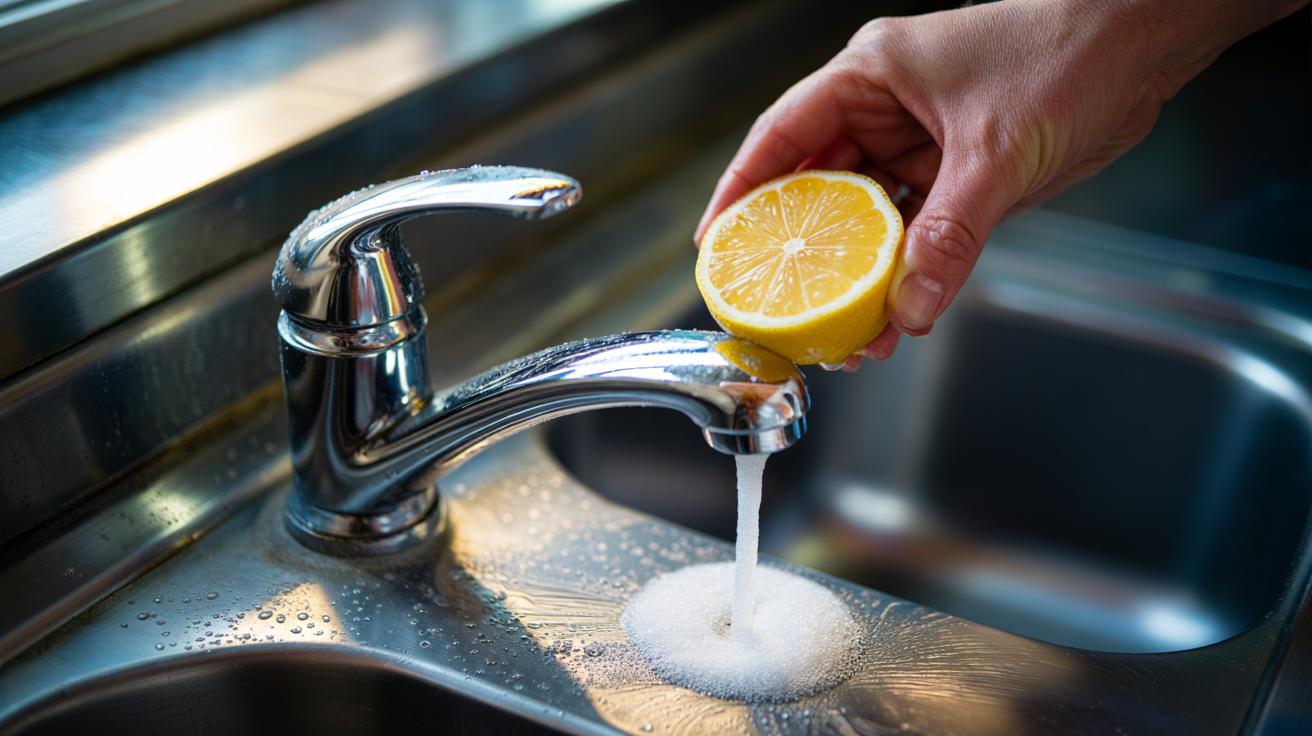
For a fast paste, mix 2 tablespoons of coarse salt with 1–2 tablespoons of fresh lemon or lime juice. Aim for a wet-sand texture that sticks to surfaces. For spot-cleaning, halve a lemon, dip the cut face in salt, and use it as a natural scouring pad. Leave the paste to dwell for one to three minutes on scale or tea stains; wipe, then rinse thoroughly with warm water. A drop of mild washing-up liquid can help where oils are heavy, but keep the formula simple for minerals and soap scum. Never mix citrus acids with bleach or ammonia—dangerous gases can form.
Method matters. Pre-wet the surface so the paste spreads evenly, then use light, circular motions to avoid scratching. For taps and grout lines, apply with a soft brush to work acid into crevices. On vertical glass, press the paste into a thin film and let gravity do less damage by working from bottom to top. Finish by rinsing and buffing dry to prevent new spotting as water evaporates. Patch-test any sensitive material, keep ventilation good, and wear gloves if you have sensitive skin. A little dwell time outperforms hard scrubbing every time.
Where It Shines and Where to Avoid
Citrus-salt excels on stainless steel sinks, glass shower screens, ceramic tiles, grout, chopping boards, and enamel. It brightens tea-stained mugs, refreshes fridges, and reduces odours on food-prep surfaces. On cookware, it’s safe for enamel and stainless steel but can strip seasoning from cast iron. Avoid natural stone such as marble, travertine, and limestone, which react with acids; steer clear of unsealed concrete and certain delicate finishes. Aluminium can spot or pit under acid, especially if left to dwell. When in doubt, test a discreet corner first and limit contact time. Rinse and dry thoroughly to lock in the shine.
| Surface | Best Use | Caution/Notes |
|---|---|---|
| Stainless steel sink | Lift limescale and water marks | Buff dry to prevent new spotting |
| Glass shower door | Remove mineral haze and soap scum | Use soft cloth to avoid fine scratches |
| Ceramic tiles and grout | Cut through film, brighten joints | Rinse well; avoid on cement grout left unsealed |
| Chopping boards (wood/plastic) | Deodorise and lift stains | Do not soak wood; dry promptly |
| Marble, limestone, travertine | Not recommended | Acid etches and dulls polished stone |
| Aluminium cookware | Use cautiously | Short contact; can discolour or pit |
Textiles respond too: a dab of lemon juice and a sprinkle of salt can lift rust and tea stains from white cotton when left to sit before laundering, ideally with sunlight to enhance the effect. On coloured fabrics, check colourfastness and dilute the juice. For tarnished brass or copper, use a gentler touch and rinse rapidly. Always test on an inconspicuous area, then scale up. Respect the material, match the dwell time to the stain, and the scrub will reward you with a clean, bright finish.
The citrus-salt scrub proves that effectiveness doesn’t need a laboratory label. Natural acids break down mineral films, and salt supplies texture and staying power, delivering quick wins on kitchens, bathrooms, and everyday stains without synthetic fragrances or phosphates. It’s frugal, planet-friendly, and satisfying to use—chemistry you can see and hear as fizz meets film. Treat it as a precision tool: right surface, right dwell time, right rinse. Which stubborn stain or surface would you tackle first with a citrus-salt mix, and what subtle tweaks might you try to fit your home and habits?
Did you like it?4.4/5 (21)