In a nutshell
- 🍋 What it is: A jar of 5% white vinegar infused with citrus peels that extracts limonene and traces of citric acid, creating a low-waste cleaner that reduces microbes on sealed, hard surfaces.
- 🧪 Why it works: The low pH and undissociated acetic acid disrupt bacterial membranes and enzymes, while citric acid chelates metals and terpenes dissolve grease and biofilms for better microbe exposure.
- ⏱️ How to use: Pre-clean, spray until wet, allow 5–10 minutes contact time, then wipe; safe on tiles, glass, and sealed laminate—avoid natural stone, unfinished wood, and aluminium; rinse metals and dry.
- ⚠️ Limits and safety: Not hospital-grade; unreliable against some viruses and spores; never mix with bleach or peroxide; for higher-risk scenarios, use disinfectants meeting BS EN 1276/EN 13697.
- 🌱 Recipe and benefits: Pack peels in a jar, cover with vinegar, steep 1–2 weeks, strain; use neat for descaling or dilute 1:1 for daily cleaning—low-cost, circular, and pleasantly fragranced.
Across Britain’s kitchens, a humble jar of white vinegar steeped with citrus peels has become a low-cost, low-waste cleaner with surprising bite. The idea is simple: household acetic acid infused with lemon, orange, or grapefruit rind creates a fragrant solution that shifts grease and tackles microbes on hard surfaces. The chemistry is anything but quaint. Acids change the game at a microscopic level, helping to unravel proteins and interfere with bacterial membranes. Add the peel’s aromatic oils and you gain extra solvency for sticky residues. The result is a practical, circular-use cleaner that can meaningfully reduce everyday germs when used properly—though it’s not a silver bullet for every pathogen. Here’s how the citrus-vinegar jar works, when to trust it, and when to reach for something stronger.
What Is a Citrus-Vinegar Jar?
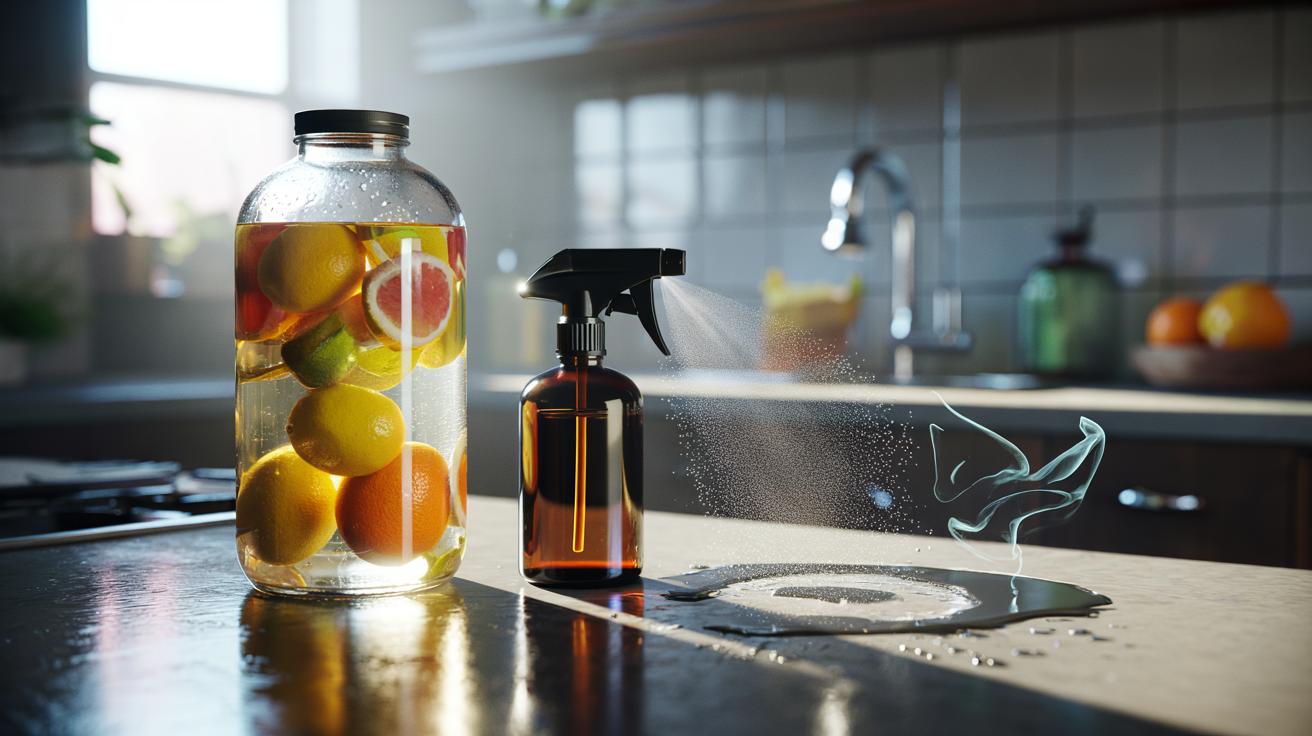
A citrus-vinegar jar is a glass container packed with fresh citrus peels and topped up with standard 5% white vinegar. Over one to three weeks, the vinegar extracts citric acid traces and citrus oils such as limonene, lending a bright scent and extra grease-cutting power. Strain, decant into a spray bottle, and use neat for limescale or grease, or dilute 1:1 with water for general wiping. The appeal is obvious: it repurposes kitchen waste, reduces plastic consumption, and costs pennies compared with branded sprays. For everyday wiping on sealed, non-porous surfaces, it’s an effective cleaner that can lower microbial loads, particularly when given adequate contact time.
Set-up is straightforward. Use a clean jar with a tight lid, pack in peels (avoid pithy, mouldy scraps), cover with vinegar, and label the date. Store away from direct light. After infusion, strain through a fine sieve or coffee filter to avoid nozzle clogs. The infused solution will keep several months, though the fragrance slowly fades. Avoid metal lids that may corrode. For a fresher citrus hit, add a strip of peel to the bottle on the day of use. Never mix infused vinegar with bleach or peroxide; dangerous gases and skin irritants can form.
Why Infused Acid Disrupts Bacteria
Household vinegar works through its low pH and the special behaviour of weak acids. Undissociated acetic acid molecules slip through bacterial membranes, releasing protons inside the cell. That internal acidification disrupts enzyme activity, energy production, and structural proteins. Meanwhile, trace citric acid can chelate metal ions that bacteria rely on, while citrus terpenes such as limonene help dissolve lipid-rich grime that shelters microbes. This one-two punch matters against kitchen suspects like E. coli and Staphylococcus on counters and chopping boards. The cleaner your surface before disinfection, the more effectively the acid works; physical removal of debris exposes microbes to the solution and reduces protective biofilms.
Acid also destabilises extracellular matrices that glue biofilms together, making it easier to wipe colonies away. It is not a hospital-grade disinfectant, and claims such as “kills 99.9%” require testing under BS EN 1276 or EN 13697. Still, in domestic settings, a generous spray with a five-to-ten-minute contact time can significantly cut bacterial counts on hard, non-porous surfaces. Think of infused vinegar as a cleaner-disinfectant hybrid: it loosens, lifts, and suppresses microbes rather than sterilising.
| Component/Parameter | Typical Value | Role | Notes |
|---|---|---|---|
| Acetic acid | ~5% (pH 2–3) | pH drop, protein/membrane disruption | Use standard distilled white vinegar |
| Citric acid (trace) | Infused from peels | Chelation, enzyme interference | Boosts limescale removal |
| Limonene and oils | Low ppm | Solvency for grease, residue | Gives fragrance; can irritate skin |
| Contact time | 5–10 minutes | Allows acid to act on cells | Do not wipe off immediately |
How to Use It Safely and Effectively
Start with cleaning: remove crumbs, visible dirt, and fat with a cloth and warm water. Then spray the citrus-vinegar solution until the surface is visibly wet. Leave for 5–10 minutes, keep it from drying out, and wipe with a clean microfibre. On stainless steel, rinse and dry to prevent dulling. Safe targets include ceramic tiles, sealed laminate, tempered glass, and most plastics. Avoid natural stone (marble, limestone, granite), unfinished wood, cast iron, and aluminium, where acid can etch or corrode. Patch-test painted surfaces. For chopping boards, clean first, apply, wait, then rinse thoroughly and dry upright.
For a basic recipe, fill a jar halfway with mixed peels (lemon for tang, orange for scent), top with vinegar, seal, and steep 14 days. Strain. For routine cleaning, dilute 1:1 with cooled boiled water; for descaling kettles or taps, use undiluted and rinse well. Keep out of children’s reach and label the bottle. Wear gloves if you have sensitive skin; citrus oils can irritate. Never combine with bleach, ammonia, or hydrogen peroxide. If heavy organic contamination is present—raw meat juices, for instance—clean thoroughly and consider a product that meets BS EN 1276 standards.
When Vinegar Isn’t Enough
Acidic cleaners have limits. Vinegar performs poorly against some viruses and is unreliable on bacterial spores and hardy pathogens such as norovirus or C. difficile. In high-risk situations—after illness, handling raw poultry, or caring for someone immunocompromised—reach for a disinfectant with clear EN-standard claims on the label and follow contact times precisely. Food businesses in the UK must defer to Food Standards Agency guidance; a homemade infusion won’t satisfy commercial hygiene protocols. In short: use citrus-vinegar for everyday maintenance, not outbreak control.
Material compatibility also matters. Acids can degrade rubber seals and etch stone; citrus oils may cloud some plastics. If limescale is heavy, vinegar excels, but rinse metals to prevent corrosion. Ventilate while cleaning to disperse vapours. For mould, physical removal plus a fungicidal product is wiser than vinegar alone. And remember: no cleaner makes up for poor technique. Generous application, fresh cloths, and time-on-surface do the real work, with infused acid as a willing helper.
Done well, a citrus-vinegar jar brings thrift, sustainability, and science to the sink-side caddy. The combination of low pH, chelation, and citrus solvents reduces everyday bacteria on hard, sealed surfaces while lifting the grease that shelters them. It’s not a cure-all and shouldn’t replace certified disinfectants where health risks are higher, yet it’s a smart, circular choice for routine wipes, splashbacks, and sink surrounds. With a jar, peels, and patience, you get a cleaner that smells of winter oranges and does more than perfume the room. Where in your home would an infused acid shine—and what tweaks would you try to make the jar your own?
Did you like it?4.5/5 (28)