In a nutshell
- 🧪 Acidity dissolves limescale: Household vinegar (≈5% acetic acid) reacts with calcium carbonate, lifting mineral deposits without scratching glass.
- 🧴 Mix and method: Use 1:3 vinegar:water for light haze, 1:1 for heavy scale; spray, allow 1–5 minutes dwell, agitate with microfiber, then rinse and buff or squeegee.
- ✨ Streak-free tactics: Work top-to-bottom, switch to clean cloths as they dampen, avoid drying on the pane; add a drop of mild soap for fingerprints and use distilled water for the final polish.
- ⚠️ Safety and compatibility: Keep acids off natural stone and sensitive coatings, never mix with bleach, and spot-test around seals and tints.
- 🌿 Smart substitutions: Try 2–4% citric acid for less odour, or a dash of isopropyl alcohol for oily films; note that acid removes deposits but can’t repair etched or scratched glass.
Hard water leaves a grey veil on windows and shower screens, stubbornly resisting ordinary sprays. A quick vinegar spritz cuts through that haze with surprising speed, trading elbow grease for chemistry. The key is acidity: acetic acid loosens and dissolves the mineral salts that make glass look tired. With the right dilution, smart contact time, and a good cloth, the routine is simple, low-cost, and low-waste. The trick is to let the acid do the work, not your wrists. Here’s how the science plays out on the pane, how to mix it properly, and how to navigate tricky films without scratching your view.
Why Vinegar Works on Glass
Most dullness on glass comes from limescale—calcium carbonate and magnesium compounds precipitated from hard water. Acetic acid in household vinegar (typically 5%) reacts with these alkaline deposits. In essence, CaCO3 + 2 CH3COOH → Ca2+ + 2 CH3COO− + CO2 + H2O. That fizz you sometimes hear is carbon dioxide escaping as the scale dissolves. Because the film is alkaline, a mild acid is the precise countermeasure. Unlike abrasive powders, vinegar avoids micro-scratches that catch dirt and worsen haze, which is why glass brightens after a short soak and wipe.
Vinegar also disrupts the invisible bond between minerals and the silica surface. Once the ions are lifted into solution, a clean rinse or a dry buff prevents residues from resettling. The outcome is a clear, reflective finish that looks “new” without harsh solvents. Acidity tackles the mineral side; a small amount of surfactant—if needed—handles any grease from hands, kitchens, or urban film. The balance of acid plus technique yields streak-free clarity.
How to Make and Use a Spritz
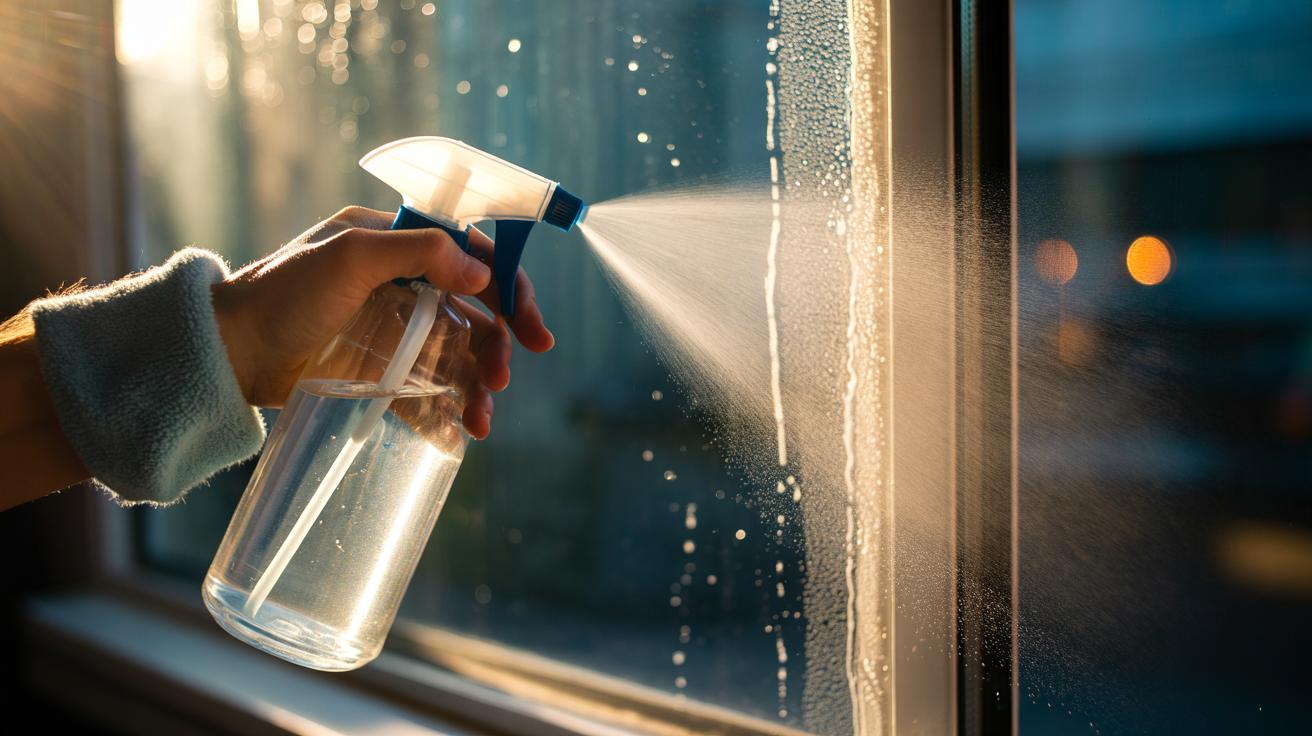
Fill a clean spray bottle with distilled white vinegar and water. For light haze, mix 1 part vinegar to 3 parts water; for heavy limescale on shower glass, try 1:1. Warm (not hot) vinegar works slightly faster. Spray generously, then wait. Contact time—typically 1 to 5 minutes—is the difference between wiping and scrubbing. Agitate with a non-scratch pad or microfiber, then rinse with cool water or wipe with a damp cloth and finish with a dry buff. Work from top to bottom to avoid drips creating fresh tracks.
On finger-marked windows, add a drop of mild dish soap per 500 ml to break oils. For exterior panes, squeegee after the rinse to prevent new spotting. If your tap water is very hard, use distilled water for the final wipe. Always test around seals and tinted films. Never mix vinegar with bleach or products containing chlorine—dangerous fumes can form.
| Task | Vinegar:Water | Contact Time |
|---|---|---|
| Light haze on windows | 1:3 | 1–2 minutes |
| Shower glass limescale | 1:1 | 3–5 minutes |
| Greasy fingerprints | 1:3 + 1 drop mild soap | 1–2 minutes |
| Final polish | Distilled water only | Immediate wipe |
Troubleshooting Streaks and Stubborn Films
If you see streaks, the usual culprits are too little product, too much product left to dry, or a cloth that’s already loaded. Mist enough to wet the surface, then buff with a clean, tight-weave microfiber. Swap cloths as they dampen. In cold rooms or on sun-warmed glass, work in smaller sections. A quick squeegee pass after the rinse reduces spotting dramatically. For deposits that resist, reapply and extend the dwell time rather than scrubbing harder.
Some “films” aren’t mineral at all: silicone residue from sealants, smoker’s tar, or traffic grime may need a different approach. Add 5–10% isopropyl alcohol to your mix to cut oily residues, keeping ventilation in mind. If you suspect silica etching or scratches, acid won’t fix the damage; you’ll need a polishing system or professional restoration. Acid cleans deposits—it cannot mend etched or pitted glass. Always avoid steel wool on window glass; it can leave faint lines and rust specks.
Safety, Surfaces, and Smart Substitutions
Vinegar is gentle on glass but not on every surface. Keep it off natural stone like marble or limestone, off unsealed concrete, and away from certain metal finishes that dislike acid. Avoid aftermarket window tints or anti-glare coatings unless the manufacturer approves mild acids. Spot-test near an edge before committing to a full pane. For leaded or stained glass, clean the glass only, carefully avoiding the came and solder joints. Never store vinegar mixes in containers that held bleach.
Prefer a different acid? Food-grade citric acid at 2–4% in water works well and is odour-light. For extremely hard water, finish with distilled water to prevent fresh spots. A tiny dose of non-ionic surfactant improves wetting without residue. Skip the trendy vinegar–bicarbonate combo in one go; they neutralise each other. Use them sequentially if you must: alkaline clean first, rinse, then acid. Right chemical, right order, right time—that’s the streak-free formula.
With a bottle, a cloth, and a bit of patience, a vinegar spritz can erase years of mineral dullness and restore sparkle. The method relies on simple chemistry and sensible handling: mix to suit the job, let it sit, and finish with a clean buff or squeegee. It’s inexpensive, low-impact, and surprisingly effective when you respect contact time and surface compatibility. When glass glows, rooms feel larger and lighter. What’s the most challenging glass surface in your home or workplace, and how might you tailor dilution, dwell time, and tools to tame it?
Did you like it?4.4/5 (25)