In a nutshell
- 🍋 A citrus wipe powered by d‑limonene lifts oxidised oils and film from wood, revealing clean grain contrast; test first and use a light “cleanse, then nourish” approach.
- 🪵 Drying oils like tung and linseed penetrate and polymerise, matching wood’s refractive index to deepen colour; pairing with MCT oil adds stability—less is more to avoid stickiness.
- 🧴 Practical method: blend MCT + a little tung with citrus (≈1%); mist cloth, apply sparingly, wait five minutes, then buff dry. Use food‑contact‑safe ingredients, avoid pooling, and keep citrus away from marble.
- ⚠️ Safety and care: manage self‑heating rags safely, store blends in the dark, consider allergies, and favour solvent‑free products; schedule maintenance monthly (beech may need more).
- ✨ Results and longevity: brighter counters, subtle sheen, and better water beading; consistent, thin applications prevent blotchiness and keep the surface tactile rather than glossy.
From Scandi-style oak to time-worn butcher’s block, wooden worktops can drift from honeyed warmth to a dull grey when everyday grease and soap film take hold. A quick, well-made citrus wipe can cut through that haze and coax back the timber’s natural colour without harsh chemicals. Powered by citrus peel solvents and boosted by natural oils, this gentle method refreshes grain, adds subtle sheen, and improves water beading. Used correctly, it’s both effective and food-safe. Here’s how citrus chemistry works on wood, why plant-based oils restore depth and saturation, and the precise routine—tried in British kitchens—that brightens counters in minutes while extending the life of the finish.
Why Citrus Cuts Through Grime on Timber
Citrus peels contain d‑limonene, a biodegradable solvent that lifts oxidised cooking oils and sticky residues clinging to wood fibres. In low dilutions, it’s kind to most finishes yet powerful enough to dissolve film that dulls the grain. Unlike bleach-based sprays, a citrus wipe leaves no chalky cast; instead, it reveals the true tone of oak, beech, or walnut beneath. Always test on an inconspicuous spot first, because concentrated citrus can soften certain varnishes if applied neat. Aim for a light application—the goal is to release soil, not to flood the surface.
The fresh aroma is a bonus, but the real win is optical: once grime is dispersed, light can again reflect cleanly off the timber’s micro-topography. That’s when a follow-up of penetrating oil matters. Citrus clears the way; oil completes the job by restoring grain contrast and sealing against moisture. Think of the process as cleanse, then nourish—a two-step routine that keeps wood looking lively rather than lacquered.
The Science of Natural Oils and Colour Restoration
Wood appears richer when its pores are filled with oil that shares a similar refractive index to the cell walls. Drying oils such as tung and linseed penetrate, then polymerise, forming a microscopic network that both protects and deepens colour. This reduces surface scatter, so grain looks darker and more dimensional without stains or pigments. Non-drying carriers—like MCT (fractionated coconut) oil—add slip for wiping and resist rancidity, but they don’t harden; pairing a little drying oil with a stable carrier gives the best of both worlds. Less is more: excess oil sits sticky and attracts dust.
Choose food-contact-safe products and avoid silicone polishes, which create a smeary shine and complicate future refinishing. Walnut oil is beautifully clear but may pose allergy concerns. Beeswax can be blended for extra gloss, though too much wax can show swirl marks. A light, well-buffed film makes timber look saturated, not shiny, keeping the worktop tactile and easy to maintain.
| Oil | Key Action | Drying | Food-Contact Suitability | Best For |
|---|---|---|---|---|
| Tung oil | Deep penetration, water resistance | Yes (polymerises) | Yes (when pure, fully cured) | High-use worktops needing durability |
| Linseed (flaxseed) | Colour enrichment, easy availability | Yes (slow cure) | Yes (pure, no metallic driers) | General refresh, warm tone boost |
| MCT (fractionated coconut) | Stable carrier, no rancidity | No | Yes | Daily wipes, dilution of citrus |
| Beeswax (additive) | Soft sheen, tactile feel | N/A | Yes | Occasional top-up after oiling |
How to Make a Citrus-and-Oil Counter Wipe
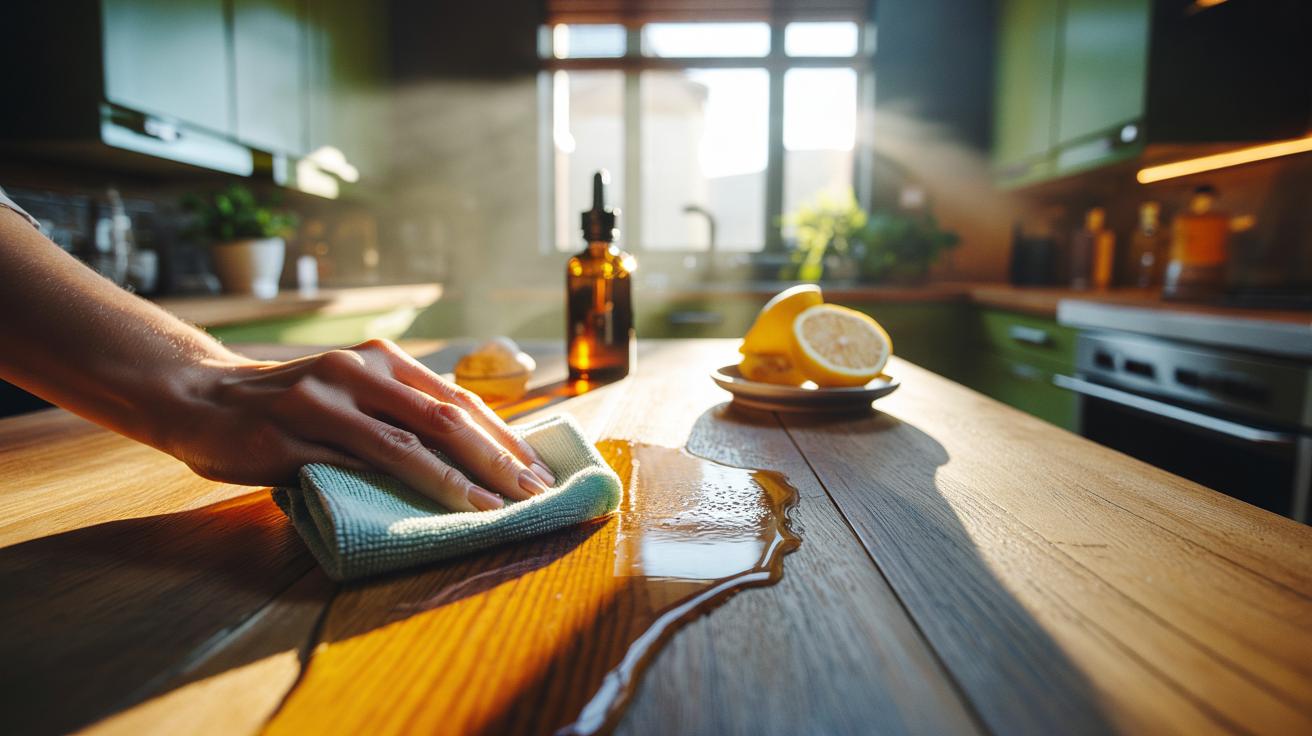
Blend 3 tbsp MCT oil with 1 tbsp pure tung oil and 10–12 drops food-contact-safe sweet orange or lemon oil (about 0.8–1% dilution). Decant into a small amber bottle. For the wipe, lightly mist a clean microfibre cloth with water, add ½ teaspoon of the blend, then work across the grain in long strokes. The citrus loosens residues; the oils follow, replenishing lustre. Wait five minutes, then buff firmly with a dry cloth until the surface feels dry and silky. If you can see oil, there’s too much.
For neglected wood, repeat daily for three days; afterwards, monthly top-ups usually suffice. Avoid using on lacquered or polyurethane-sealed tops without testing, as even mild citrus can soften soft finishes. Keep citrus away from stone inserts—acid and terpenes can etch marble. Day-to-day cleaning remains simple: warm water with a drop of mild soap, dry promptly, then your citrus wipe as needed. Never soak wooden worktops or leave standing water near joints.
Care, Safety, and Sustainability Considerations
Oily cloths can self-heat as drying oils cure. Always lay used rags flat to dry outdoors, or submerge in water in a lidded metal tin before disposal. Store your blend out of sunlight and use within six months. For families with nut allergies, avoid walnut oil; tung is from a tree nut but rarely problematic—check with your GP if unsure. Choose FSC-certified timber and look for solvent-free, pure oils to keep indoor air cleaner. If the surface raises grain after cleaning, a light de-nib with 600-grit paper, then a thin oil application, restores smoothness.
Frequency depends on wood species and kitchen habits: oak and iroko cope well with monthly care; beech may like fortnightly attention. Stubborn water rings often fade after two thin oil coats 24 hours apart. If the worktop looks blotchy, it’s usually uneven absorption—wipe off sooner and buff longer next time. Consistency, not quantity, is what keeps colour vivid.
The citrus wipe is a small ritual with outsized results: the solvent lifts film, the oils settle and harden, and the wood’s natural colour returns with a calm, low-sheen glow. In a world of quick sprays and silicone polishes, it’s a tactile, sustainable approach that respects the material beneath your hands. With a bottle on standby and a minute of buffing, your worktops can look newly dressed rather than newly varnished. As you tune the blend to your timber—more tung for traffic, more MCT for glide—what finish do you want your kitchen to wear every day?
Did you like it?4.5/5 (28)