In a nutshell
- 🧂 A single open jar of bicarbonate of soda acts as a passive deodoriser, absorbing fridge odours for about one week without masking scents.
- 🧪 It works via high surface area and amphoteric chemistry to neutralise volatile acids, amines, and sulphur compounds—neutralises, not masks.
- 🥣 Setup is simple: add 150–200 g to an open jar/ramekin (not baking powder), place on the middle shelf, stir mid-week, and refresh weekly.
- 📍 Smart practice: seal pungent foods, use wider vessels in humid fridges, keep out of children’s reach, and repurpose used powder for cleaning—not cooking.
- 🔧 For stubborn smells, remove the source, deep clean (vinegar wipe), check temperature 3–5°C, deploy two jars, or add activated carbon as backup.
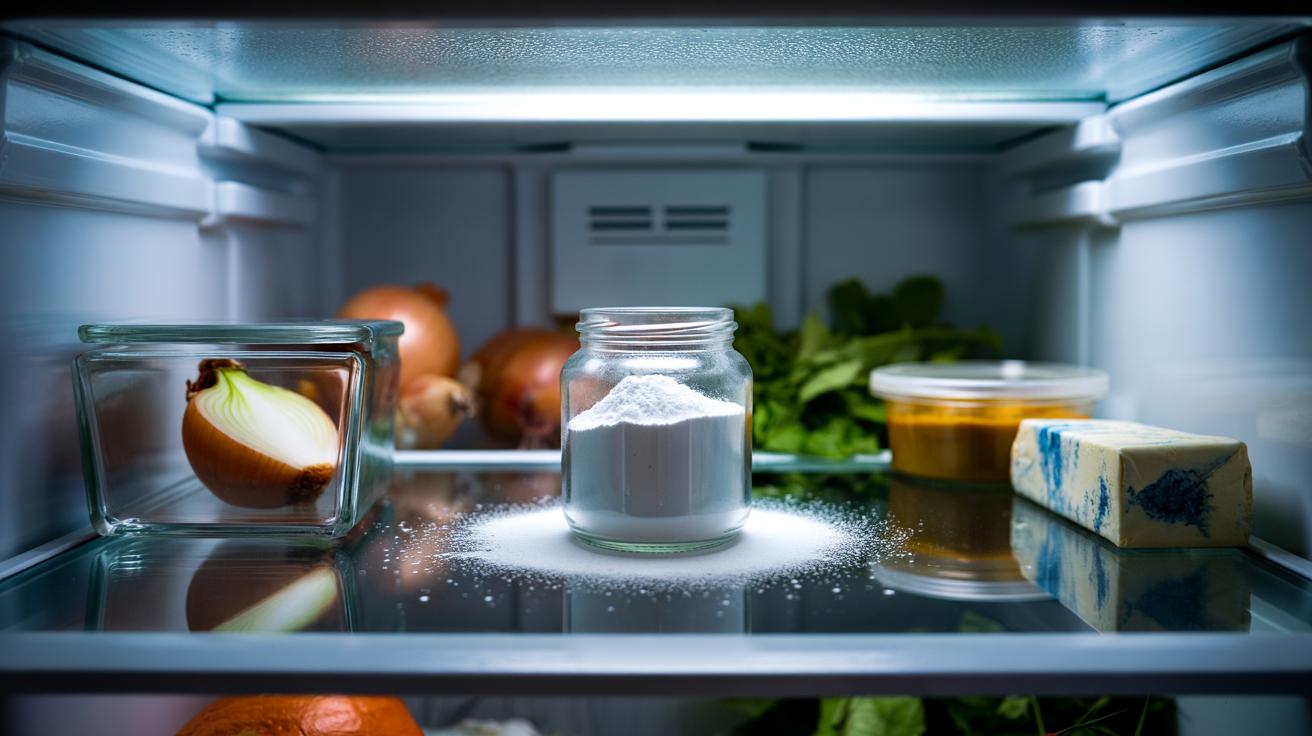
Open your fridge and the truth greets you before the light does: a lingering whiff of last night’s curry, a ghost of Stilton, a hint of onion. In British kitchens, a simple fix has been hiding in the baking aisle all along. A humble jar of bicarbonate of soda works as a quiet, round-the-clock deodoriser, restoring freshness without perfumes or propellants. One properly prepared jar can keep odours at bay for a full week, absorbing the volatile molecules that make your fridge smell “lived-in”. It’s inexpensive, child-safe if handled sensibly, and fanatically effective. Here’s how the bicarbonate blitz works—and how to make it part of your cold-storage routine.
How the Jar Works: The Chemistry of Odour Absorption
Think of bicarbonate of soda as a microscopic sponge with manners. Its crystalline structure offers ample surface area, where airborne molecules settle. Crucially, bicarbonate is amphoteric: it can react with both acids and bases, helping to neutralise many stink-makers. In fridges, odours typically come from volatile acids (vinegary notes), sulphurous compounds from brassicas and eggs, and amines from ageing fish. The bicarbonate doesn’t perfume the air; it reduces the concentration of these molecules, trimming the sharp edges of the smell profile until the “pong” disappears. The science is simple: odours are neutralised, not masked, which is why results feel cleaner and last longer.
Humidity helps. Water vapour ferries odour molecules to the bicarbonate’s surface, where they can be captured or reacted with. That’s why an open jar works better than a closed box: exposure boosts contact. It’s also why you should not confuse baking powder with bicarbonate—baking powder contains acids and starches that blunt the effect. Used correctly, a jar of bicarbonate acts as a passive filter, maintaining a fresher microclimate around your food without interfering with the fridge’s temperature or airflow.
Step-by-Step: Build the One-Week Bicarbonate Jar
Start with a clean, dry jam jar or ramekin. Add 150–200 g of bicarbonate of soda—enough to expose a broad surface. Leave the jar open, or pierce 8–10 holes in a lid or a square of breathable cloth secured with a band. Park it on the middle shelf, towards the back, away from spills and not directly beneath a fan outlet. Replace the bicarbonate weekly for peak performance, and give it a gentle stir mid-week to expose fresh crystals. Label the lid with the date so the swap becomes habit. For large American-style units, use two jars, one per compartment.
Mind the basics. Keep pungent foods—onions, blue cheese, smoked fish—in sealed containers to reduce the workload. If your fridge is crowded, consider a second jar during festive weeks. Don’t use the deodorising batch for cooking afterwards; instead, repurpose it as a gentle sink or bin-cleaning scrub. The method is cheap, quick, and fits around any routine. Below is a snapshot you can stick to your fridge door.
| Item | Recommendation |
|---|---|
| Ingredient | Bicarbonate of soda (not baking powder) |
| Amount | 150–200 g per jar |
| Container | Open jar/ramekin with large surface area |
| Placement | Middle shelf, towards the back |
| Coverage | One standard UK fridge; use two for larger models |
| Refresh interval | Every 7 days; stir at day 3–4 |
| Typical cost | £0.10–£0.25 per week |
Smart Placement, Safety, and Maintenance Tips
Location matters. Avoid perching the jar where it can be knocked into sauces or raw meat drips. If your fridge runs very humid, use a shallow, wider vessel to maximise surface exposure and prevent caking. Should the powder clump, spread it thinly on a baking tray, dry at 120°C for an hour, and reuse it for household cleaning—not as a deodoriser. For consistent results, refresh weekly without fail. Households with frequent spicy leftovers may benefit from a mid-week top-up. If you travel, remove the jar before the fridge is switched off to avoid soggy paste forming.
Safety is straightforward. While bicarbonate is food-safe, the deodorising jar has absorbed odour compounds, so keep it out of children’s reach and do not cook with it. Avoid fragranced alternatives that can migrate into butter and dairy. Seal strong-smelling foods properly to keep cross-aromas out of milk and pastry. If you’re sensitive to dust, transfer gently to prevent inhalation. And don’t rely on bicarbonate to fix hygiene lapses: it complements, rather than replaces, a monthly deep clean of shelves, gaskets, and the drip tray.
Troubleshooting Stubborn Smells
If the jar seems underpowered, suspect a source problem. Check vegetable drawers for forgotten produce, inspect door seals for trapped liquid, and empty the drip tray above the compressor—an overlooked stink magnet. Deep clean with a 1:4 white vinegar solution, then reintroduce your bicarbonate jar. Verify temperature: 3–5°C curbs bacterial growth without freezing greens. For intense episodes—spilled fish stock, cracked egg—deploy two jars and run a short “odor purge” by leaving a small bowl of coffee grounds overnight. No deodoriser will outperform removing the source, which is why a swift clean beats weeks of chasing smells.
Be realistic about limits. Bicarbonate won’t absorb ethylene from ripening fruit, so store bananas and avocados in the fruit bowl, not the fridge. If smells return within days, your unit may be overpacked, blocking airflow; re-space items and avoid warm leftovers entering en masse. Persistent sulphur notes can point to a failing door seal or too-high humidity. In rental flats with elderly fridges, a small activated carbon sachet alongside bicarbonate can provide extra insurance until maintenance arrives.
Used well, the bicarbonate blitz is a tiny ritual with outsize impact: pennies’ worth of powder that keeps your chilled staples tasting like themselves, not yesterday’s takeaway. It’s quiet, chemical-light, and compatible with a weekly shop—open a jar, place it smartly, and let the crystals do the hard work. Refresh on the same day each week and your fridge will smell consistently clean. Will you adopt the jar-and-stir routine, or will you tweak the method—dual jars, sealed cheese, a monthly deep clean—to build your own odour-free playbook?
Did you like it?4.6/5 (29)