In a nutshell
- ☕ Coffee grounds act as natural abrasives, loosening biofilm and grease at the drain mouth while offering mild adsorption of odour molecules for a fresher sink.
- 🧪 Real deodorising equals source removal: scrubbing dislodges residue; pairing grounds with a little washing-up liquid and a hot-water flush carries volatiles and grime away.
- 🧰 Step-by-step method: make a damp paste (grounds + coarse salt + a drop of detergent), scrub the strainer and accessible trap for 45–60 seconds, let sit briefly, then rinse with hot (not boiling) water.
- 🛠️ Plumbing and safety: avoid dumping grounds down drains; capture with a mesh, compost after use, and check for structural causes like a dry P-trap if odours persist.
- 🌿 Eco alternatives and maintenance: use bicarbonate for sour smells, bottle brushes for flanges, and enzymatic cleaners for grease; repeat light scrubs weekly for busy kitchens.
Britons are rediscovering the power in yesterday’s espresso puck: a simple coffee-ground scrub that deodorises drains while lifting biofilm and grease. As a natural abrasive, spent grounds offer a tactile clean and a porous surface that can grab lingering volatile odour compounds. Used sparingly, they provide an eco-conscious alternative to harsh chemicals, especially in kitchens where smells ride up from the waste pipe. The key is technique and moderation: you are not tipping grounds into the pipework, you are using them to scour the mouth of the drain and trap before flushing. Here is how the science stacks up—and how to do it safely.
Why Coffee Grounds Work in Drains
Spent coffee grounds are a gritty, plant-based matrix of cellulose and lignin with a surprising amount of microtexture. That roughness delivers mechanical action, loosening the biofilm that harbours odour-producing bacteria, while the porous particles offer modest adsorption of smelly molecules such as sulfur and amines. Their natural tannins contribute mild acidity, which can help disrupt films that cling to metal and plastic. Crucially, the deodorising effect arises less from perfume and more from removal of residue—the scum and fat coating the first centimetres of pipework, where smells tend to originate.
Because used grounds still contain trace oils, the technique works best when paired with heat and a dash of surfactant. A small amount of washing-up liquid helps emulsify grease released by the scrub; hot water then carries loosened debris away. Think of grounds as a short-contact, targeted scour around the drain mouth and trap—not a substance to store inside your plumbing. Done this way, you get a clean, notably fresher drain without risking compaction deeper in the pipe.
How Natural Abrasives Capture and Neutralise Odours
Odours cling to surfaces and to the slime layer lining pipes. Abrasives work by dislodging that layer and by temporarily binding volatiles through surface forces. Coffee’s fine, irregular particles create a large contact area for adsorption—a weak attraction that can hold odour molecules long enough to be rinsed away. Salt brings crystalline edges for scouring, while bicarbonate (baking soda) excels at neutralising acidic compounds; each solves a different piece of the odour puzzle. Real deodorising happens when the source is removed, not merely masked with fragrance.
Choosing between abrasives depends on what’s causing the smell. Protein-rich residues from food create amine odours; acidic spills and sour films benefit from bicarbonate; greasy, mixed soils respond well to coffee plus a surfactant. For stubborn odours, first break the biofilm mechanically, then flush thoroughly with hot water to reset the drain’s surface. The aim is a clean, wetted pipe that bacteria struggle to recolonise quickly.
| Material | Particle Character | Odour Control Mechanism | Best For | Caution |
|---|---|---|---|---|
| Coffee grounds | Porous, irregular grit | Adsorbs volatiles; scrubs biofilm | Greasy, mixed residues | Use sparingly; avoid deep accumulation |
| Bicarbonate of soda | Fine alkaline powder | Chemically neutralises acids | Sour odours, light films | Needs hot flush; limited scrubbing |
| Coarse salt | Hard cubic crystals | Mechanical scouring | Stuck-on debris near the strainer | Rinse well to prevent corrosion on metals |
A Step-by-Step Coffee-Ground Scrub for Kitchen and Bathroom Drains
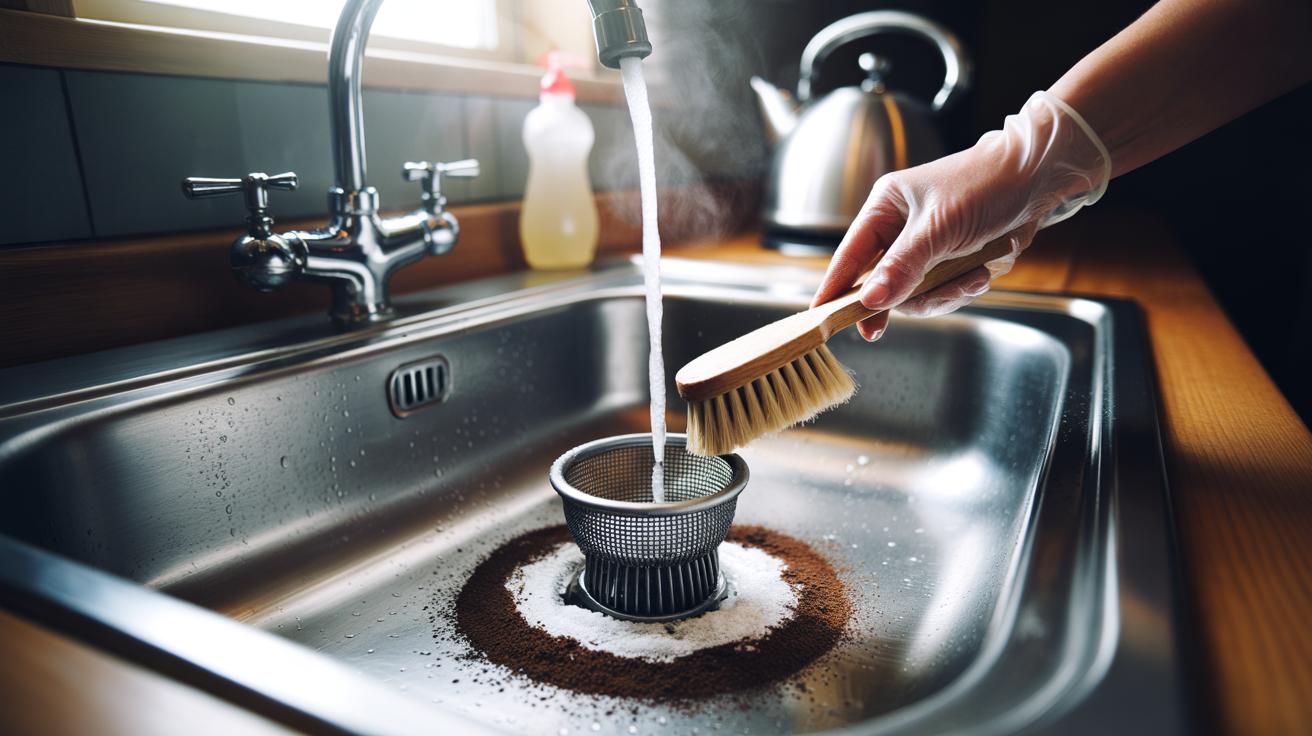
Gather 2–3 tablespoons of spent grounds, a teaspoon of coarse salt, and a small squeeze of washing-up liquid. Dampen the mixture so it clumps but doesn’t drip. Remove the drain cover if possible, then apply the paste to the strainer, flange, and the upper reach of the trap you can safely access. Using a soft brush or gloved fingers, scrub in small circles for 45–60 seconds. Allow the paste to sit for two minutes to engage with residue and odour molecules, then flush with a full kettle of hot (not boiling) water to carry loosened grime away.
For maintenance, repeat weekly in busy kitchens or after cooking fatty foods. If your sink lacks a removable basket, place a fine mesh over the opening so most grounds are captured as you scrub. Never pour straight cups of grounds down the drain; the point is contact cleaning, not disposal. When you finish, tap captured grounds into the food-waste caddy or compost. Septic users should be extra mindful: keep quantities minimal and always rinse thoroughly.
Safety, Plumbing Considerations, and Eco-friendly Alternatives
Many “mystery odours” have simple mechanical causes. A dry P-trap (after a long holiday or from an infrequently used shower) lets sewer gases up; refill it with water and the smell vanishes. Loose gaskets around the waste or an underperforming vent can also mimic drain odours. If smells persist after a proper clean and hot flush, the issue is likely structural, not cosmetic. In grease-prone kitchens, consider a periodic enzymatic cleaner that digests fats overnight. Stainless and composite sinks tolerate gentle abrasives well, but always test finishes and avoid aggressive scouring on delicate surfaces.
Prefer to skip coffee? A teaspoon of bicarbonate followed by a slow hot-water flush often resets a slightly sour drain. A bottle brush cleans the flange and tailpiece without sending particles downstream. Vinegar can help with mineral films on metal parts, but use it separately from bicarbonate to avoid simply making froth. Whatever the method, the golden rule is removal plus rinse: dislodge the film, emulsify the grease, and carry everything away with heat and flow. Grounds you don’t use for cleaning are excellent in the compost bin.
Handled with restraint and a rinse, coffee grounds offer a satisfying, low-waste way to refresh drains by combining abrasion, mild adsorption, and sensible plumbing hygiene. They are not a cure-all, but they shine at the crucial first few inches where smells begin. Keep quantities small, pair the scrub with hot water and a surfactant, and think of the process as maintenance rather than magic. Clean surfaces don’t smell—and clean pipes stay quieter too. What’s your go-to routine for keeping kitchen or bathroom drains both clear and odour-free, and which natural methods have worked best in your home?
Did you like it?4.6/5 (27)