In a nutshell
- 🧪 Cornstarch draws out oil stains via fine granules and capillary action; an overnight dwell lets grease migrate from fibres into the powder.
- 🧼 Method: blot (don’t rub), place a barrier, sprinkle generously, wait 8–12 hours, brush/vacuum, repeat if needed, then pre-treat with washing-up liquid and launder cool.
- 👗 Fabrics: cotton, denim, linen respond best; synthetics need longer and surfactants; treat silk, wool, viscose, leather, and suede with care and test for colourfastness.
- ⚖️ Alternatives: compare cornstarch with baking soda, talc, and solvent removers; pick the gentlest effective option to protect colour and fibre integrity.
- ❗ Precautions: avoid heat until the stain is gone, use light agitation only, shield the reverse with a barrier sheet, and vacuum residue to prevent dust trails.
In homes across Britain, one quiet hero in the cleaning cupboard has been battling greasy disasters without fanfare: cornstarch. This fine, silky dust has a remarkable knack for pulling oil stains out of fabrics while you sleep, sparing you frantic scrubbing and pricey specialist products. The secret lies in its ultra-fine particles and their voracious appetite for lipids, which act like countless tiny sponges. Sprinkle, wait, and brush away — that is the simple ritual. Leave the powder undisturbed overnight and it can draw out oil lodged deep in fibres. Whether you’ve splashed salad dressing on linen or dripped engine oil on denim, cornstarch can often reset the clock on a stain before it sets for good.
Why Cornstarch Tackles Grease So Effectively
At first glance, cornstarch looks inert. Under the microscope, its granules reveal a different story: high surface area, porous structure, and a natural affinity for non-polar substances. That combination creates relentless absorption. As liquid oil spreads along fibres, capillary forces carry it into the weave. Cornstarch counters with its own capillary action, pulling oil into the powder’s labyrinth of microcavities. The effect is slow but decisive, particularly when given time. The overnight window is vital because diffusion allows more of the trapped grease to migrate into the powder, instead of being driven deeper by heat or friction.
There’s chemistry at play too. Starch polymers, chiefly amylose and amylopectin, interact through weak intermolecular forces that encourage adhesion of oil molecules to the granule surface. This is not a detergent reaction; it’s physical sequestration. Because cornstarch is neutral and non-abrasive, it rarely disturbs dyes or finishes on most everyday textiles. That makes it a safe first responder after accidental splashes, before washing sets the plan in motion.
Step-by-Step Method: Overnight Oil Stain Removal
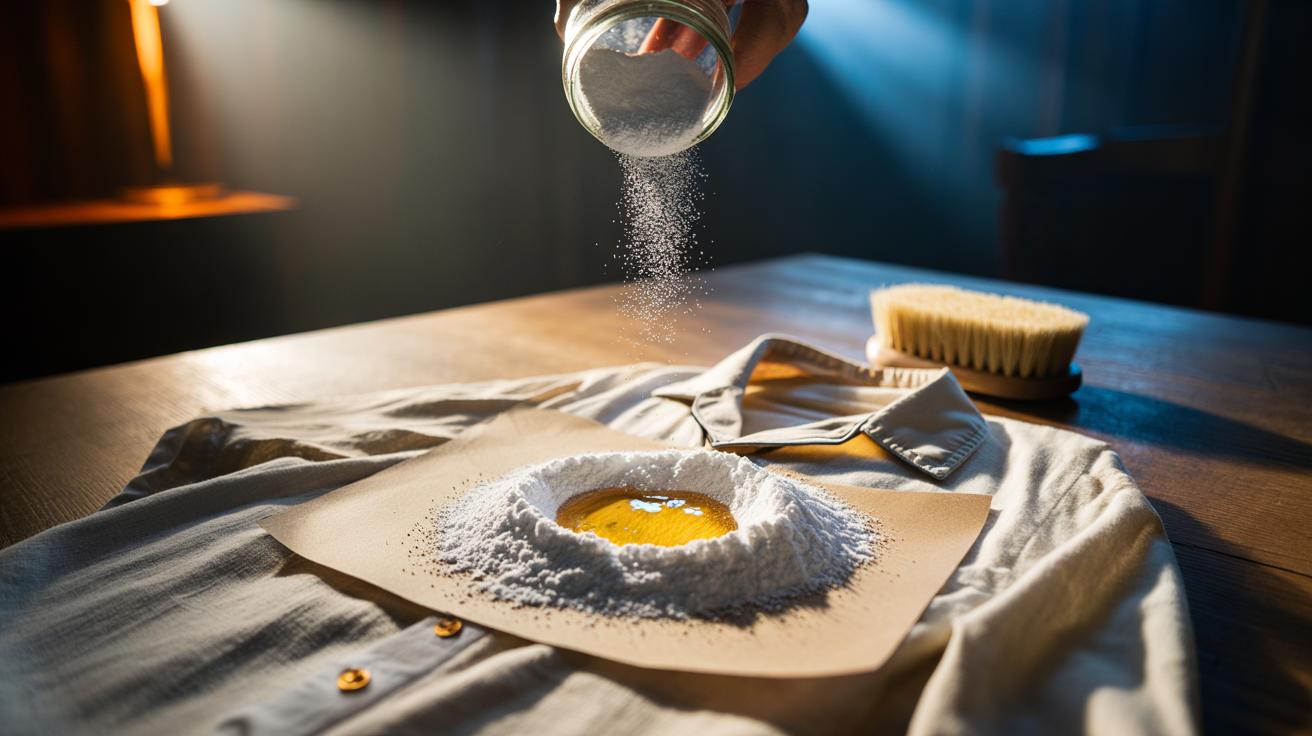
Act quickly. Blot the fresh spill with a clean cloth or paper towel to remove free oil; do not rub, as rubbing spreads the stain along the weave. Lay the garment flat and slide a sheet of card or baking paper beneath the stained area to stop transfer. Dust on a generous mound of cornstarch — enough to bury the mark. Gently tap to help the powder nestle into the fibres. For thicker fabrics such as denim, a soft brush can encourage contact without abrasion.
Wait at least 8–12 hours. Leaving the powder overnight gives you the highest chance of pulling oil from below the surface. In the morning, brush off thoroughly or vacuum with a nozzle. If a shadow remains, repeat the application; persistent stains often yield in two cycles. Once the visible residue is lifted, pre-treat with a small blob of washing-up liquid (it’s designed for grease), massage lightly with fingertips, then launder on the fabric’s recommended setting.
For set-in or unknown stains, test for colourfastness on an inconspicuous seam before the detergent step. Avoid hot water or a hot tumble dry until you are satisfied; heat will set any residual oil. On upholstery, vacuuming the spent powder thoroughly prevents white dust trails and keeps the nap uniform.
Fabric Types and When to Be Careful
Cotton, denim, canvas, and linen respond best, as their open weaves allow oil to migrate into the cornstarch. Polyester and other synthetics can be trickier because oil clings tenaciously to hydrophobic fibres; give them a longer dwell time and follow with a targeted surfactant. Knitwear benefits from a gentler touch to avoid distorting the loops. Always shield the reverse with a barrier sheet to stop the stain printing through, especially on light T-shirts and lined garments.
Delicate fibres — silk, viscose, wool — demand caution. Cornstarch itself is benign, but agitation or the wrong wash routine may cause texture changes. On “dry clean only” pieces, use powder as a stopgap absorbent, then seek professional care. Leather and suede can develop halos; test first and consider specialist powders formulated for skins. If the oil is fragranced (curry, perfume), expect a lingering odour; a subsequent cold soak with a dash of white vinegar in the rinse can help neutralise smells without locking in stains.
Comparing Kitchen Powders and Stain Removers
Not every cupboard staple behaves the same. Cornstarch excels at passive oil uptake without scratching or leaving alkaline residue. Baking soda offers mild deodorising power but can be gritty on delicate weaves. Talc provides slick, fine coverage yet may clump on damp patches. Commercial solvent-based removers cut through oxidised oils but risk dye lift if overused. Choose the gentlest effective option first to protect colour and fibre integrity. The quick guide below helps you pick the right tool for the job and set expectations about timing and risks.
| Product | Absorption/Cutting Power | Risks | Best For | Typical Time |
|---|---|---|---|---|
| Cornstarch | High absorption; passive draw | Low; dust residue | Fresh oil on cotton, denim, linen | 8–12 hours |
| Baking Soda | Moderate; deodorises | Can abrade delicate fibres | Odorous oils, synthetics | 2–8 hours |
| Talc | Moderate; very fine coverage | Clumping on damp areas | Spot pretreatment on silks (test) | 4–12 hours |
| Solvent Remover | High; active grease cutting | Dye bleed, fumes | Old, oxidised stains | Minutes |
Whichever route you choose, remember that heat is the enemy until the stain is visibly gone. Finish with a cool-to-warm wash, air-dry, and inspect before any hot cycle. That way, you avoid setting faint residues that later bloom into dark rings.
This humble powder reminds us that not every effective cleaner needs a laboratory label. Harnessing physics and patience, cornstarch can reverse greasy mishaps with little cost, no harsh odours, and minimal risk to colour or fibre. Keep a jar in the laundry kit, teach the household the “sprinkle and wait” rule, and you’ll save garments that might otherwise be written off. Next time an olive oil splash or bike-chain smear lands on your sleeve, will you reach for heat and haste, or try the quiet, overnight rescue instead — and what tweaks will you add to perfect your own routine?
Did you like it?4.5/5 (27)