In a nutshell
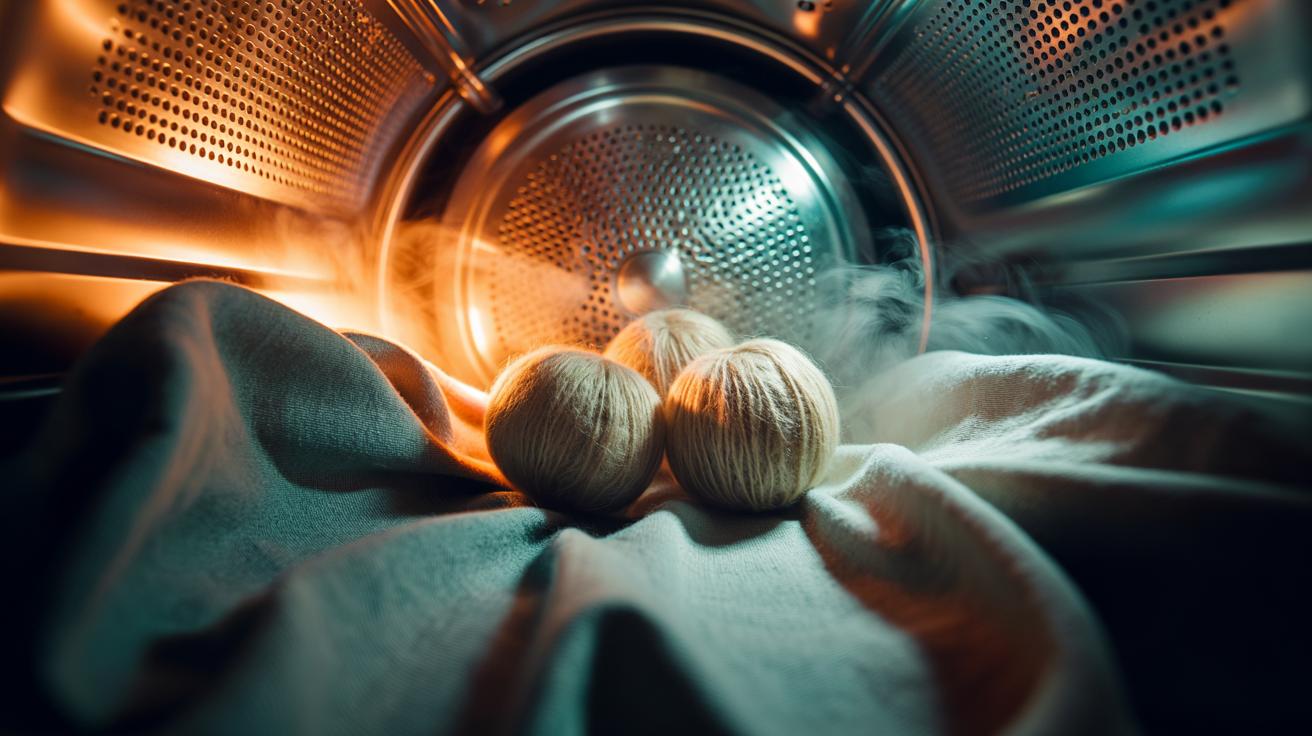
- 🧶 Wool dryer balls act as mobile spacers, lifting layers to improve airflow so clothes tumble freely and emerge with fewer wrinkles.
- 💧 Hygroscopic fibres absorb and release moisture, buffering relative humidity inside the drum to keep textiles pliable and reduce crease set-in and static.
- ⏱️ Faster, gentler drying thanks to better heat distribution and separation, often trimming cycle times by 10–25% without chemical coatings on fabrics.
- 🧺 Practical use & care: deploy 3–6 balls per load, avoid overstuffing, remove garments promptly, refresh balls occasionally, and keep oils minimal for safety.
- 🌱 Sustainability & savings: reusable natural fibres cut waste and energy use, preserving absorbency and breathability while lowering per-wash costs.
Across UK laundries, a quiet revolution is tumbling away inside the dryer. Households are swapping disposable sheets for resilient wool dryer balls that promise fewer wrinkles, quicker cycles, and less static. The trick lies in how natural fibres drink in and shed moisture, subtly changing the microclimate of the drum. Rather than coating fabrics, these spheres work with physics and fibre science, lifting layers to let warm air circulate. By moderating humidity and keeping garments moving, wool balls help clothes emerge smoother and less crumpled. Here is how they work, why they are kinder to textiles than chemical softeners, and the best way to deploy them.
Why Wool’s Structure Tackles Wrinkles
Wool is a complex protein fibre made of keratin, naturally crimped and covered in minute cuticle scales. That crimp acts like a spring, giving the balls loft and bounce. Inside a dryer, this elasticity helps separate fabric layers so they do not compress into hard creases. Air can circulate more evenly, and the rolling action gently massages trapped folds. Wool’s resilience means the balls keep their form for hundreds of cycles, continuing to lift and tumble clothes rather than flattening them.
Crucially, wool is hygroscopic. It can absorb around 16–18% of its weight in water without feeling wet, then release it as conditions warm. That moisture buffering keeps garments pliable during the critical phase when creases would normally set. The combination of mechanical separation and humidity control reduces the high-pressure pinch points that imprint wrinkles into cotton and linen. Unlike single-use sheets, wool adds no films to fabric, preserving breathability and the handle of natural fibres.
Moisture Absorption and Release Inside the Drum
In a heated tumble, hygroscopic wool takes up vapour from damp garments and releases it as temperature rises, smoothing the peaks and troughs of relative humidity. That stabilising effect matters because cellulose fibres such as cotton become more pliable with modest moisture, a process often described as plasticisation. When humidity is steadier, textiles dry without the sharp transitions that cause abrupt shrinkage and set-in creases. The result is a kinder, more even finish, especially on shirts, pillowcases, and table linens that normally emerge crumpled.
There is a second win: By preventing pockets of over-drying, the balls help curb static build-up in synthetics and blends. Less static means garments separate rather than cling, improving airflow and trimming cycle times. The rolling spheres also redistribute heat, so hems and waistbands dry closer to the pace of thicker panels. For best results, allow space in the drum—an overstuffed load limits the balls’ movement and negates their humidity-smoothing effect.
Practical Use: Loading, Care, and Performance
For a typical 7–9 kg household dryer, use three wool balls for light loads and up to six for towels or bedding. Add them at the start of the cycle and select your usual setting; many users can shorten time by 10–25% thanks to improved airflow. Wrinkle reduction is most noticeable on woven cottons, poplin, and linen. Knits benefit too, though their stretch naturally masks creases. Pull shirts, dresses, and tablecloths promptly at cycle end for a final shake while fibres are still supple. Leaving items in a cooling drum invites fold lines that undo earlier gains.
Care is simple. If the balls pick up lint, a quick wash on a gentle cycle and air-dry will refresh the surface. Occasional pilling is cosmetic and doesn’t affect performance. Skip heavy fragrances; a single drop of essential oil per ball is ample, and only on a low-heat cycle. Do not soak balls in oils or use them on high heat—excess oil can pose a fire risk. Store them dry, and rotate sets to extend their lifespan across hundreds of cycles.
Key Properties and Benefits at a Glance
Wool dryer balls work because their material science aligns with the demands of efficient, fabric-safe drying. The table below summarises what the fibres do and why that matters for everyday laundry. Think of them as mobile spacers and humidity buffers that keep textiles relaxed while moisture departs. Compared with disposable sheets, they avoid residues that can dull performance fabrics or reduce towel absorbency. They also create a pleasantly quiet thud instead of the sharp clatter of plastic alternatives.
| Property | What It Means | Laundry Benefit |
|---|---|---|
| Hygroscopic Fibres | Absorb and release water vapour | Smoother drying curve, fewer set-in wrinkles |
| Natural Crimp | Spring-like structure maintains loft | Better fabric separation and airflow |
| Thermal Resilience | Retains shape under heat and motion | Consistent performance over many cycles |
| No Chemical Coatings | Nothing deposited on garments | Preserves absorbency and breathability |
From a sustainability angle, the reusability of natural fibres reduces packaging waste and per-wash cost to pennies. That value holds even as energy prices fluctuate, since shorter cycles save both time and kilowatt-hours. For households aiming to streamline chores without compromising garment care, the pairing of moisture management and mechanical lift is compelling. The payoff is seen on the ironing board: fewer deep creases, less steam required, and fabrics that keep their character. It is a modest switch that adds up across a year of laundry.
Wool dryer balls make a persuasive case for simple engineering and smart materials: crimped, hygroscopic fibres that choreograph air, heat, and humidity into a gentler dry. They do not replace good habits—timely unloading, sensible heat settings, and proper sorting—but they amplify them with minimal fuss. For many UK homes, they are an easy upgrade from single-use softeners, kinder to textiles and budgets alike. If your laundry could be faster, smoother, and less reliant on chemicals, what will you change first to make it happen?
Did you like it?4.4/5 (21)