In a nutshell
- 🧲 Pet hair clings to skirting boards due to static electricity and the triboelectric effect, intensified by low humidity and airflow along the floor.
- ⚡ A quick rub with a dryer sheet transfers cationic surfactants, forming a thin antistatic film that neutralises charge and reduces friction, so hair won’t stick.
- 🧽 Technique: dry-dust first, then wipe lightly with an unscented dryer sheet; spot-test delicate finishes; refresh weekly in winter and less often when humidity is higher.
- 🧱 Surface factors: matte emulsion and PVC trims charge up more than semi-gloss or sealed timber; aim for 40–50% humidity to cut static and extend results.
- 🛡️ Limits and alternatives: antistatic film won’t bond to greasy dust; use antistatic spray via cloth or a light vinegar clean first, and pair with a HEPA vacuum to curb re-deposition.
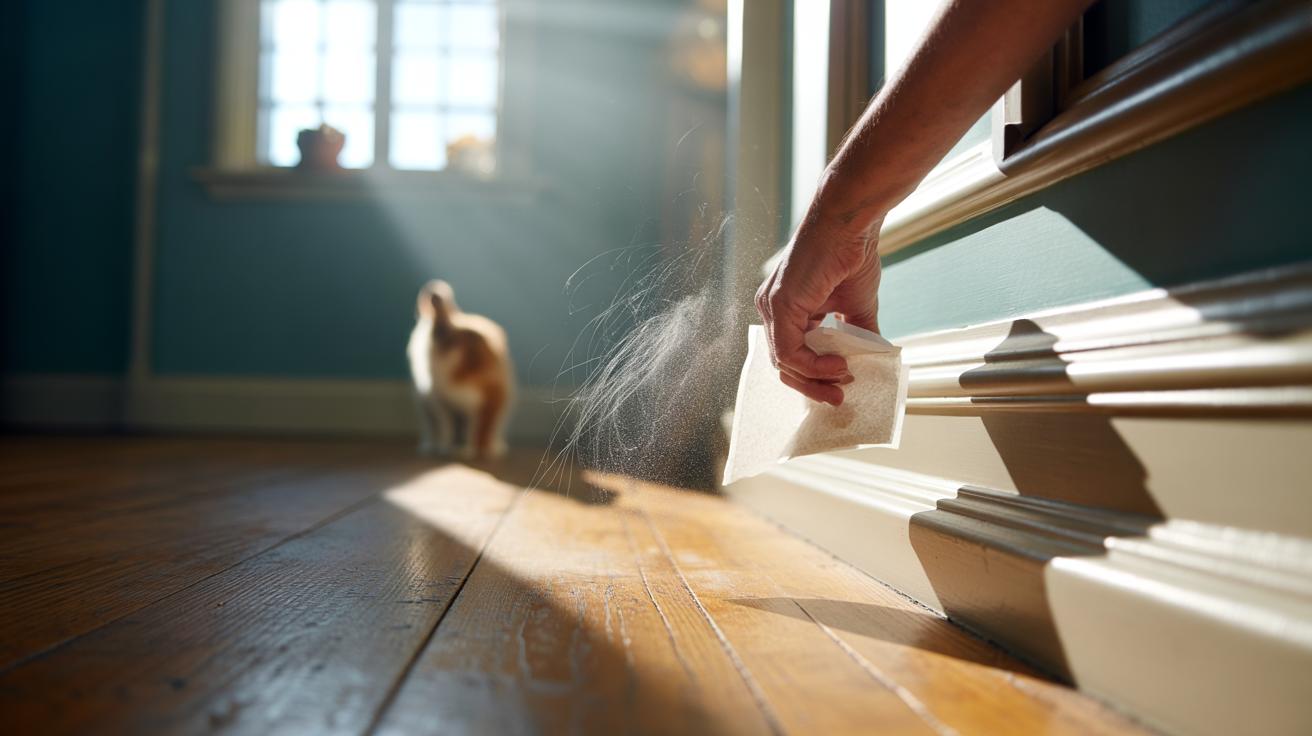
Pet owners in Britain know the drill: you wipe the skirting boards, and within a day a halo of fluff is back. The culprit isn’t laziness; it’s static electricity, quietly turning your baseboards into fur magnets. A low-fuss trick does the rounds on social media and among cleaning pros alike: the dryer sheet rubdown. A quick sweep along the boards can stop fur from clinging for days, and it takes less time than brewing a cuppa. Here’s the science, the method, and the caveats you need to know to keep pet hair at bay without adding yet another chore to your weekend.
Why Pet Hair Clings to Baseboards
Pet hair carries a light electric charge as it’s shed and scuffed about the house. Your skirting boards, especially those painted with polymer-rich paints or finished with vinyl-based coatings, accumulate the opposite charge through the triboelectric effect. When two materials rub—shoes on carpet, paws on rugs, cloth on paint—they exchange electrons. The result is a persistent attraction between board and fur, amplified by dry indoor air during heating season. Static makes hair behave like iron filings seeking a magnet, so the fluff you notice isn’t just dust; it’s electrostatically sorted and stuck.
Location makes matters worse. Skirting boards sit at the collision point of draughts, footsteps, and paws, so every pass of air or movement lifts and charges more fibres. Low humidity lowers surface conductivity, letting charge linger. Even the microtexture of matte paint can trap strands mechanically while charge does the initial grab. The upshot: charged surfaces + charged fibres = cling. Breaking that invisible handshake is the simplest way to keep your edges crisp and clean longer.
How Dryer Sheets Disrupt Static Attraction
Dryer sheets are coated with cationic surfactants (often quaternary ammonium compounds) and a little lubricant. When you wipe a board, those molecules transfer to the surface, forming a whisper-thin antistatic film that bleeds off charge and reduces friction. The cationic layer neutralises negative hotspots and helps dissipate incoming charge so hair can’t lock on. It also makes the surface slightly slick, which means any fluff that does arrive is easier to whisk away with a feather duster or the soft brush on your hoover.
This isn’t magic; it’s surface physics. The treated board becomes less attractive electrically and less “grippy” mechanically. That’s why a single wipe can deliver days of relief, particularly in dry weather. Unscented sheets are best if you’re sensitive to fragrances, and they’ll avoid adding an odour that might bother pets. If you prefer a greener route, look for plant-derived antistatic sheets; the mechanism is the same, though longevity varies by brand and coating thickness.
Safe and Effective Technique for Your Skirting Boards
Start with a quick dry dust: use a microfibre cloth or soft brush to remove loose debris. Then take a fresh or lightly used dryer sheet and fold it to create a firm edge. Wipe along the entire length of the board with light, even strokes, including the top lip where hair settles. For carved or profiled boards, press the sheet into grooves with your fingertip. You’re depositing a film, not scrubbing; overdoing it won’t help and may leave residue on glossy finishes.
Frequency depends on conditions. In winter radiators dry the air, so you might refresh weekly; in humid months the effect lasts longer as natural moisture helps discharge surfaces. Always spot-test on an inconspicuous corner if your paint is delicate, limewash-based, or newly cured. Keep pets away while you wipe, and wash hands after. If residue worries you, follow with a barely damp microfibre pass—gentle enough to keep the antistatic film while removing excess coating.
What Works Best: Materials, Frequency, and Limitations
Not all surfaces behave alike. Semi-gloss acrylic paint tends to accumulate less charge than chalky matte emulsions, and sealed timber attracts less cling than PVC trims. Carpets and synthetic rugs nearby ramp up charging; natural-fibre runners help keep the air and surfaces calmer. Consider your home’s humidity: a simple hygrometer can explain why some weeks are fluffier than others. Aim for 40–50% relative humidity to naturally reduce static buildup, comfort permitting. For allergy sufferers, pair the dryer-sheet trick with a HEPA hoover to stop re-deposition.
| Surface/Factor | Static Tendency | Dryer Sheet Effectiveness | Notes |
|---|---|---|---|
| Matte emulsion paint | High | Strong | May need weekly wipe |
| Semi-gloss acrylic | Medium | Good | Longer intervals possible |
| Sealed timber | Low–Medium | Good | Test to avoid residue on oil finishes |
| PVC/vinyl trims | High | Strong | Responds well to cationic film |
| Humidity 40–50% | Lower | Moderate | Extends time between wipes |
There are limits. If boards are greasy or dusty, antistatic agents can’t bond well. Scented sheets may irritate sensitive pets; unscented is the safest bet. For a residue-free approach, use an antistatic spray formulated for electronics or fabrics, misted onto a cloth then applied to boards. You can also lightly dampen a microfibre cloth with diluted white vinegar (no more than 1:10) to clean, then finish with a single dryer-sheet pass for static control. Keep an eye on high-traffic corners; they need the most frequent attention and deliver the most visible payoff.
In short, the dryer-sheet rub works because it tackles the real enemy: static charge. By laying down a thin antistatic film, you stop hair from finding a foothold and make routine dusting far easier. It’s quick, thrifty, and adaptable to most finishes when tested first. The best results come from combining the wipe with clean boards and comfortable humidity, creating a home where the skirting stays tidy without constant effort. Will you test the trick on a single room this week and see how long your baseboards stay free of fluff?
Did you like it?4.4/5 (29)