In a nutshell
- 🫖 Overnight vinegar + cling film wrap dissolves limescale while you sleep; set up at bedtime for a cleaner, faster-boiling kettle in the morning.
- ⚗️ The chemistry: acetic acid reacts with calcium carbonate to form soluble calcium acetate + CO₂; coverage and contact time are key, and cling film limits evaporation on spouts and rims.
- 🧰 Steps: unplug and cool, fill with white vinegar (neat or 1:1), apply vinegar‑soaked paper to the spout, seal with cling film, leave overnight; in the morning rinse, wipe, then boil and discard water twice—keeping electrics dry.
- 🧪 Acid options: white vinegar (5%) for low cost, cleaning vinegar (6–10%) for speed, and citric acid for minimal odour; match strength to scale thickness and schedule monthly in hard-water areas.
- ✅ Safety & longevity: avoid mixing acids with bleach, protect decorative finishes, clean the filter, and prefer repeat soaks over scraping; routine descaling improves efficiency, lifespan, and brew taste.
Hard-water chalk building up in your kettle is more than an eyesore; it slows boiling, wastes energy, and can sprinkle crusty flakes into your tea. There’s a simple fix that works while you sleep: a white vinegar soak inside the kettle, plus a cling film wrap around the spout and awkward crevices. The mild acetic acid in vinegar dissolves stubborn limescale without scrubbing, turning rock-like deposits back into rinse-away salts. Set it up at bedtime; wake to a brighter, faster kettle. Below, the chemistry behind the trick, a step‑by‑step guide that avoids mess and damage, and smart ways to choose the right acid, contact time, and cost for UK households.
Why Vinegar Works on Limescale
Limescale is mostly calcium carbonate, a mineral that forms when hard-water calcium meets heat. Acetic acid in vinegar reacts with calcium carbonate to produce soluble calcium acetate, water, and fizzing carbon dioxide. That gentle reaction is why you’ll hear a soft sizzle in the first minutes of soaking. The game‑changer is time: acids don’t need force, they need contact. By keeping vinegar in place overnight, you allow fresh molecules of acid to reach and dissolve layers that scrubbing alone can’t shift, especially on the heating plate and along the spout.
Cling film enters as a barrier that slows evaporation and holds a vinegar‑soaked cloth against curved surfaces. Vinegar works best warm but not hot; for safety, you’ll do this with the kettle unplugged and cool. The extended dwell mimics the action of stronger descalers without their harshness or fumes. Expect chalky edges to soften and edges to brighten—evidence that calcium is being pulled into solution for an easy rinse in the morning.
How to Do the Vinegar and Cling Film Wrap
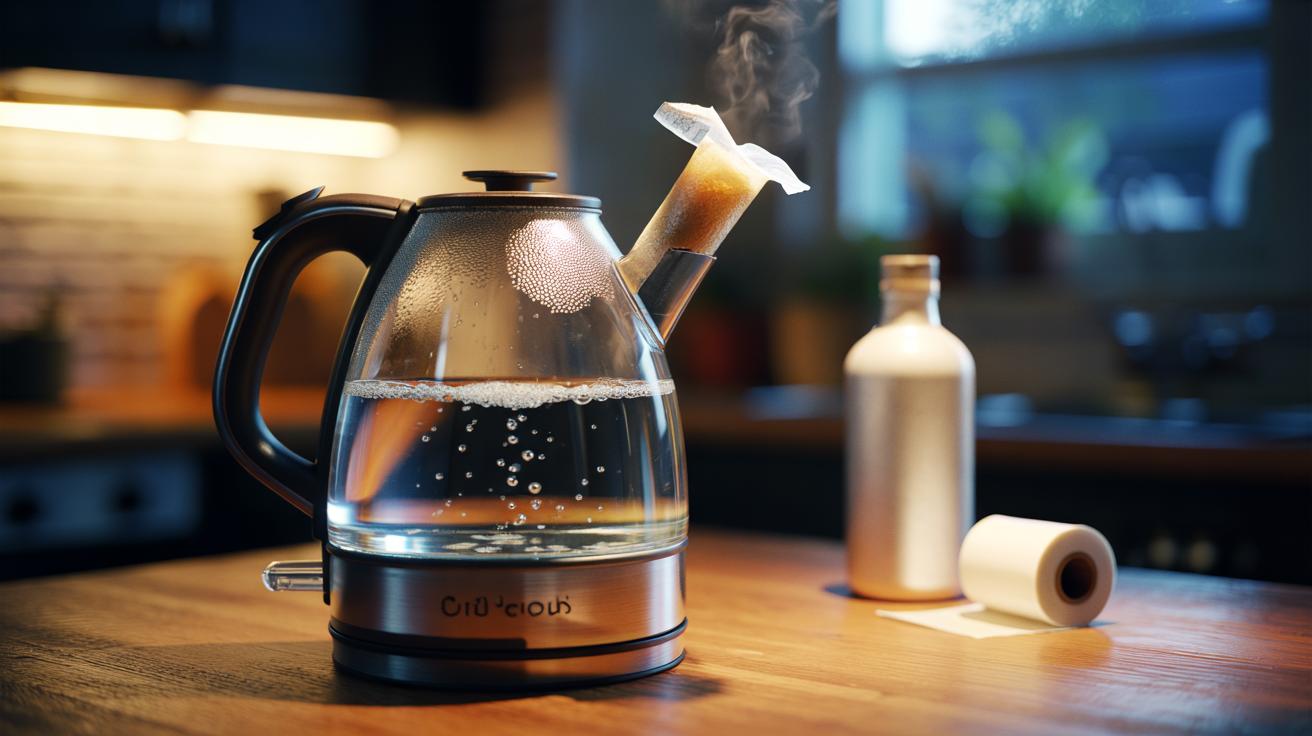
Unplug the kettle and let it cool. Pour out any water. Fill the interior to cover the scale line with white vinegar or a 1:1 mix of vinegar and water if scale is light. For the spout and lid rim, saturate a strip of kitchen paper in vinegar, drape it over the crusted areas, then seal it in place with cling film so the liquid stays in contact. Do not turn the kettle on during the soak. Set the kettle on a tray to catch drips and leave it overnight.
In the morning, remove the wrap, pour away the solution, and inspect. Most scale will rinse off; any flecks can be wiped with a soft cloth. Refill with clean water, boil once or twice, and discard to clear any lingering tang. If deposits remain, repeat on the thickest patches or switch to a slightly stronger acid solution for a second, shorter pass. Never immerse the base of an electric kettle, and keep liquids away from electrical contacts.
Choosing Acids, Contact Times, and Costs
Different acids reach the same destination via different routes. White vinegar (5% acetic acid) is the classic, low-odour, readily available option in UK supermarkets. Cleaning vinegar (6–10%) works faster but smells stronger. Citric acid crystals make a clear, scent‑light solution ideal for kettles and coffee gear. Match strength and time to the thickness of the scale, not your patience: the goal is controlled, even softening rather than stripping metal finishes.
| Acid Option | Typical Mix | Contact Time | Odour | Notes |
|---|---|---|---|---|
| White vinegar (5%) | Neat or 1:1 with water | 6–12 hours | Low–moderate | Cheap, effective; rinse and boil twice to clear tang |
| Cleaning vinegar (6–10%) | Neat or 1:1 with water | 3–8 hours | Moderate | Faster; ventilate kitchen during use |
| Citric acid | 1–2 tbsp per 500 ml warm water | 1–6 hours | Very low | Food-safe; great for quick refreshes |
| Malt vinegar | Not advised | — | Strong | Leaves persistent smell; save for chips |
In very hard‑water postcodes, monthly descaling keeps performance snappy and taste clean. For thick, chalky “lips”, start with neat vinegar overnight, then move to maintenance doses. Whichever acid you choose, contact time and coverage do the heavy lifting. If odour worries you, pick citric acid for the inside and reserve vinegar for the cling film wrap on exterior trims and the spout.
Safety and Longevity: Protecting Your Kettle
Mild acids are safe for stainless steel, glass, and most modern kettle interiors when used sensibly. Avoid prolonged exposure on painted trims or decorative metals; keep the cling film wrap tight so vinegar doesn’t wander. Never mix acids with bleach or chlorine cleaners, and keep electrics dry. After descaling, rinse thoroughly, then boil fresh water and discard to remove any dissolved minerals and odour traces. A quick wipe of the filter screen will stop loosened flakes from re-circulating.
To guard against new build‑up, empty leftovers after boiling rather than letting water sit. If your kettle has a removable filter, soak it in warm citric acid solution during the overnight treatment. For stubborn mineral rims, a second short soak beats scraping, which can scratch the heat plate and invite faster scale. Treated regularly, your kettle will look brighter and heat up more quickly, with your tea tasting as it should—clean, hot, and free from chalky notes.
This overnight vinegar plus cling film wrap trades elbow grease for chemistry, letting acetic acid dissolve limescale while you rest. It’s inexpensive, low‑risk, and adaptable to any kettle, from stainless steel to glass, with a citric acid alternative if you want less smell. With a little routine—rinse, boil, discard—you’ll keep mineral deposits at bay and your brew tasting crisp. Will you try the overnight wrap as your new monthly habit, or experiment with citric acid for a faster refresh when the scale line first appears?
Did you like it?4.6/5 (25)