In a nutshell
- 🔥 Heat-driven diffusion: Warm radiators raise the sheet’s temperature, increasing fragrance compounds’ vapour pressure and using convection to spread a gentle, even scent.
- 🧭 Practical setup: Use one unused dryer sheet, place it on the radiator’s top edge without blocking vents or valves, keep heat moderate, and reassess after 15–20 minutes—a little goes a long way.
- ⚠️ Safety and sensitivities: Keep sheets off electric fan heaters and gas fires, avoid hot spots and softening paint, consider low-allergen or unscented sheets with diluted essential oils, and remove at any sign of singeing.
- 💷 Cost and longevity: A low-cost hack using heat you already pay for; scent typically lasts 4–12 hours. Alternatives include a ceramic radiator diffuser, a bowl of water with oil nearby, or a plug-in diffuser.
- 🏠 Air quality and moderation: Ventilate if needed, avoid continuous use in small rooms, and balance fragrance strength with indoor air quality, budget, and sensitivity levels.
There’s a quietly effective home hack making the rounds in British households: resting a dryer sheet on a warm radiator to gently perfume a room. The idea works because heat encourages fragrance molecules to lift off the sheet and disperse into the air, producing a consistent, low-level scent without sprays or plug-ins. Done carefully, it’s simple and inexpensive. Yet many people don’t realise that the physics and chemistry behind it are sound—and that a few sensible precautions keep the method safe. Below, we unpack how warmth unlocks aroma, the best placement practices, and alternatives that stretch your budget while keeping indoor air quality in mind.
How Heat Unlocks Fragrance Chemistry
Radiators create a pocket of warm air that rises by convection, drawing room air across the surface. As the sheet warms, the volatile compounds in its fragrance blend gain energy. Their vapour pressure increases, allowing more molecules to escape into the airstream and circulate around the room. Many dryer sheets also carry perfumes in a softener matrix; heat softens this matrix, releasing scent in a gradual, controlled way. Gentle, steady warmth is what turns a quiet radiator into a subtle diffuser.
The details matter. Typical radiator front-panel temperatures range roughly from 45–70°C, warm enough to push molecules into the air without scorching the sheet. Lower humidity usually improves diffusion, while a mild draught promotes even spread. The effect tails off as the sheet’s perfume reservoir depletes. Airflow near the radiator grille accelerates distribution, but do not block vents. If you notice any hint of singeing or a sharp chemical note, remove the sheet at once and ventilate.
Practical Steps and Safety on Home Radiators
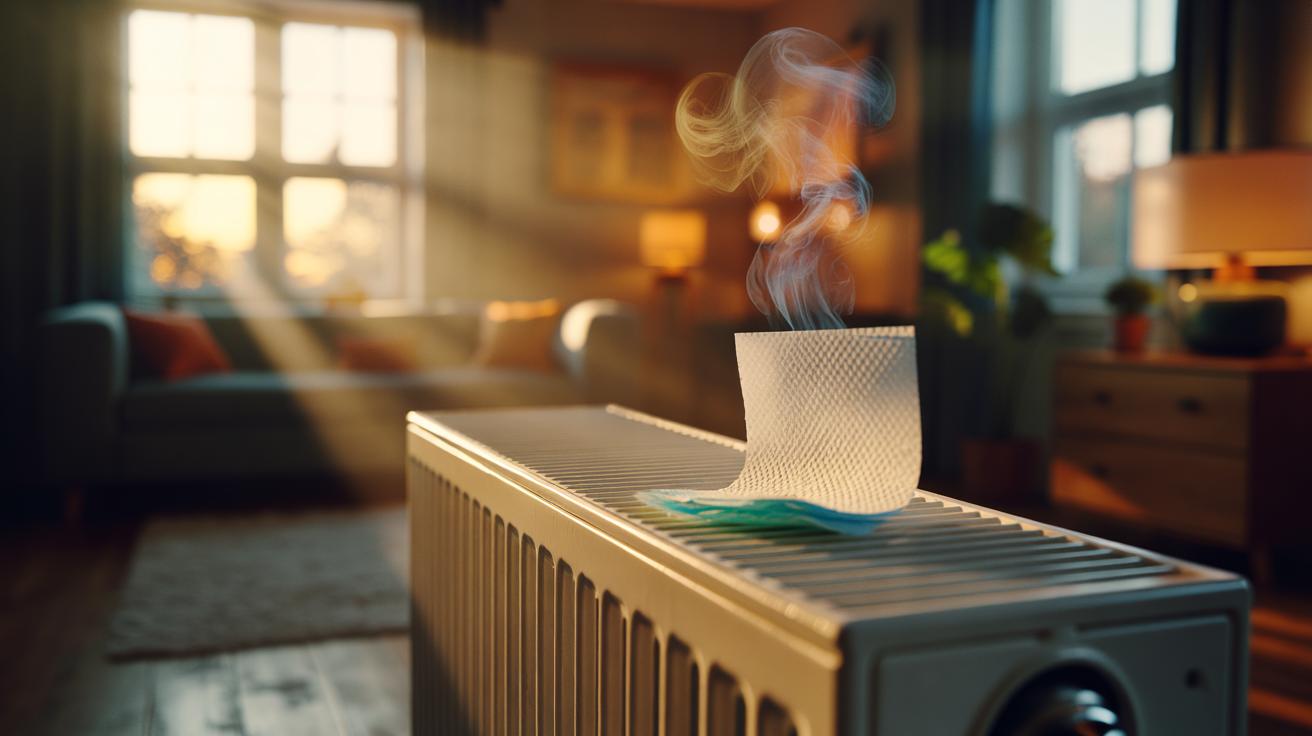
Use a single unused dryer sheet for the cleanest scent profile. Place it on the top lip or a flat section of the radiator, securing it with a metal clip or a ceramic trinket that won’t overheat. Keep the sheet away from thermostatic valves and clear of convector fins to preserve airflow. Start with the heating set to a moderate temperature and assess the room after 15–20 minutes. A little goes a long way; one sheet can scent a medium room without layering multiple fragrances.
Safety is straightforward. Do not place dryer sheets on electric fan heaters or gas fires, and never tuck them behind covers that trap heat. Avoid contact with painted surfaces prone to heat-softening. Some sheets contain quaternary ammonium compounds; those with asthma, fragrance sensitivities, or pets may prefer low-allergen or unscented sheets lightly misted with a few drops of essential oil diluted in water. Always keep sheets out of reach of children and remove them if the radiator feels excessively hot to the touch.
Alternatives, Longevity, and Cost
The sheet-on-radiator trick is attractive because it’s cheap, quick, and mess-free. Still, longevity varies. Expect a noticeable effect for a few hours to a full day, depending on brand, radiator temperature, and room size. If you want steadier performance, consider a radiator-safe ceramic diffuser or a small bowl of water with a drop or two of essential oil placed nearby—not directly on top—to encourage lighter, slower diffusion. Always dilute potent oils and avoid continuous use in small, unventilated spaces.
On costs, the method often undercuts plug-in diffusers and candles, and it uses the heat you’re already paying for. For renters, it avoids residue or open flames. Below is a quick comparison to help you decide what suits your home, routine, and sensitivity profile. Choose the mildest option that achieves the effect you want and monitor the room’s scent strength as the radiator cycles.
| Method | Approx. Scent Duration | Heat Source | Pros | Cautions |
|---|---|---|---|---|
| Dryer sheet on radiator | 4–12 hours | Wet-system radiators | Cheap, simple, no flame | Fragrance sensitivities; avoid hot spots |
| Ceramic radiator diffuser | 6–24 hours (refillable) | Radiators/towel rails | Reusable, controlled dosing | Use diluted oils; keep stable |
| Bowl of water + essential oil nearby | 2–8 hours | Ambient warmth | Mild scent, low cost | Spill risk; not for strong oils |
| Plug-in diffuser | Variable | Electric | Programmable output | Ongoing electricity and refill cost |
The dryer-sheet-on-radiator tactic proves that a little household science can elevate comfort without fuss. By leveraging vapour pressure and steady convection, you get a soft, room-filling scent that rides on heat you already use. Keep placement sensible, scent levels modest, and an eye on sensitivities, and the method becomes a tidy part of your winter routine. If in doubt, test for 10 minutes with a window cracked, then adjust. How might you adapt this approach—or one of the alternatives—to balance fragrance, cost, and indoor air quality in your home this season?
Did you like it?4.6/5 (20)