In a nutshell
- 🧴 Why it works: Cationic surfactants in fabric softener cling to fibres, smoothing them, reducing static, and slowing odour release; a diluted fabric softener spray adds a clean scent without soaking—ideal for quick refreshes, not a deep-clean substitute.
- 🔧 How to mix and apply: Start with 1 tsp softener to 500 ml distilled water (increase gradually if needed), optionally a teaspoon of white vinegar; patch-test, mist from 30–40 cm, brush with microfibre, and ventilate well; never mix with detergents.
- 🛋️ Fabric suitability and safety: Use on W/WS water-safe fabrics; avoid leather, suede, silk, and “dry clean only” covers; light dilutions protect finishes and potential flame-retardant treatments; choose fragrance-free if sensitivity is a concern and keep rooms aired.
- 🧼 Maintenance routine: Vacuum first to lift dust that traps smells, rotate cushions, air covers when possible, and schedule periodic professional or approved extraction cleans; apply the spray sparingly to prevent residue that can attract soil.
- ⚠️ Do’s and don’ts: Don’t oversaturate or spray wood, metal studs, or electronics; label the bottle, store out of sunlight, use within two weeks, and if the fabric feels tacky after drying, dilute further before the next use.
That sleepy, slightly musty note that clings to a well‑used sofa is hard to shift, especially when upholstery can’t be bundled into the wash. A practical workaround sits in your laundry cupboard: a diluted fabric softener spray. Lightly misted, it can tame stale smells and leave fibres feeling smoother, helping a living room smell freshly aired without heavy perfumes. The trick is getting the balance right so the solution refreshes without leaving residue. Always start with a cautious dilution and a quick patch test. Used sparingly and paired with decent ventilation, this simple method brings a discreet, clean scent back to sofas between deeper cleans.
Why a Diluted Softener Works
Most fabric softeners rely on cationic surfactants—positively charged compounds that cling to the slightly negative charge of textile fibres. That bond forms a thin, even coating that smooths the fabric surface, reduces static, and helps slow the release of lingering malodour molecules. In a diluted solution, the same chemistry provides a light touch on upholstery, while the fragrance blend supplies a fresh, just‑laundered note. Water acts as the carrier, distributing those actives as a fine mist so the sofa is refreshed rather than doused. Mist, don’t soak, to keep cushions and padding dry.
The effect isn’t a substitute for extraction cleaning, but it is an efficient reset after cooking, damp days, or pets on the settee. Because some softeners also include mild preservatives, they can help limit the microbes that feed odours on the surface. There are caveats. Do not use on leather, suede, silk, or “dry clean only” fabrics, and avoid any areas with delicate trims or embroidery. For most synthetic or blended covers, a light, even application is the sweet spot.
How to Mix and Apply the Spray
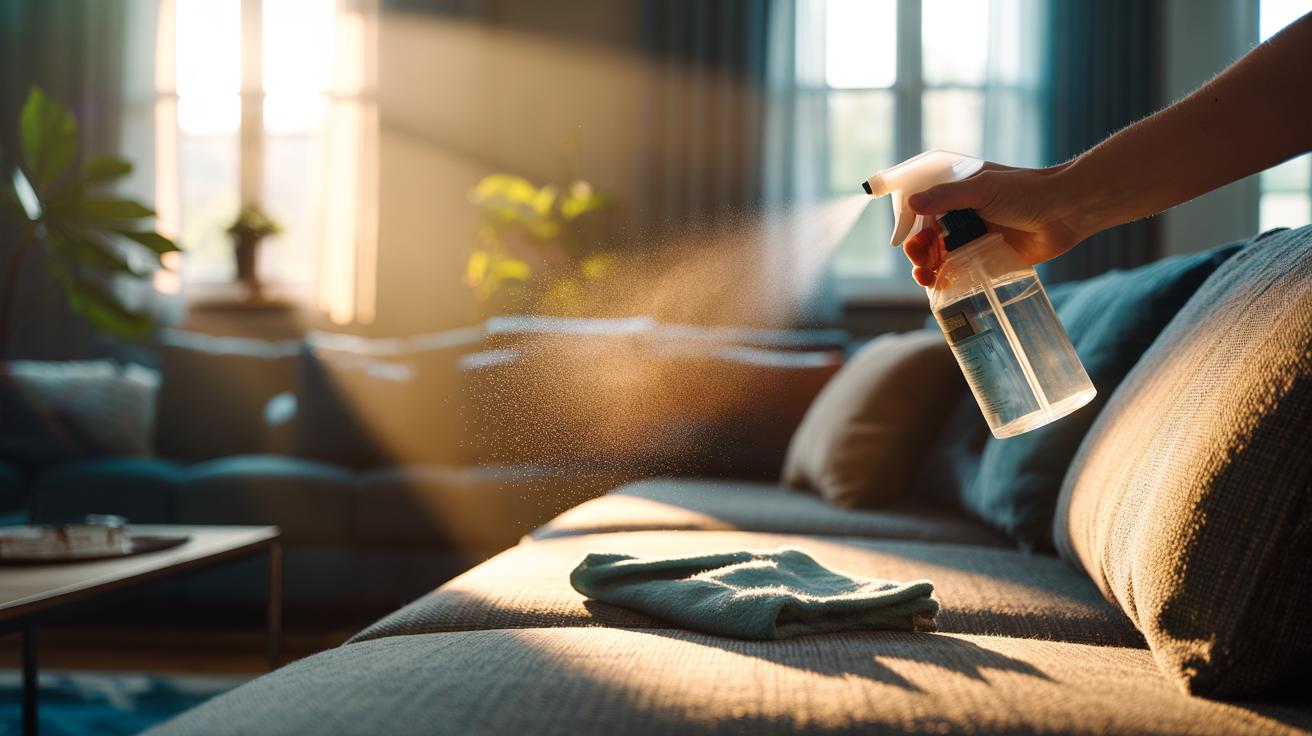
Start by vacuuming the sofa thoroughly to remove dust that holds smells. Mix the spray in a clean atomiser using distilled water where possible. A reliable baseline is 1 teaspoon (5 ml) softener to 500 ml water; for heavier odours, step up gradually. Some households like a teaspoon of white vinegar to aid odour neutralisation; keep additions light. Always patch‑test on a hidden seam and wait for it to dry. Hold the sprayer 30–40 cm from the fabric, mist very lightly, then brush the pile with a dry microfibre cloth. Allow good airflow to speed drying.
| Situation | Softener | Water | Optional | Notes |
|---|---|---|---|---|
| Light stale smell | 1 tsp (5 ml) | 500 ml | — | Test first; one light pass is enough. |
| Post‑cooking or pet day | 2 tsp (10 ml) | 750 ml | 1 tsp white vinegar | Ventilate well; avoid metal fittings. |
| Persistent mustiness | 1 tbsp (15 ml) | 1 litre | — | Apply in two light sessions, not one heavy spray. |
Never mix with detergents, which can react with softeners and leave cloudiness. Label the bottle, store out of sunlight, and use within two weeks. If any tackiness remains after drying, you’ve gone too strong—dilute and try again.
Safety, Fabrics, and Long‑Term Care
Softener residue can attract soil if overused, so treat the spray as a maintenance aid, not a daily habit. Stick to fabrics with care codes W or WS, which indicate water‑safe cleaning, and check the manufacturer’s tag. Keep rooms ventilated during and after spraying, especially for households with asthma or fragrance sensitivities; fragrance‑free softener is a calmer choice. Be mindful that concentrated products might affect specialist finishes, including some flame‑retardant treatments, which is why light dilutions and patch tests matter.
For routine care, rotate cushions, vacuum crevices weekly, and air covers outdoors when the weather allows. Reserve a deeper clean—professional extraction or a home machine approved for your fabric—for seasonal resets or stubborn odours. Between those bigger jobs, a lightly diluted fabric softener spray keeps the settee guest‑ready while avoiding wetting the fillings. Never spray directly onto wooden arms, metal studs, or electronics; apply to fabric only and wipe accidental overspray promptly.
Used wisely, a fabric softener mist is a quick, low‑cost tactic that reins in stale smells and leaves upholstery feeling newly tended. The science is simple, the method is gentle, and the results are immediate—provided you respect dilution, airflow, and fabric type. Keep a small bottle on the cleaning caddy, refresh after vacuuming, and your living room will hold that clean‑home signature without overpowering scent. What’s your go‑to ratio, and how do you pair this trick with your broader sofa‑care routine to keep the settee fresh week after week?
Did you like it?4.4/5 (29)