In a nutshell
- 🍊 Natural essential oils in citrus peel—rich in terpenes like limonene, linalool, and citral—disrupt odour-causing microbes and deliver a clean, uplifting scent.
- 🧵 Build a breathable sachet with thoroughly dried pesticide-free peel in muslin or cotton; boost with a pinch of bicarbonate of soda or rice and, optionally, a drop of food-safe citrus oil.
- 📊 Choose peels for purpose: Orange (limonene) for broad appeal, Lemon (citral) for crisp “clean” notes, Grapefruit (nootkatone) for longevity, Lime for a strong opening in sportswear drawers.
- ✅ For best results, place near airflow, recharge every 4–6 weeks by crumbling peel, and keep slightly away from delicate fibres; use peel-only around pets to avoid concentrated oil exposure.
- ♻️ A sachet is low-waste and compostable, costs pennies versus shop-bought fresheners, and avoids petrochemical fragrances while keeping clean clothes fresher between wears.
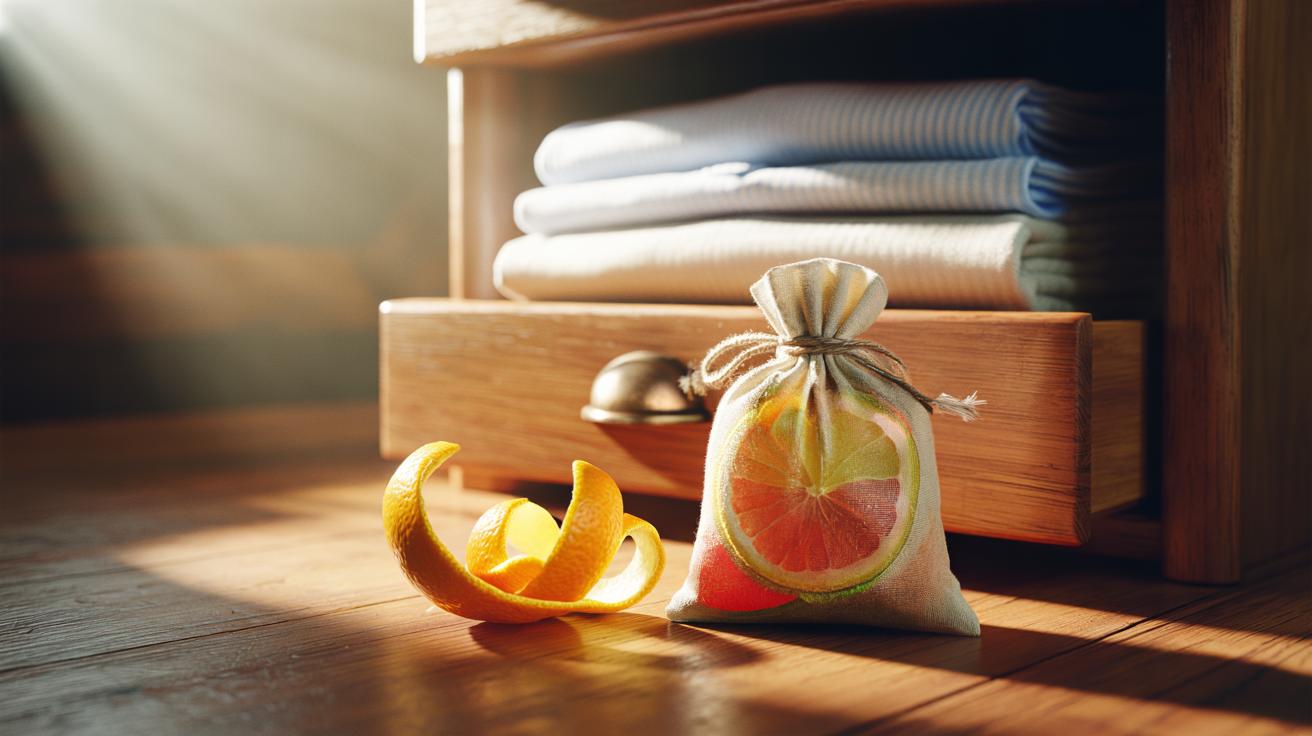
Stale drawers and wardrobes often share a common culprit: trapped humidity and the silent work of odour-causing microbes. A simple response is hiding in your fruit bowl. A sachet packed with dried citrus peel uses the power of natural essential oils to disrupt musty smells while delivering a bright, clean aroma. This isn’t just masking odour; it’s altering the conditions that let it form. The peel’s oils evaporate slowly, releasing antimicrobial compounds and binding with lingering scents in fabrics. With a scrap of cotton and yesterday’s orange skins, you can build a freshening tool that is frugal, low-waste, and quietly effective.
The Chemistry Behind Citrus Freshness
At the heart of citrus’s deodorising talent are terpenes such as limonene, linalool, and citral. These volatile molecules lift from dried peel in minute doses, circulating through the drawer and interacting with airborne compounds that make clothes smell stale. Citrus oils interrupt the microbial growth cycle that underpins mustiness. Research has shown that limonene-rich oils exhibit antifungal and antibacterial activity against fungi like Aspergillus and various bacteria. By nudging the micro-environment away from favourable conditions for mould, the sachet reduces both the cause and the symptom of odour.
There is also a sensory science explanation. Terpenes bind to olfactory receptors associated with “clean” notes, which our brains read as freshly laundered. In a confined space, low, steady diffusion matters. Dried peel releases fragrance more slowly than synthetic blocks, avoiding overpowering blasts. The peel’s porous structure absorbs and re-releases smells, acting as a mild adsorbent. Pairing citrus with a moisture-balancing filler, such as a teaspoon of bicarbonate of soda or rice, helps control humidity, reducing the dampness that fuels odours in the first place.
Building an Effective Drawer Sachet
Start with clean, pesticide-free peel from oranges, lemons, limes, or grapefruit. Dry it thoroughly: either air-dry on a rack for several days or bake on a low oven setting until crisp. Complete drying is vital to stop mould in the sachet itself. Chop the peel into small pieces to increase surface area, then spoon into a breathable pouch—muslin, old cotton handkerchiefs, or a single layer of linen works well. Tie with string, leaving space for air circulation. For thicker garments or deep drawers, make two small sachets rather than one large bundle to distribute scent evenly.
Boost performance with strategic additions. A teaspoon of bicarbonate of soda helps mop up acidic odours, while a pinch of dried cloves adds mild moth deterrence. If you want a stronger start, add a single drop of food-safe citrus essential oil to the dried peel—but avoid soaking the fabric to prevent staining. Place sachets away from delicate silks and test on a scrap if concerned. Replace or recharge when fragrance fades—typically every four to six weeks.
| Citrus Peel | Signature Oils | Aroma Profile | Notable Benefit |
|---|---|---|---|
| Orange | Limonene | Sweet, sunny | Broad appeal; gentle antimicrobial action |
| Lemon | Citral, Limonene | Bright, zesty | Perceived “clean” signal; sharp deodorising |
| Grapefruit | Nootkatone, Limonene | Dry, pithy, tonic | Longer-lasting top note; balanced freshness |
| Lime | Limonene, Gamma-terpinene | Green, tart | Strong opening; good for sportswear drawers |
Practical Tips, Longevity, and Safety
For best results, position sachets where air moves: near drawer fronts or among loosely folded items, not compressed at the bottom. Rotate drawers during seasonal swaps and air them briefly with the sachets removed if dampness builds. Average longevity ranges from a month to six weeks, depending on humidity and how often drawers are opened. To recharge, crumble the peel to expose fresh surfaces or add a tiny top-up of lemon or orange oil. If the sachet smells flat or musty, compost and rebuild rather than risking reusing spent materials.
Consider fabric safety and sensitivities. Citrus oils may discolour delicate fibres if applied neat. Keep sachets slightly apart from silk, untreated wool, and heirloom pieces. Pet owners should note that concentrated essential oils can irritate cats and small animals; use peel-only sachets and store them in furniture inaccessible to curious paws. For moth prevention, citrus pairs well with cedar or lavender blocks, offering a rounded protective and freshening profile without harsh synthetic mothballs.
Sustainability and Cost Comparison
Household citrus peel transforms food scraps into a functional wardrobe aid, cutting waste and avoiding synthetic fragrances that rely on petrochemical bases. A commercial sachet can cost several pounds and often uses plastic fibres as carriers. A home-made version costs pennies and uses compostable components. When you’re finished, the peel and thread can return to the soil via compost or a food-waste caddy. There’s no single-use plastic wrapper, and the scent load is lighter on indoor air quality compared with aerosolised sprays.
Performance-wise, a citrus sachet won’t bulldoze foul odours from unwashed clothes—which no product should—but it keeps clean textiles fresher between wears. It also avoids clashing perfume notes that linger after dryer sheets. For gym kit drawers, consider alternating citrus with charcoal sachets to balance moisture control and fragrance. On a yearly basis, the cost saving is noticeable, and the environmental footprint shrinks without sacrificing that crisp, just-laundered impression.
Citrus peel sachets succeed because they change the small ecosystem inside a drawer: they cut humidity, slow microbes, and scent the air with clean, uplifting notes. The result is quiet, reliable freshness built on natural chemistry and everyday materials. You can tailor blends to seasons, switch peels as fruit bowls change, and compost the lot when it’s spent. Ready to reclaim your drawers from musty drift without synthetic fog? What peel-and-pouch combination will you try first, and how will you tune it to your wardrobe and climate?
Did you like it?4.6/5 (30)