In a nutshell
- 🧽 A crumpled aluminium foil ball cleans by high-friction micro-edges that shear off carbonised residue, with hard aluminium oxide tips offering gentle, controlled abrasion.
- 🔧 Method: soak with hot water and washing-up liquid; for stubborn grime, simmer with bicarbonate of soda; scrub with a golf-ball–sized foil wad, keep it wet, re-crumple for fresh edges, then rinse, dry, and optionally finish with vinegar for shine.
- 🧪 Science: governed by tribology, the process exploits brittle crusts for selective abrasive wear while soapy water provides mixed lubrication, limiting damage to stainless steel and seasoned cast iron.
- ⚠️ Safety: Do not use on non-stick (PTFE/ceramic), enamel, or anodised aluminium; choose nylon pads or mild pastes instead, and re-oil cast iron after cleaning.
- 📊 Suitability at a glance: Stainless steel—yes; cast iron—yes with care; non-stick—no; enameled—generally no; anodised aluminium—not advised; try oxygen bleach or citric acid soaks when abrasion isn’t safe.
It sounds like a hack, yet the science is solid: a crumpled aluminium foil ball can restore scorched pans with startling ease. The trick lies in friction and the foil’s subtle abrasiveness, which shear off carbonised layers without resorting to harsh chemicals. Used correctly, this approach is quick, cheap, and oddly satisfying. Always avoid non-stick coatings and delicate finishes, but for stainless steel and robust cookware, the method performs brilliantly. Below, we unpack why this works, the best technique, and the material science that turns a kitchen staple into a serious cleaning tool.
Why a Crumpled Foil Ball Works
A foil ball’s cleaning power comes from its chaotic surface. When you scrunch foil, it forms countless micro-edges that create high local pressure points as you rub. These points act as a fine, non-loaded abrasive, generating enough shear force to lift carbonised residue while spreading contact to avoid gouging. The roughness increases the coefficient of friction against burnt-on bits, which tend to be brittle. That brittleness is your ally: once the residue fractures, it detaches in flakes rather than smearing.
Aluminium quickly develops a thin aluminium oxide layer, harder than the base metal. Those oxide-tipped ridges enhance scrubbing, yet remain mild compared with steel wool. Add a film of hot water with washing-up liquid, and you reduce adhesion while preserving bite. The result is controlled abrasion: aggressive on carbon, relatively gentle on sound stainless steel or seasoned cast iron.
Step-By-Step: From Burnt-On Mess to Clean Shine
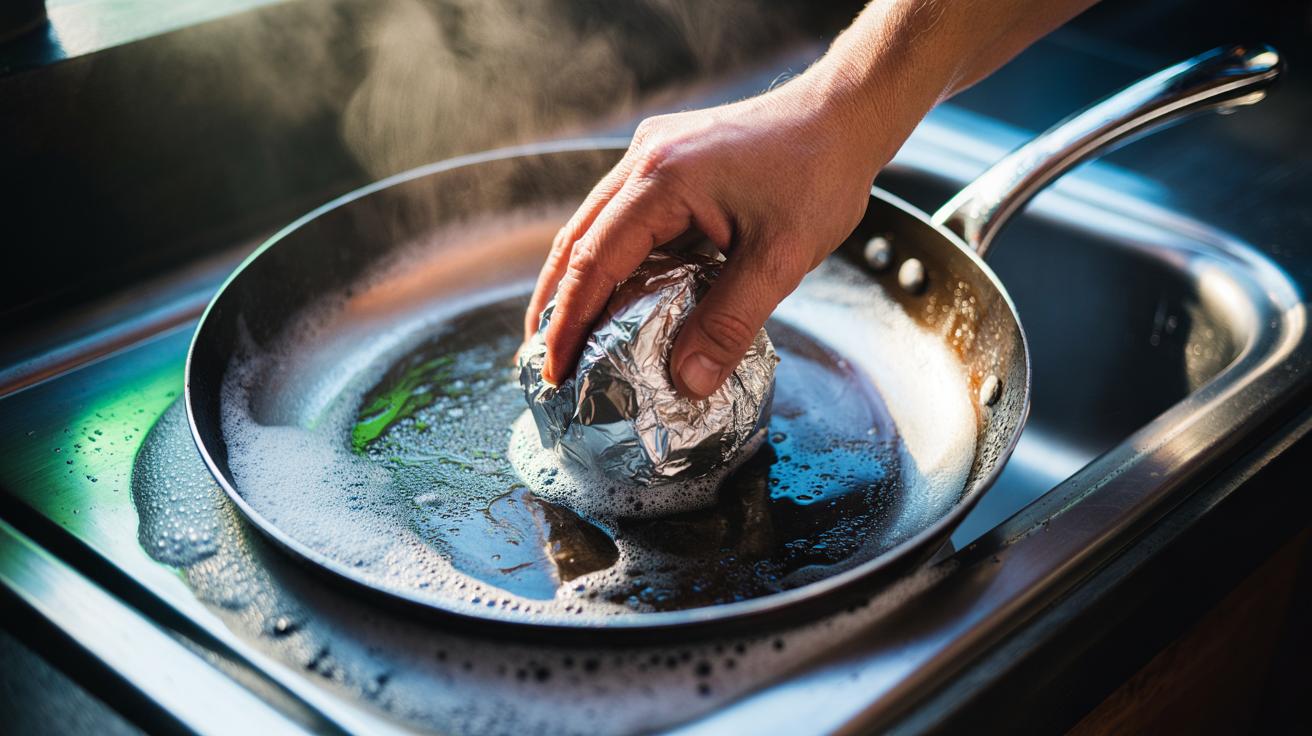
First, fill the pan with hot water and a squirt of washing-up liquid; leave it to soak for 10–15 minutes. For heavy polymerised gunk, simmer water with a tablespoon of bicarbonate of soda for five minutes, then pour off most of the liquid, leaving a thin slurry. Scrunch a golf ball–sized piece of foil into a compact, ridged ball. Test a small, inconspicuous area before committing.
Work in short, overlapping strokes, keeping the surface wet. Use moderate pressure and refresh the foil when it smooths over. For corners and rivets, re-crumple to expose fresh edges. Stubborn caramelised sugars or proteins respond well to a 1:1 vinegar rinse after scrubbing with bicarb; the mild acid loosens mineral films and restores shine.
Rinse thoroughly and dry immediately to prevent water spots. For stainless steel, finish with a drop of mild cleaner to polish out haze. Do not use a foil ball on non-stick (PTFE), soft anodised aluminium, lacquered copper, or decorative coatings.
Science of Friction and Material Interaction
Cleaning here is governed by tribology—the study of friction, wear, and lubrication. The foil ball’s effectiveness stems from a balance of abrasive wear on the burnt layer and limited adhesive wear on the intact substrate. Carbonised residues have higher brittleness and lower toughness than stainless steel; under shear, they crack along micro-fissures, detach, and disperse with the wash water. This selective wear is why scrubbing feels “easy” once the crust starts to break.
Aluminium’s oxide skin, approximately nanometres thick, presents a hard ceramic-like interface. Paired with a lubricating film of soapy water, it produces mixed lubrication: enough friction to cut, enough slip to prevent galling. Heat accelerates softening of fatty residues, which lowers the required force.
Beware of enamel and soft aluminium alloys: their surface hardness or coatings may not outmatch the foil’s micro-edges. When in doubt, reduce pressure, increase lubrication, and reassess. The goal is controlled, minimal removal—of residue, not the pan.
When Not to Use Foil and Safer Alternatives
Some cookware demands gentler tactics. Thin anodised aluminium and decorative finishes can dull. Non-stick (PTFE) and ceramic coatings scratch easily, compromising performance and safety. For these, use a nylon pad, soft sponge, or a paste of bicarbonate of soda left to dwell before a light rub. For enameled cast iron, stick to non-abrasives; a warm soak with a splash of washing-up liquid and a wooden scraper often suffices. Remember: matching abrasiveness to surface hardness protects your investment.
| Surface | Foil Ball Suitability | Notes |
|---|---|---|
| Stainless steel | Yes | Use with soapy water; rinse and polish after. |
| Cast iron (seasoned) | Yes, carefully | Re-oil after cleaning to protect seasoning. |
| Non-stick (PTFE/ceramic) | No | Risk of scratching and coating failure. |
| Enameled surfaces | Generally no | Stick to nylon or soft sponges. |
| Anodised aluminium | Not advised | May dull or mark the finish. |
If you need extra oomph without abrasion, try an overnight soak with hot water, bicarb, and a teaspoon of oxygen bleach (colour-safe), or simmer a citric-acid solution for mineral stains. Let chemistry ease the load, then finish with the lightest mechanical action possible.
The humble foil ball is a small triumph of household physics: textured pressure, selective wear, and simple chemistry combining to erase burnt-on memories from last night’s dinner. It’s frugal, fast, and surprisingly precise when you respect surface limits and lubricate generously. Keep a roll handy, but pair it with patience and a critical eye; the smartest clean is the gentlest one that works. As you rethink your sink-side toolkit, which pan in your kitchen most deserves a science-backed second chance—and what technique will you try first?
Did you like it?4.6/5 (28)