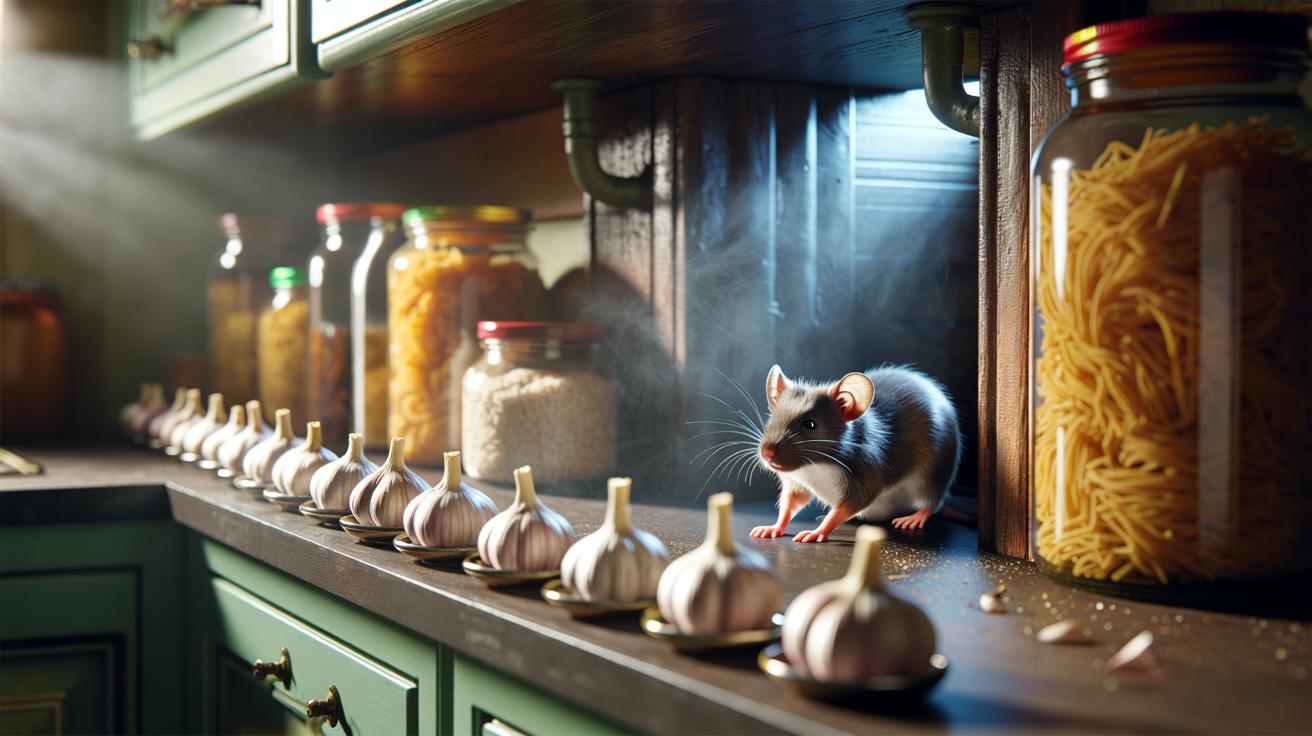
In a nutshell
- 🧄 A garlic clove barrier deters mice by releasing volatile sulphur compounds—especially allicin—that overwhelm their senses, irritate trigeminal nerves, and mask scent trails.
- 🧠 Mice rely on olfactory receptors; pungency signals risk and prompts avoidance, making garlic an effective deterrent rather than a poison, best used alongside other measures.
- 🗄️ Cupboard deployment: place whole and lightly sliced/crushed cloves along edges and entry points at 20–30 cm intervals; replace every 5–7 days (2–4 for crushed) and keep off food packaging.
- 🛠️ Integrate with IPM: rigorous cleaning, airtight containers, sealing gaps >6 mm, bristle strips, mesh around pipes, and targeted traps where activity persists.
- 🐾 Safety and escalation: keep garlic inaccessible to pets, prevent odour taint, bin spent cloves, and seek BPCA-accredited pest control for larger infestations.
In British homes, the humble garlic clove has earned a place among practical, low-cost deterrents for unwelcome rodents. The idea is simple: create a garlic clove barrier inside or around cupboards so mice choose an easier route. This isn’t folklore with no basis. Garlic gives off volatile sulphur compounds that overwhelm a mouse’s exquisitely sensitive nose, encouraging avoidance rather than exploration. When cupboard hygiene and proofing are already in hand, the tactic can help to interrupt night-time visits and protect dry goods. Think of it as a scent curtain that makes cupboards less appealing, not a cure-all that replaces proper sealing and sanitation.
Why Mice Loathe Pungent Aromas
Mice live by their noses. With densely packed olfactory receptors and a secondary vomeronasal system, they map the world through scent to locate food, kin and safe runways. Garlic releases volatile sulphur compounds—notably allicin, formed when cloves are cut or crushed—that produce an aggressive odour profile. To a mouse, this is not merely unpleasant; it can be physiologically aversive. These compounds stimulate trigeminal nerve endings, causing irritation that encourages swift retreat. The outcome: disrupted navigation, masked pheromone trails, and a high-friction environment in which exploring a cupboard simply isn’t worth the risk.
Behaviourally, avoidance makes evolutionary sense. In the wild, pungency often signals toxicity or danger. While garlic is not a poison bait, its intensity triggers caution and breaks habitual foraging patterns. That helps in enclosed spaces where mice like straight edges and dark corners. Yet the effect is contextual: ventilation, temperature and air currents change odour strength. Do not rely on scent alone to control an established infestation. A smart home strategy mixes scent deterrence with proofing, cleaning, and targeted trapping where activity is evident.
How the Garlic Clove Barrier Works in Cupboards
The goal is a continuous, low-level vapour field. Place small dishes of fresh garlic cloves near entry points and along the rear plinth or shelf edges, where mice prefer to travel. Lightly slice or crush a portion of the cloves to release allicin, leaving others whole to extend longevity. Aim for spacing of 20–30 cm in problem areas. Replace cloves every 5–7 days, or sooner if the smell fades. Keep them on washable saucers or breathable sachets so oils don’t taint packaging, and avoid direct contact with grains, pasta or pet food. In tight cupboards, the odour concentrates efficiently without overpowering the room.
Balance potency with practicality. Too much paste can be messy and may permeate cardboard. Whole bulbs last longer but smell milder. In cool, dry cupboards the effect persists; in warm kitchens, allicin burns off faster. Ventilate briefly after placement if the odour is intense for household members. Combine the barrier with wiping down shelves, decanting dry goods into sealed jars, and removing attractants such as crumbs. Where cables or pipes penetrate a unit, use the cloves to mark the path—and then seal those gaps when you can.
| Garlic Form | Smell Intensity | Effective Duration | Best Use |
|---|---|---|---|
| Whole cloves | Low–medium | 5–7 days | Maintenance barrier |
| Sliced/crushed cloves | High | 2–4 days | Rapid deterrence at hotspots |
| Garlic paste/oil on cotton | Very high | 1–3 days | Short bursts; avoid near food packaging |
Practical Tips and Safety for UK Homes
Start with cleanliness: vacuum crumbs, wipe grease, and store staples in airtight containers. Position a garlic clove barrier where signs of activity appear—droppings, smear marks, or gnawed edges. Track response over a week: reduced droppings and quieter nights indicate success. Proofing remains essential: seal gaps larger than 6 mm with steel wool and sealant, fit bristle strips to cupboard kickboards, and mesh pipe penetrations. For flats or terraces with shared voids, coordinate with neighbours to avoid re-entry. Where activity persists, add snap traps in covered stations along walls, baited with peanut butter or chocolate spread.
Safety matters. While kitchen use is widespread, garlic can harm pets if eaten in quantity; position cloves in inaccessible corners or behind mesh. Avoid placing garlic next to open foods to prevent odour taint. Bag and bin spent cloves promptly to deter fruit flies. If you suspect a larger infestation—persistent scratching, daytime sightings, or damage—contact your council’s pest control or an accredited technician (look for BPCA membership). Scent deterrents support Integrated Pest Management (IPM), they do not replace it. Keep records of placements and results, then adjust your approach with evidence.
Used intelligently, garlic is a sharp, flexible tool: it masks trails, nudges mice away from cupboards, and buys you time to seal the building envelope. The chemistry is on your side—allicin and its kin create an odour landscape mice prefer to avoid—while the costs are small and the method is reversible. Treat the smell as a barrier, not a bait, and double it up with proofing and good storage. With that, your kitchen becomes less attractive to opportunistic foragers. What combination of scent, storage, and sealing will you try first to make your cupboards a no-go zone?
Did you like it?4.6/5 (21)