In a nutshell
- 🔬 The fizz explains it: baking soda and hot water lift soap scum; an acid adds CO₂ fizz that agitates debris—it dislodges hair rather than dissolving keratin.
- 🧪 Step-by-step: 100–150 g baking soda → 500–800 ml hot water at 60–80°C → optional 100–150 ml vinegar → cap 5 minutes → final hot flush; pour slowly and avoid boiling water on plastic traps.
- 🧰 When it works: great for early slow drains clogged by scum and light hair; not for deep wads or objects—use a drain snake, a plunger, or remove the U-bend; enzymes are slow, caustic soda is potent but risky.
- ⚠️ Safety first: do not mix DIY fizz with commercial drain openers, ventilate, and skip the method if chemicals were used recently; protect seals by keeping water below boiling.
- 🛡️ Prevention: fit a hair catcher, run a weekly maintenance flush (2 tbsp soda + half-kettle hot water), clean the pop-up, limit oils/clays down the sink, and tackle limescale with diluted citric acid.
Blocked bathroom sinks are a modern nuisance, yet the budget-friendly duo of hot water and baking soda promises a quick clear-out with a satisfying fizz. It is not plumbing wizardry, but a simple bit of household chemistry that loosens the tangles of hair, gels, and soap scum that choke the waste. Pouring a measured amount of sodium bicarbonate into the drain and chasing it with very hot water can agitate grime and lift it from the pipe walls. Add a splash of mild acid and the fizz increases. It will not magically dissolve hair like caustic soda, but used early and correctly, it can restore flow, avoid harsh chemicals, and spare you a call-out fee.
How the Fizz Works on Hair and Gunk
Hair blocks because strands of keratin snag on rough patches and on clumps of soap scum and toothpaste residue. Baking soda is a mild alkali; in hot water it helps loosen fatty deposits by nudging pH upwards, softening residues that bind hair. When you add an acid such as vinegar or lemon juice, carbon dioxide bubbles form, creating a fizz that agitates debris. That mechanical bubbling, plus heat, helps detach the mat of gunk from the inner curve of the waste. The fizz does the lifting, not a dramatic chemical digestion of hair. Hair itself is resilient keratin and only breaks down quickly with strong alkalis, but the cocktail frees it from the glue-like film that keeps it lodged.
Temperature is crucial. Water at 60–80°C softens congealed oils and old shaving foam without stressing seals. Avoid boiling water straight onto plastic traps, as it can warp fittings or craze ceramic glaze. Think of the mixture as a gentle scrub that reaches where a brush cannot, nudging detritus downstream until it’s flushable.
Step-by-Step: The Hot Water + Baking Soda Pour
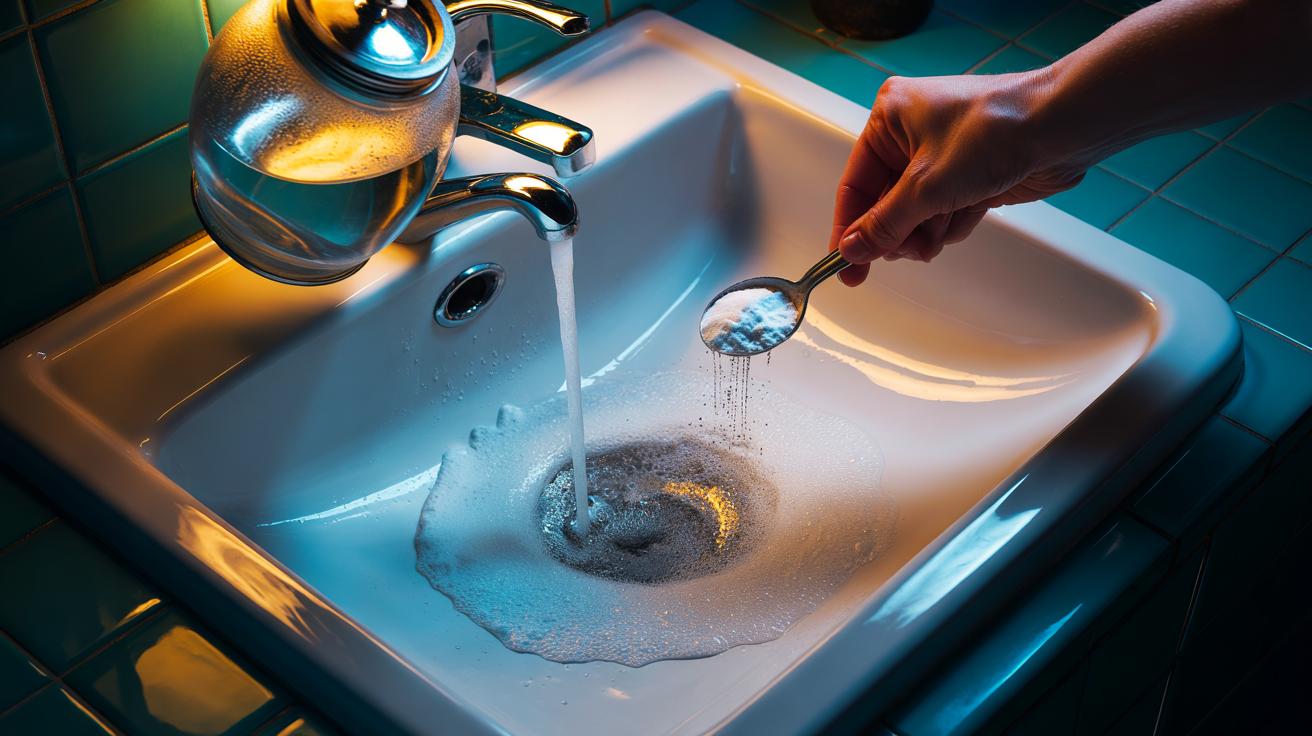
Start by removing the plug or pop-up stopper and scooping out standing water. Tip 100–150 g of baking soda into the drain, nudging it past the throat. Heat a kettle and let it stand 30–60 seconds off the boil; pour 500–800 ml slowly so the heat lingers in the bend. For extra fizz, follow with 100–150 ml of white vinegar or a tablespoon of citric acid in water; cap the drain for five minutes to keep bubbles working in the trap. Finish with another 500 ml of hot water to carry loosened debris away. Never mix this routine with commercial drain openers; if you used chemicals recently, skip the DIY approach and ventilate well.
| Action | Measure/Temp | Purpose |
|---|---|---|
| Pour baking soda | 100–150 g | Raises pH to loosen scum and prep fizz |
| Add hot water | 500–800 ml at 60–80°C | Softens oils; moves soda into the trap |
| Optional acid splash | 100–150 ml vinegar | Creates CO₂ fizz to agitate debris |
| Final flush | 500 ml hot water | Washes loosened hair and gunk away |
Work patiently rather than throwing the kettle in one go. Slow pours keep heat where the blockage sits. If water still pools, repeat once; persistent standing water calls for mechanical help.
When It Works—and When to Use Something Else
This method excels at early-stage slow drains caused by soap scum, shaving stubble, toothpaste sludge, and light hair tangles. The hot water softens; the soda and fizz lift; the follow-up flush clears. Signs you’re in luck include a drain that gurgles but still moves water or a sink that empties slowly rather than not at all. If you catch the problem early, the fizz can restore full flow in minutes. It’s also a good maintenance routine after you’ve removed visible hair from the stopper or overflow.
It is not a cure-all. A solid wad of hair lodged deep in the trap, a dropped cotton bud, or hardened scale will shrug off mild alkalinity. In those cases, use a drain snake, a cup plunger on the overflow-sealed basin, or remove the U-bend to clear by hand. Enzyme-based cleaners help on organic muck but take hours. Caustic soda will dissolve hair, yet demands gloves, goggles, and care. Do not combine products. If repeated DIY attempts fail, call a professional to avoid cracked traps and chemical hazards.
Prevention Tips That Keep Sinks Flowing
Prevention beats panic. Fit a discreet hair catcher under the plug to intercept strands before they travel. After shaving, run hot water for 20–30 seconds and wipe residual foam from the basin rather than rinsing clumps down the drain. Keep oils, body butters, and clay-based masks away from the sink; these set on cool pipes. Once a week, perform a maintenance flush: 2 tablespoons of baking soda followed by a half-kettle of hot water. Small, regular doses keep scum from forming the glue that traps hair.
Clean the pop-up mechanism monthly; it is a notorious snag point. If limescale is common in your area, an occasional rinse with diluted citric acid helps de-crust aerators and reduces roughness inside fittings. Teach children not to drop floss or cotton pads in the basin. A quick visual check of the overflow and waste every fortnight cuts off trouble before it compacts into a stubborn blockage.
Used wisely, the hot water and baking soda pour is a simple, low-cost ritual that rescues a sluggish sink and postpones tougher interventions. The fizz doesn’t eat hair in the dramatic sense; it dislodges it by softening the sticky films that anchor strands. Done at the first signs of slow drainage—and supported by good habits—it keeps your bathroom routine flowing without harsh chemicals or hefty bills. Will you adopt a weekly fizz-and-flush, or tweak the method to suit your household’s habits and water hardness?
Did you like it?4.6/5 (20)