In a nutshell
- 🧊🧂 The ice + salt combo delivers gentle abrasion: salt grains propelled by melting ice and lubricating brine scrub the hard‑to‑reach base without scratching.
- 🌀 Method: add 4–8 ice cubes, 1–2 tbsp coarse salt, a splash of cool water; swirl 60–90 seconds, rinse, repeat if needed—avoid thermal shock on delicate glass.
- 🧪 Variations: a dash of white vinegar softens limescale; use fine salt on acrylic; choose smaller ice for slim necks and a funnel to load salt cleanly.
- ♻️ Eco angle: relies on mechanical action, not harsh chemicals; uses little water, with distilled water for spot‑free finishes and a citrus rinse to neutralise odour.
- ✅ Results: restores clarity in narrow vases, carafes, and bottles, lifting algae film, mineral rings, and stains with a controlled, non‑scratch scrub.
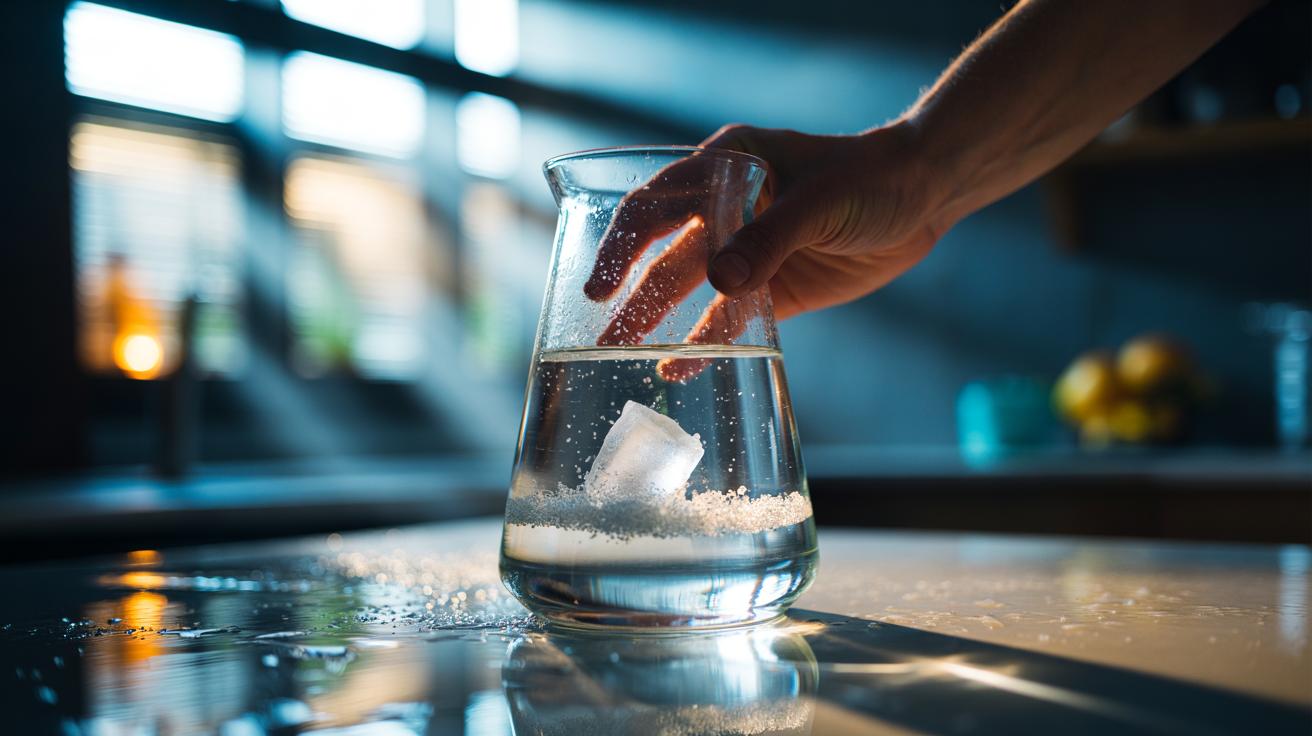
Cloudy rings, greenish film, and gritty sediment can make even the most elegant vase look unloved—especially when the neck is too slim for a brush. Enter the humble duet of ice cube and salt. When paired and swirled inside narrow vases, they scour the bottom where bristles can’t reach, lifting residue without harsh chemicals. The cold brine loosens deposits while frozen grains act like tiny scrubbers, delivering a controlled, non-scratch polish. This simple, thrifty trick turns kitchen staples into a precision cleaning tool, clearing stubborn stains and restoring sparkle in minutes. Here’s how the frozen grains do the hard grind—and how to use them safely.
Why Ice and Salt Work in Tight Spaces
At the heart of this hack is a combination of gentle abrasion and smart chemistry. Salt crystals lodged against an ice cube behave like a micro-abrasive pad: the grains rub against the glass, while the ice keeps them moving and tempers their bite. As the ice melts, a cold brine forms, helping to lubricate the movement and carry loosened grime. This dynamic duo reaches the vase’s base and curves where brushes and cloths simply won’t fit. The result is a controlled scrub that tackles water marks, algae film, and that infuriating tea-stain tint on clear glass.
There’s a physics twist, too. The brine lowers the freezing point, meaning the ice melts steadily, releasing fresh edges of salt to keep the scrub efficient. Cold causes some deposits—especially biofilm and light mineral traces—to lose adhesion, so the agitation finishes the job. Crucially, you’re not relying on harsh solvents. You’re harnessing motion, temperature, and crystal texture to clean precisely where it matters.
Step-by-Step Method for Stain-Free Vases
Gather a handful of ice cubes, 1–2 tablespoons of coarse salt (table salt works in a pinch), and enough cool water to cover the base. Avoid sudden temperature shocks—don’t pour very hot water into a cold vase. Drop the ice and salt into the vase, add a splash of water, cover the mouth with your palm, and swirl in firm circles. Tilt gently so the ice skates across the bottom edge. In 60–90 seconds you’ll hear and feel the scouring action. Rinse, inspect, and repeat once if needed for heavy rings.
| Item | Quantity | Purpose |
|---|---|---|
| Ice cubes | 4–8 | Drive movement; cool brine loosens residue |
| Coarse salt | 1–2 tbsp | Micro-abrasive scrub that reaches corners |
| Cool water | Enough to cover base | Lubricates, lifts debris for rinsing |
For tall or very slim vessels, use smaller ice pieces to negotiate the neck. If residue persists, soak the base with cool water for 10 minutes, then repeat the swirl. Do not use boiling water on delicate crystal or cold glass. Finish with a clear rinse and air-dry upside down for a streak-free gleam.
Smart Variations, Pitfalls, and Eco Benefits
For limescale or stubborn mineral rings, add a tablespoon of white vinegar to the mix; the mild acid softens deposits so the salt-and-ice scrub finishes them swiftly. If you’re cleaning coloured glass, test briefly to ensure no etched marks were pre-existing; the method is gentle, but it can reveal flaws you hadn’t noticed. On soft plastics or acrylic vases, swap coarse salt for fine salt to reduce the risk of micro-scratches. Let the ice do the work—vigour is good, brute force isn’t. For very narrow necks, a paper funnel helps you add salt without spillage.
There’s a sustainability angle, too. You’re avoiding bleachy cocktails and single-use scrubbers by leaning on mechanical action and a touch of brine. The solution uses minimal water and can be poured away safely. A light citrus rinse will neutralise any brief saline scent. If your tap water is hard, finishing with distilled water prevents new spots. Simple ingredients, precise results, and no chemical fog—an everyday win for glass and planet.
There’s a certain satisfaction in hearing those grains whisper across glass and seeing clarity return where grime had settled. The ice and salt routine is fast, frugal, and reliable, rescuing bud vases, carafes, and heirloom bottles that usually defy cleaning tools. With a measured swirl, controlled pressure, and a mindful rinse, the base brightens and the neck stops being a problem. Once you’ve tried it, you’ll never reach first for bleach again. Which vessels in your home—or studio—would benefit most from a cold, crystalline scrub, and how might you adapt the technique for their quirks?
Did you like it?4.4/5 (25)