In a nutshell
- 🛠️ Use hot water and bicarbonate of soda—with optional white vinegar—to quickly loosen hair and soap scum and restore bathroom drain flow.
- 🔬 The alkalinity of bicarb emulsifies grease, the CO₂ fizz agitates debris, heat thins residues, and vinegar helps lift mineral-bound soap scum; hair (keratin) is released, not dissolved.
- 📏 Method: add 4–6 tbsp bicarb, wait 5 minutes, pour hot (off-the-boil) water, then 150–200 ml vinegar; cap to let it fizz, wait 10–15 minutes, finish with a hot flush.
- ⚠️ Safety: avoid pouring boiling water directly into PVC/ABS, never mix with bleach or chemical cleaners, wear protection; if water won’t drain at all, remove the P-trap or use a drain snake.
- 🧰 Prevention: monthly light maintenance (2 tbsp bicarb + hot flush), fit a hair catcher, rinse residue-prone products; persistent odours or gurgling suggest vent/stack issues—call a qualified plumber.
Blocked bathroom drains are a perennial British headache, but the simplest fix is often hiding in plain sight: hot water and bicarbonate of soda. The pairing breaks down the sticky blend of hair, soap and skin oils that lines your pipes, restoring flow without harsh chemicals or a call-out fee. It’s cheap, quick, and gentle on modern plastic plumbing when done correctly. Here’s how the method works, why the fizz helps dislodge grime, and the exact measurements that shift stubborn sludge. You’ll also find safety notes, limits, and smart prevention tips so the problem doesn’t creep back next week.
Why Bicarb and Heat Work on Clogs
The typical bathroom clog is a tangle of hair (keratin) bound together by soap scum, body oils and hard-water minerals. Hot water softens this mass, loosening the gluey film that traps strands across the waste. Bicarbonate of soda raises alkalinity in the pipe, which helps to emulsify greasy residues and disrupts the bonds that make soap residues cling. This kitchen-cupboard pairing tackles the gunk that slows bathroom drains. In short bursts, it’s effective without the aggressive bite of caustic products, making it a friendly first line of defence for sinks, showers and baths.
Add a mild acid such as white vinegar after the bicarb and you trigger the fizz: carbon dioxide bubbles that physically jostle debris. The effervescence pries at edges and crevices where mats of hair and film hide. Even when you skip the vinegar, heat plus alkalinity still assist the break-up process. The goal is not to dissolve whole clumps instantly, but to destabilise them so flow returns and subsequent rinses carry the muck away.
Step-by-Step Method for a Fast Unclog
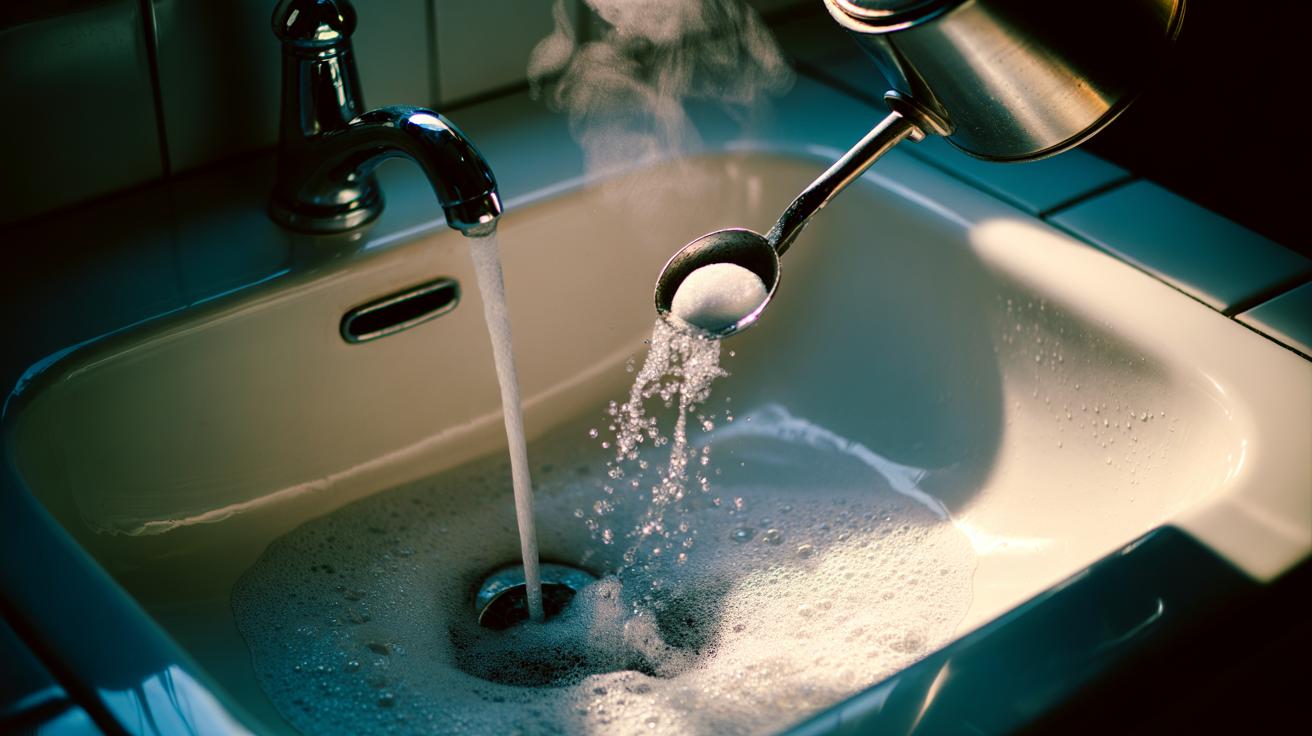
Start by removing any visible hair from the plughole or trap cover. Pour in 4–6 tablespoons of bicarbonate of soda, aiming it directly into the drain rather than the surface. Let it sit for five minutes so it settles into the blockage. Heat a kettle, then pour hot water just off the boil slowly and steadily to avoid splashback and protect plastic pipework; the surge helps push softened residues along. If flow remains sluggish, follow with 150–200 ml of white vinegar and cap the hole briefly to keep the fizz working in the pipe.
Wait another 10–15 minutes, then finish with a generous flush of hot water. For baths and showers, repeat once if the drain improves but isn’t free-flowing. Do not mix this method with bleach or commercial drain cleaners; rinse and wait 24 hours if such chemicals were used. A rubber glove and a simple hair hook can remove stubborn nests before the pour. Most partial clogs respond within minutes, saving you the drama of an emergency plumber.
| Material | Quantity | Action | Targets |
|---|---|---|---|
| Bicarbonate of soda | 4–6 tbsp | Sprinkle into drain; wait 5 min | Grease, soap film |
| Hot water | 1–2 kettles | Pour slowly, off the boil | Softens, flushes |
| White vinegar (optional) | 150–200 ml | Pour; cap for 5–10 min | Fizz lifts hair, scum |
The Science: How Fizz Eats Hair and Soap
Soap scum is often calcium and magnesium salts of fatty acids that stick like limescaled glue. When bicarbonate of soda meets vinegar, they form sodium acetate, water and carbon dioxide. That CO₂ effervescence agitates the clog, while the slightly alkaline conditions from bicarb help emulsify fatty residues. Think of the fizz as tiny fingers prying at the edges of a stubborn mat. Hot water reduces viscosity, making oily films less cohesive so the bubbling can penetrate and lift.
Hair itself—tough keratin—doesn’t melt away, but alkalinity can swell strands and weaken the binders that trap them. As the soap matrix loosens, hair is freed and flushed. Vinegar also helps combat mineral build-up by shifting carbonate deposits that anchor grime. The combination is a mechanical-chemical one-two: heat and bubbles for motion, mild alkalinity for grease, and mild acidity for mineral soap. The result is a safer clean-out that minimises damage to finishes and modern plastic traps.
Safety, Limits, and When to Try Something Else
Avoid pouring water at a rolling boil directly into PVC or ABS pipes; let the kettle sit 30–60 seconds first. Wear gloves and eye protection, and ventilate if you’re using vinegar in a confined space. Never combine this method with bleach or proprietary drain cleaners—mixing chemicals risks fumes and heat. If water stands without draining at all, the blockage may be solid or lodged beyond the trap. In that case, remove and clean the P-trap or use a drain snake before any pouring.
For recurring slow drains, fit a hair catcher and adopt a monthly maintenance routine: 2 tablespoons of bicarb, a splash of hot water, rest, then a hot flush. Rinse shaving cream and conditioner residues promptly; both feed soap scum. Be cautious with natural stone basins—keep vinegar off the surface to avoid etching. If you detect foul odours, repeated backups, or gurgling in nearby fixtures, you may have a vent or stack issue. That’s the moment to call a qualified plumber for a proper survey.
Quick, low-cost and kinder to plumbing, the hot water and bicarb pour is an elegant fix for the muck that collects beneath our bathroom plugs. It leverages heat, mild alkalinity and optional fizz to unstick hair and soap without the environmental toll of caustic products. Keep the routine light but regular, fit a strainer, and you’ll stay ahead of the gunk. When a clog does return, you’ll know exactly what to reach for—and when to escalate. What’s the one drain in your home that could benefit from a careful, fizzy reset this week?
Did you like it?4.3/5 (29)