In a nutshell
- 🧪 The science: acetic acid in vinegar dissolves limescale (calcium carbonate) while you sleep, restoring flow without heavy scrubbing.
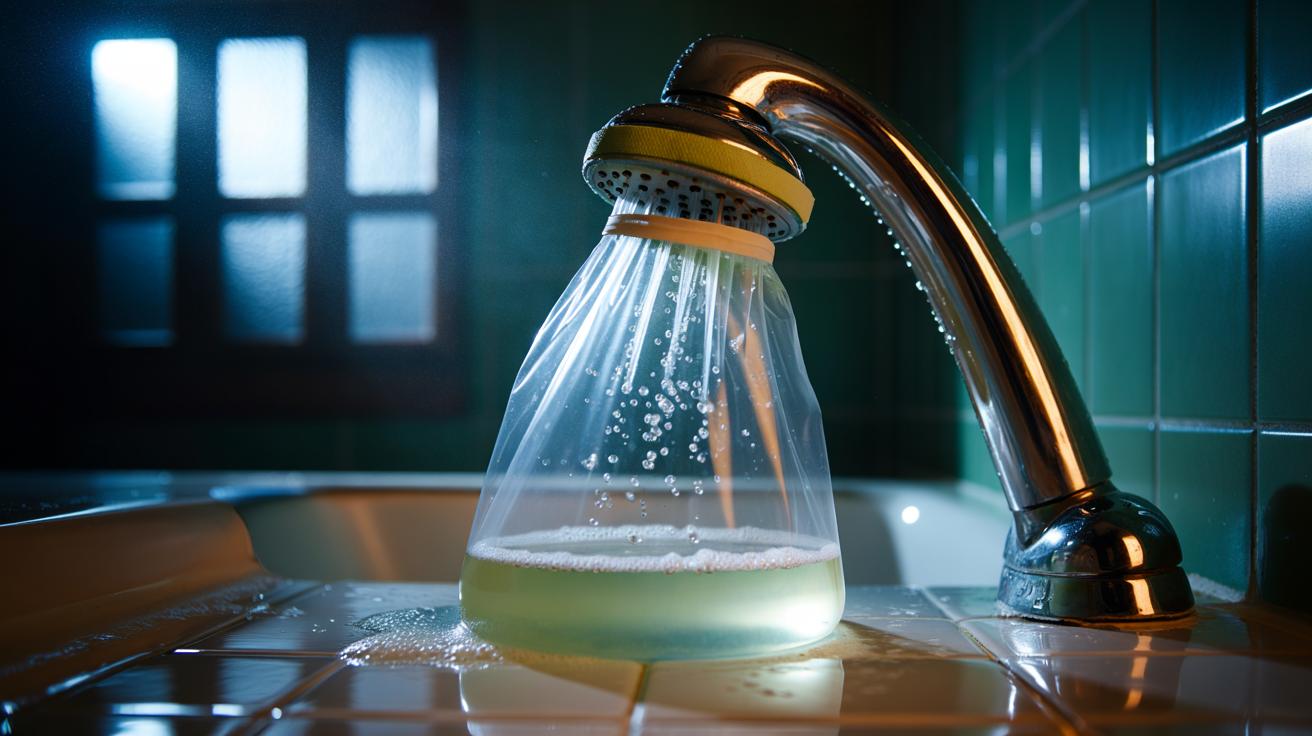
- 🪣 Method: bag the shower head with white vinegar and secure with a rubber band for 6–12 hours; remove, lightly brush, and flush hot water.
- 🛡️ Safety & materials: works on chrome, stainless, ABS; shorten soaks for delicate finishes and keep off natural stone; never mix vinegar with bleach.
- 🧰 Stubborn scale: try citric acid (5–10%), a warm solution, pinching silicone nozzles, and gentle brushing; repeat short soaks rather than one aggressive treatment.
- 🚿 Prevention: adopt monthly mini-soaks and consider an inline shower filter or softening to curb mineral build-up and extend finish life.
There’s a simple, gratifying way to revive a clogged shower without buying specialist chemicals: the vinegar + rubber band trick. Secure a small bag of household vinegar around the shower head, leave it overnight, and wake to restored flow and a brighter finish. The science is straightforward yet satisfying: acetic acid gently dissolves the stubborn limescale that throttles water and dulls chrome. It’s inexpensive, low-waste, and friendly to most finishes when used with care. The secret is patient contact time—letting the acid work while you sleep. Here’s how the chemistry plays out, the safest way to set it up, and the tweaks that make a surprising difference in the morning.
Why Vinegar Dissolves Limescale While You Sleep
Limescale is largely calcium carbonate, a chalky mineral deposited by hard water. Vinegar’s acetic acid (typically 5–8%) has a low pH that reacts with calcium carbonate, transforming it into soluble calcium ions while releasing carbon dioxide bubbles. Those tiny fizzing pockets help lift scale from crevices and nozzle tips. Because the acid doesn’t need scrubbing force to work, time does the heavy lifting. Leave it overnight and diffusion draws the solution into micro-channels, loosening deposits that a quick wipe can’t reach. Even a light film responds; heavier crusts may require a second soak or a gentle brush in the morning.
There’s a second benefit: vinegar disrupts soap scum and some biofilm residues that distort spray patterns. While it isn’t a hospital-grade disinfectant, its acidity helps break down organic grime that traps minerals. The result is a smoother, more consistent flow with less splatter. For many UK homes on hard water, this quiet, steady reaction pays back in clearer jets and a shower that looks cared-for, not coated.
The Rubber Band Bag Method Step by Step
Choose plain white vinegar or “cleaning vinegar” and a small, sturdy food bag. Avoid malt vinegar—it can stain and leaves a lingering scent. Fill the bag with enough vinegar to submerge the shower head’s face. Slip it over the head and secure tightly with a rubber band or hair tie just behind the spray plate. Check that all nozzles are covered but the bag isn’t straining the pipework. Six to twelve hours is the sweet spot for most heads; very heavy build-up may benefit from the longer end of that window.
In the morning, remove the bag, scrub the face gently with an old toothbrush, and run hot water for a minute to flush loosened debris. If your head detaches easily, soaking it in a bowl can be neater, especially for rain heads. A warm (not boiling) vinegar bath improves reaction speed without risking seals. Finish by wiping the finish with a soft cloth. If any jets still stray, pinch silicone nozzles to dislodge grit or use a wooden cocktail stick for stubborn holes.
Materials Compatibility and Safety
Most chrome-plated brass, stainless steel, and ABS plastic heads tolerate vinegar well when exposure is limited. That said, finishes vary. Always test a hidden spot first and keep soak times conservative on delicate coatings. Keep vinegar off natural stone tiles, which can etch. Never mix vinegar with bleach or bleach-based sprays. Ventilate lightly; the carbon dioxide fizz and the vinegar odour fade after rinsing. If you’re using higher-strength “cleaning vinegar,” shorten the soak to protect seals and plating. The guide below helps you match exposure to material.
| Material/Finish | Recommended Soak Time | Notes |
|---|---|---|
| Chrome-Plated Brass | 6–10 hours | Rinse well; polish with a soft cloth. |
| Stainless Steel | 6–12 hours | Very tolerant; wipe dry after. |
| ABS Plastic + Silicone Nozzles | 4–8 hours | Pinch nozzles after soaking to clear grit. |
| Oil-Rubbed Bronze/Nickel | 2–4 hours | Test first; reduce time to protect patina. |
| Near Natural Stone | Use with care | Shield stone; wipe spills immediately. |
Safety quick wins: wear washing-up gloves if you have sensitive skin, keep vinegar away from grout that’s not fully cured, and flush until the smell clears. Soft, repeated treatments beat an aggressive single soak and help preserve finishes over time.
Alternatives and Add-Ons for Stubborn Scale
If vinegar’s overnight pass doesn’t fully clear the crust, escalate carefully. A 5–10% citric acid solution is slightly stronger but kinder to many finishes; dissolve crystals in warm water and repeat the bag method for 2–6 hours. Commercial descalers work too—follow the manufacturer’s timings. Mechanical help matters: use a nylon brush, pinch silicone nozzles, and, if the head disassembles, clean the faceplate and flow restrictor separately. Never mix vinegar with bleach—this can create dangerous fumes. For very hard water areas, schedule a monthly mini-soak to keep deposits from hardening into rock-like nodules.
To speed results, gently warm the solution and the metal (a hot shower first helps), then apply. A drop of washing-up liquid in the vinegar can wet surfaces more evenly. If odour bothers you, run the fan and rinse with a lemon-water splash at the end. For long-term prevention, consider an inline shower filter or whole-house softening; less mineral load means shorter soaks, brighter chrome, and fewer clogged jets between cleans.
The vinegar + rubber band method earns its reputation because it’s cheap, quiet, and scientifically sound. Acid plus time is a precise antidote to mineral build-up, restoring pressure and spray shape with minimal effort. Used sensibly, it respects finishes, trims cleaning bills, and spares you from harsh products. Add a soft brush, a monthly rinse routine, and perhaps a dash of citric acid for difficult cases, and you’ll keep the bathroom running to time. Will you set up a bag-and-band soak tonight, or will you tweak the method—warmer solution, shorter stints, or a preventive filter—to suit your water and your routine?
Did you like it?4.3/5 (27)