In a nutshell
- 🔬 The science: Tarnish is silver sulphide; a hot, alkaline bath creates a tiny cell where aluminium donates electrons, reducing Ag2S back to silver. Hot water and bicarbonate of soda speed the redox reaction.
- 🛠️ Method: Line a heatproof dish with aluminium foil, add near‑boiling water, 1 tbsp bicarbonate per litre and a pinch of salt; ensure direct contact with foil for 2–5 minutes, then rinse and dry.
- ⚠️ Safety: Suits sterling and silver‑plated cutlery, but avoid immersing glued/wooden handles, hollow‑handled knives, gemstones, enamel, or oxidised details; never mix with bleach or acids.
- ✨ Limits: The bath lifts tarnish, not scratches or worn plating; use a light, non‑abrasive polish for final lustre and repeat short soaks rather than one long immersion.
- 🧳 Care: Store in anti‑tarnish bags or acid‑free wraps, add charcoal/silica, hand‑wash after use, and seek professional conservation for valuable pieces.
In kitchens across Britain, there’s a quietly brilliant hack that returns dull forks and spoons to dinner‑party sparkle without abrasive elbow grease. It enlists hot water, a crumple of aluminium foil, and a pinch of pantry chemistry to strip away the grey film that makes heirloom flatware look tired. The real surprise is speed: within minutes, tarnish lifts as if reversed. This isn’t witchcraft but a redox reaction that nudges sulphur off the silver’s surface and onto the foil. The trick is gentle on sterling, swift on routine tarnish, and kinder to your cutlery than aggressive polishing pastes. Here’s how the process works, why temperature matters, and the common mistakes to avoid.
How the Foil-and-Hot-Water Reaction Works
Tarnish on silver is mainly silver sulphide (Ag2S), formed when silver meets airborne sulphur compounds such as hydrogen sulphide. The foil method pairs silver with aluminium in a warm, alkaline solution, creating a tiny galvanic cell. Electrons flow from aluminium to the silver surface, reducing silver sulphide back to metallic silver while the sulphur is transferred to the aluminium, forming aluminium sulphide. In effect, the reaction restores the silver rather than scraping it. Because there’s minimal physical abrasion, hallmarks and fine edges are preserved compared with heavy polishing.
Heat accelerates ion movement and boosts efficiency, which is why hot water is central to the method. A mild electrolyte—typically bicarbonate of soda and a little salt—enables contact between metals. You may notice a faint sulphurous scent; that’s the chemistry doing its job. For best results, ensure direct contact between the foil and each piece of silver; the reaction is strongest where the metals touch, helping lift tarnish faster on intricate patterns and around ferrules.
Step-by-Step: The Fast Foil Method for Silver Cutlery
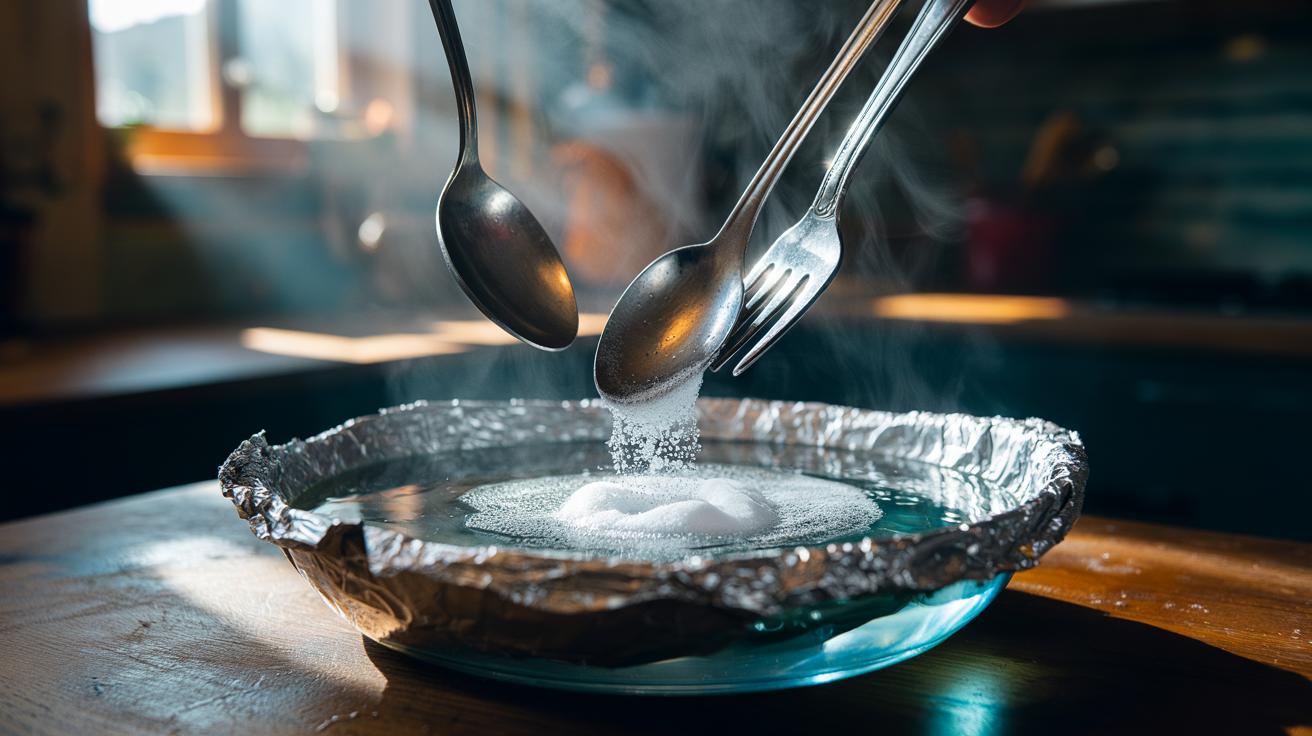
Line a heatproof glass or ceramic dish with crumpled aluminium foil, shiny side up. Add very hot water—just off the boil—then stir in one tablespoon of bicarbonate of soda per litre and a teaspoon of salt. Place the cutlery so each piece touches the foil. Leave for 2–5 minutes, turning once. When the tarnish fades, lift out with tongs, rinse in clean hot water, and dry immediately with a lint‑free cloth. Always place silver in contact with aluminium and keep the water hot for a quick, thorough reaction. For stubborn areas, repeat briefly rather than extending a single long soak.
Use the checklist below to keep the kit simple and safe.
| Item | Role | Notes |
|---|---|---|
| Aluminium foil | Electron donor | Crumple loosely to maximise contact points. |
| Hot water | Speeds reaction | Near‑boiling is effective; avoid rolling boil in the dish. |
| Bicarbonate of soda | Electrolyte, alkalinity | About 1 tbsp per litre of water. |
| Salt | Conductivity boost | Optional; a small pinch helps ion flow. |
| Heatproof dish | Safe container | Avoid metal pans to prevent stray reactions. |
Safety, Materials, and What to Avoid
Most sterling silver and silver‑plated cutlery responds well, but there are caveats. Do not immerse pieces with glued, resin, or wooden handles, as heat can weaken adhesives or crack finishes. Knives with hollow handles or pitch can suffer from hot soaks; clean blades separately and keep handles out of the water. Avoid pieces with attached gemstones, enamel, or deliberately darkened (oxidised) detailing you wish to preserve; the process can lift that contrast.
The reaction is gentle, yet chemistry still demands care. Never mix with chlorine bleach or acidic cleaners. Use glass or ceramic vessels to keep the system predictable and free of extraneous metals. If you’re unsure about plating thickness, trial a single teaspoon first. While this method doesn’t physically remove silver, over‑zealous repeats on poorly plated items can reveal base metal where plating is already thin. Rinse thoroughly and dry fast to prevent new water spots from marring your newly bright finish.
When to Polish Instead: Limits of the Trick
The foil bath excels at converting tarnish in crevices and broad surfaces, but it won’t fix scratches, pits, or coppery bleed‑through where plating has worn. If you value a soft antique patina, consider a targeted approach—reactivate only the worst areas, then stop. For pieces with stubborn bluish or rainbow films, a quick, non‑abrasive silver polish can refine the final lustre after the chemical clean. Use a microfibre cloth and light pressure; the goal is to brighten, not grind.
Display habits matter too. Store in anti‑tarnish bags or wrap in acid‑free tissue, and add a sachet of activated charcoal or silica to capture stray sulphur compounds. Wash by hand after use; dishwashers can bake on stains and stress handles. For museum‑grade or highly valuable flatware, periodic professional conservation is wise. Think of the foil method as a fast reset for everyday pieces, with occasional gentle polishing as the finishing touch.
This quick kitchen chemistry turns a Sunday spread from drab to dazzling with little cost and less fuss. By leaning on a simple electrolytic exchange, it revives silver safely and preserves detail that heavy compounds may erode. Keep your kit handy, work hot, and respect the limits of plated or handled knives. Once you’ve seen the tarnish vanish before your eyes, routine care becomes a matter of minutes. Which pieces in your drawer deserve a careful test first—and how will you adapt the method to suit the quirks of your own collection?
Did you like it?4.4/5 (20)